The reason your windshield wipers skip over a repaired chip
The Physics of the Skip: Why a Same-Day Chip Repair Fails Under Your Wipers
When you are driving through a torrential downpour and your windshield wipers begin that rhythmic, irritating skip-skip-skip across the glass, you are not just hearing a mechanical failure. You are hearing the sound of physics and failed surface tension. As a Master Glazier with a quarter-century in the trade, I have seen every iteration of glass failure, from high-performance curtain walls in skyscrapers to the laminated safety glass of a high-end vehicle. The reason your windshield wipers skip over a repaired chip usually boils down to a discrepancy in surface energy and the shore hardness of the resin used by the glass installer. Most mobile service technicians are in such a rush to provide a same-day fix that they ignore the fundamental requirements of glass leveling and refractive index matching.
“Installation is just as critical as the window performance itself. A high-performance window installed poorly will fail.” AAMA Installation Masters Guide
The Narrative of the Surface Tension Crisis
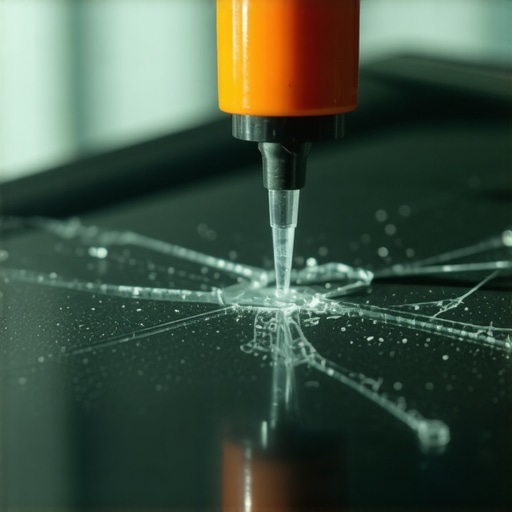
I recall a client who called me in a panic because their new windshield, which had just undergone a chip repair, was ‘stuttering’ every time it rained. I walked in with my hygrometer and a 10x jeweler’s loupe and showed them that the humidity in the air during the repair had actually trapped a microscopic layer of moisture between the resin and the glass. It was not a failure of the glass itself; it was a failure to manage the environment of the repair. The previous technician had performed a ‘caulk-and-walk’ equivalent on their windshield. The resin had partially cured but had shrunk by nearly 4 percent because they used a low-intensity UV lamp. This shrinkage created a microscopic ‘pothole’ that the wiper blade, which is designed to glide on a consistent film of water, was physically catching on.
The Rough Opening of a Micro-Fracture
In the architectural world, we talk about the Rough Opening as the space where a window sits. In a windshield chip, the Rough Opening is the crater left by the stone impact. If a glass installer does not properly vacuum the air out of this crater, the resin cannot fully penetrate the ‘legs’ or micro-cracks of the break. When the resin is then cured, it does not form a monolithic surface with the surrounding glass. Instead, you have a patch that is softer than the surrounding silica. Glass has a Mohs hardness of about 5.5 to 7, while most cured resins sit significantly lower. When your wiper blade, usually made of EPDM or silicone, moves across the glass, it encounters a change in friction. This change in friction causes the blade to chatter. It is exactly like a Sash that is out of alignment in its track; if the friction isn’t uniform, the movement won’t be either.
The Impact of Climate on Resin Integrity
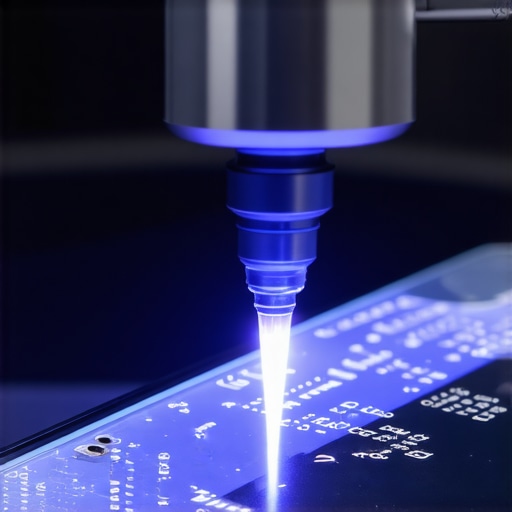
If you are in a northern climate where the temperature fluctuates between freezing and humid, the situation is even more dire. Heat loss and condensation are the enemies of any glass repair. When you have a chip, the glass is compromised. In cold weather, the glass contracts. If the resin used in your same-day repair does not have the same coefficient of thermal expansion as the glass, the two materials will fight each other. The resin will either pull away from the edges of the repair or it will protrude slightly above the surface. This protrusion is the primary reason for wiper skipping. It acts as a speed bump for the wiper blade. A proper mobile service must account for the ambient temperature of the glass, often pre-heating the area to ensure that the resin flows into every microscopic crevice of the Rough Opening before the UV light is applied.
“Standard practice for installation requires that all surfaces be clean, dry, and free of contaminants that might interfere with adhesion.” ASTM E2112 Standard Practice
The Anatomy of the Glazing Bead and Pit Filler
In a standard window, the Glazing Bead holds the glass in the frame. In a chip repair, the ‘pit filler’ is what holds the repair together and levels it with the surface. If the technician does not use a high-viscosity pit filler to finish the job, the wiper blade will eventually erode the softer repair resin. This is especially true if you are using your wipers frequently in dusty conditions. The dust acts as an abrasive, wearing down the resin faster than the glass. To prevent this, the glass installer must ensure that the repair is polished using a cerium oxide compound to match the smoothness of the original glass. Without this step, you are left with a surface that has a different tactile profile, leading to that annoying skip.
Why Mobile Service Efficiency Often Trumps Quality
The rise of the mobile service model has made chip repair incredibly convenient, but it has also led to a decline in technical precision. A technician might Shim their schedule to fit ten cars in a day, which means they are only spending fifteen minutes on your windshield. They skip the critical step of ‘probing’ the break to ensure there are no air pockets. They might ignore the Weep Hole equivalent in automotive glass, which is the path for air to escape as resin enters. If air is trapped, it creates a bubble. When the wiper blade passes over this bubble, the air compresses and then expands, causing a micro-vibration that you feel as a skip. Furthermore, if the Operable parts of your wiper system are already worn, any slight imperfection in the glass repair is magnified ten-fold.
The Math of the Energy Savings Myth in Glass Repair
Many people think that a chip repair is just about saving the cost of a full windshield replacement. While that is true in the short term, the real ROI is in the safety and structural integrity of the laminate. A windshield provides up to 30 percent of the structural strength of your vehicle in a rollover. If the repair is not done to the highest standards, the ‘Rough Opening’ of that chip remains a point of weakness. From a technical standpoint, the U-Factor of your glass is not changed by a chip, but the Visible Transmittance (VT) and the structural load-bearing capacity are significantly altered. Do not buy the marketing hype of ‘invisible’ repairs; buy the technical data of resin bonding strength and refractive index matching. If the resin does not match the 1.52 refractive index of the glass, you will always see a ghost of the repair, and your wipers will always find that imperfection.
Conclusion: Precision Over Convenience
The next time you call for a same-day mobile service, ask the glass installer about their resin’s shore hardness and their curing process. Ask if they use a separate pit filler for the surface level. If they look at you like you are speaking a foreign language, they are a ‘caulk-and-walk’ artist. You need someone who understands that a windshield is a piece of engineered safety equipment, not just a clear shield. Water management on a windshield is a science, and just like a Sill Pan or Flashing Tape protects a home, a proper glass repair protects the driver. If your wipers are skipping, the glass is telling you that the repair is incomplete. Do not settle for a bump in the road on your own windshield.