How to spot high-quality resin by the way it smells
The Invisible Standard of Glass Restoration
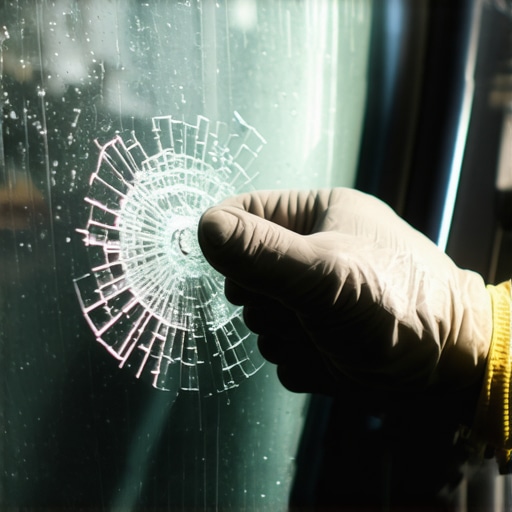
In the world of professional glazing, the difference between a permanent fix and a temporary patch often comes down to chemistry that the average consumer never sees. When you hire a glass installer for a chip repair, you are not just paying for their time; you are paying for the structural integrity of your glazing system. Most people assume all resins are created equal, but as a master glazier with a quarter-century in the field, I can tell you that the nose knows more than the eyes. High-quality resins have a specific chemical signature, often detected by a sharp, pungent acidic bite, while cheap, off-the-shelf fillers often smell like waxy plastic or have no scent at all. This lack of chemical ‘punch’ usually indicates a lack of the acid-based primers necessary to etch the glass at a molecular level and create a permanent bond.
The Condensation Crisis: A Lesson in Thermal Stress
I recall a homeowner in a bitter Chicago January who called me in a panic because their same-day repair from another company had failed within forty-eight hours. I walked in with my hygrometer and thermal camera, but I didn’t even need them. I could see the ‘ghosting’ around the impact point. The previous tech had used a low-viscosity, cheap resin that couldn’t handle the 70-degree temperature differential between the heated interior and the sub-zero exterior. The sash was vibrating with the wind, and because the resin didn’t have the proper elastic modulus, it simply delaminated. It wasn’t just a bad repair; it was a fundamental misunderstanding of how glass behaves as a dynamic material. A window is a thermal barrier, and any chip repair must act as a seamless extension of that barrier, not just a plug in a hole.
“Installation is just as critical as the window performance itself. A high-performance window installed poorly will fail.” – AAMA Installation Masters Guide
The Chemistry of the Smell: Acrylic Acid and Bonding Power
When a mobile service technician opens their bridge and injector, the first thing I look for is the scent of acrylic acid. This is the ‘glazier’s cologne.’ It is a sharp, vinegar-like odor that signals the presence of high-grade monomers. These monomers are designed to penetrate the microscopic fissures of a break. If the resin is odorless, it often means it is a high-solids, low-acid formula that will sit on top of the glass rather than integrating with it. In cold climates, where the U-Factor is the primary metric of success, a weak bond is a death sentence for the glass. As the glass contracts in the winter, the Rough Opening of the chip expands. If the resin doesn’t have the chemical ‘teeth’ to hold on, the repair will pop, or worse, the crack will spread toward the glazing bead.
The Physics of Thermal Expansion in Northern Climates
In the North, the enemy is Heat Loss and the resulting contraction of materials. We focus on the U-Factor because we need to keep the radiant heat inside the building envelope. When performing a chip repair in these environments, the resin must be ‘warm-edge’ compatible. This means it needs to mirror the thermal expansion coefficient of the glass. If you use a rigid, brittle resin in a high-performance double-pane unit, the first time the sun hits that glass and the temperature swings 40 degrees, the stress concentration at the repair site will cause a catastrophic failure. This is why professional glass installer kits include multiple resins for different temperatures and break types. We aren’t just filling a hole; we are managing the Dew Point within the glass itself.
“The selection of sealants and resins must be compatible with the substrate to ensure long-term adhesion under environmental cycling.” – ASTM E2112 Standard Practice
Viscosity, Refractive Index, and the Mobile Service Reality
The technical goal of a professional chip repair is to match the refractive index of the glass, which is approximately 1.52. This is what makes the repair ‘disappear.’ However, achieving this requires a resin that can be vacuum-pressured into the break. Cheap same-day services often use a one-size-fits-all resin that is too thick. They skip the vacuum cycle, leaving air trapped in the break. This air has a different refractive index, which is why you can still see the ‘black’ or ‘silver’ reflection in a poorly done repair. A true professional will use a thin-viscosity resin for the initial fill and a higher-viscosity ‘pit filler’ for the surface, ensuring the Sill Pan and surrounding frame are protected from any chemical runoff. This level of detail is what separates a master from a ‘caulk-and-walk’ amateur. Don’t be fooled by high-pressure sales tactics; look for the technical specifications of the resin and, if you’re close enough, trust your nose.