How to fix a rock chip before the summer heat makes it spread
The sound is unmistakable: a sharp, high-pitched tick against the glass that signals a structural compromise in your windshield. As a master glazier with a quarter-century in the trade, I have seen that tiny impact point evolve from a negligible blemish into a catastrophic failure that spans the entire width of the glass. The transition from a repairable chip to a full-on replacement often happens in the blink of an eye, particularly when the summer heat begins to exert its will on the molecular structure of the glass. Most people see a window as a static object, but a glazier understands that glass is a dynamic material that is constantly reacting to thermal loads and environmental pressures. When you have a rock chip, you have a concentrated point of stress in a system that is designed to distribute force evenly. If you do not address it before the mercury rises, you are essentially waiting for physics to finish the job that the pebble started.
The Sales Pitch Takedown: Why Expertise Trumps Convenience
I recall sitting across from a mobile glass salesman at a regional trade show who was pushing a new line of DIY resin kits. He was what we call a Tin Man in the industry, a high-pressure closer who prioritized volume over structural integrity. He was trying to convince a group of property managers that they could save thousands by having their janitorial staff use these generic kits to fix chips in their fleet vehicles and building entryways. I had to step in and explain the reality of the situation. I asked him about the refractive index of his resin and the vacuum pressure his delivery system could maintain. He stared at me blankly. I had to explain to those property managers that using an inferior resin without proper vacuum extraction is worse than doing nothing at all. You trap air and moisture inside the fracture, creating a tiny greenhouse effect. When the sun hits that trapped air, it expands, and because the air has nowhere to go, it pushes against the walls of the crack, forcing it to spread. This is the difference between a professional glass installer and someone who just wants to sell you a quick fix. A professional understands the science of the bond.
“Installation is just as critical as the window performance itself. A high-performance window installed poorly will fail.” – AAMA Installation Masters Guide
The Science of Summer Heat and Thermal Expansion
To understand why summer is the enemy of your glass, we have to look at the Solar Heat Gain Coefficient or SHGC. In architectural glazing, we spend our lives managing how much solar radiation passes through a pane. In a vehicle or a high-performance building in a hot climate like Phoenix or Dallas, the glass is often treated with coatings on Surface #2 (the inner side of the outer pane) to reflect infrared energy. However, even with these coatings, the glass absorbs a significant amount of heat. Glass has a specific coefficient of thermal expansion. While it is relatively low compared to metals, it is not zero. When the exterior temperature reaches 100 degrees Fahrenheit, the surface temperature of your glass can easily climb to 160 degrees or higher. This causes the glass to expand. In a perfect, uncompromised sheet of laminated glass, this expansion is manageable. But when you have a rock chip, you have created a discontinuity. The area around the chip expands at a different rate than the rest of the glass because the structural integrity is gone. This creates a stress riser. As the glass expands, it puts immense pressure on the tip of the crack. Eventually, the tension exceeds the strength of the molecular bonds in the glass, and the crack ‘runs’ or ‘spiders.’
Blueprint C: The Glass Class on Laminated Safety Systems
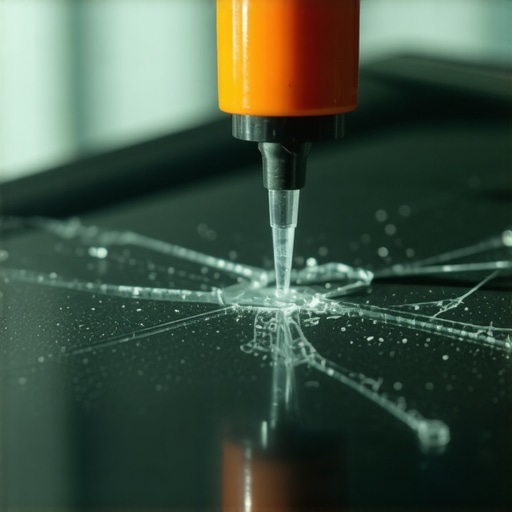
Most people do not realize that their windshield or high-security building glass is actually a sandwich. It consists of two layers of annealed glass bonded together by a polyvinyl butyral (PVB) interlayer. This interlayer is what makes it safety glass. When a rock hits the outer layer, it usually creates a Hertzian cone fracture, which is that circular or star-shaped blemish. The reason this is so dangerous in the summer is due to the differential in temperature between the inside and outside of the glass. You have the scorching summer sun beating down on the exterior (Surface #1) while your air conditioning is blasting the interior (Surface #4). This creates a massive thermal gradient across the glass assembly. This is why a same-day glass installer is so critical. You need to fill that void with a specialized resin that matches the refractive index of the glass (approximately 1.52) and restores the structural bond before the thermal stress becomes too great. A professional chip repair uses a bridge and injector system to pull a vacuum on the chip, removing all air and moisture. Only then is the resin injected under pressure, ensuring that every microscopic fissure is filled. This resin is then cured using specific UV wavelengths, essentially welding the glass back together at a molecular level.
“The success of any glass repair or installation depends on the technician’s understanding of the substrate’s limits.” – ASTM E2112 Standard Practice
The Mechanics of Mobile Service and Professional Repair
When you call for mobile service, you are not just paying for someone to drive to your location; you are paying for a controlled environment brought to your doorstep. A master glass installer will first assess the rough opening of the chip. They will look for signs of moisture contamination or dirt that has worked its way into the break. If you wait too long, road grime and rain can fill the crack, making a clean repair impossible. This is why we emphasize same-day service. The process involves more than just a drop of glue. We use a probe to clear any loose shards from the pit, then apply the injector bridge. We cycle through vacuum and pressure stages. You can actually see the air bubbles being pulled out of the star break. Once the resin is in, we apply a pit sealer and a curing film. This isn’t like a sash or a muntin that can be easily replaced if you mess it up. Once that resin is cured, it is permanent. If there is air trapped inside because the technician used a cheap ‘caulk-and-walk’ method, you will see a visible scar, and the structural integrity will be compromised. A professional repair should be nearly invisible and should be able to withstand the same thermal loads as the original glass. We check the glazing bead and ensure that no stress is being applied from the frame itself, whether that is a car’s pinch weld or a building’s curtain wall. In a hot climate, we also have to be careful not to create thermal shock during the repair. We never spray cold glass cleaner on a hot windshield, as that sudden drop in temperature can trigger the very crack we are trying to prevent.
Final Verdict: Don’t Buy the Hype, Buy the Science
In the world of glazing, there are no shortcuts. Whether I am installing a triple-pane operable window with a high U-factor for a skyscraper or repairing a small chip in a commuter’s windshield, the physics remain the same. You are managing energy, light, and structural tension. If you ignore a rock chip during the summer, you are ignoring a ticking time bomb. The cost of a professional repair is a fraction of the cost of a full replacement, especially now that many modern windows and windshields include complex sensors and coatings. A mobile service that offers same-day chip repair is your best defense against the inevitable expansion that comes with the sun. Look for a technician who understands things like weep hole drainage and sill pan integrity in a residential setting, or vacuum-pressure cycles in an automotive setting. It is the same expertise. Protect your glass, respect the physics of thermal expansion, and never let a salesman tell you that a DIY kit is as good as a master glazier’s touch.