Is that chip actually repairable? Use the quarter test to find out
The Anatomy of a Glass Fracture: Why Immediate Assessment Matters
In my twenty-five years as a master glazier, I have seen thousands of homeowners stare at a small impact mark on their glass with a mixture of hope and dread. That tiny speck, often dismissed as a cosmetic nuisance, is actually a structural breach in the thermal envelope of your building. When a projectile hits a glass surface, it creates a localized area of extreme stress. Whether it is a rock hitting an operable sash or a bird strike on a fixed storefront window, the physics remain the same. Glass is a supercooled liquid with a highly organized molecular structure under tension. A chip is not just a hole; it is a disruption of that tension. I recall a specific incident in a high-rise downtown where a homeowner called me in a panic because their large picture window started ‘singing’ in high winds. I walked in with my hygrometer and a simple coin. It was not the wind making the noise; it was the vibration of a microscopic star-crack that had been neglected for six months. The humidity in the room was 60 percent, and the moisture was actually migrating into the laminated interlayer through that tiny ‘insignificant’ chip. It was not a window failure; it was a failure of maintenance and understanding the chemistry of glass.
“Installation is just as critical as the window performance itself. A high-performance window installed poorly will fail.” AAMA Installation Masters Guide
The Quarter Test: A Technical Benchmark for Repairability
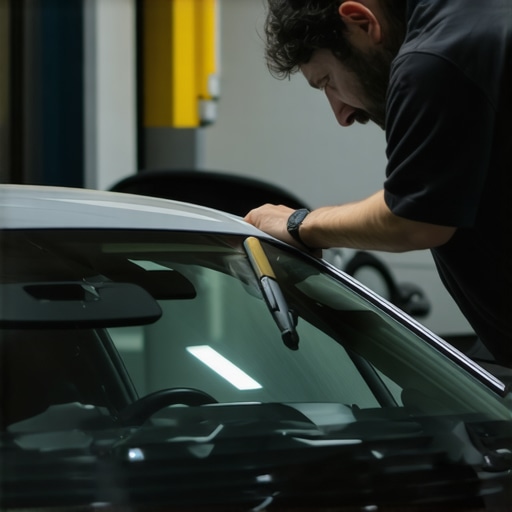
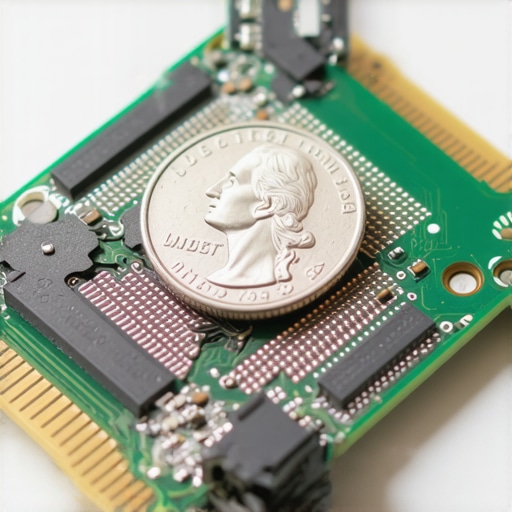
To determine if you need a full glass installer or just a mobile service for a resin injection, we use the ‘Quarter Test.’ This is not a casual suggestion; it is a geometric reality. If the entire area of the chip, including all radial cracks stretching out from the point of impact, can be covered by a standard United States quarter, you are likely a candidate for repair. If any ‘legs’ of the crack extend beyond that twenty-four-millimeter diameter, the structural integrity of the pane is compromised. In these cases, the tension across the rough opening will eventually cause the glass to ‘run.’ This is especially true in northern climates where the U-factor is the primary concern. When the temperature drops to sub-zero levels, the glass on the interior (surface #4) is significantly warmer than the exterior (surface #1). This temperature gradient creates massive thermal stress. If there is a chip, that stress concentrates at the tip of the fracture. Without the structural support of a full glazing bead and a solid shim, the glass will expand and contract until the crack spans the entire width of the unit.
The Science of Resin Injection and Refractive Indices
When a mobile service technician performs a chip repair, they are not just ‘filling a hole.’ They are performing a refractive index match. The resin used must have the same optical density as the float glass. A master glazier knows that the resin must be vacuum-pressured into the break to remove all air. If air remains, it acts as a thermal bridge, allowing heat to escape and creating a visible scar. We talk about the ‘Dew Point’ inside the chip. If moisture is trapped under the resin, it will freeze, expand, and pop the repair right out of the glass. This is why ‘same-day’ service is not just about convenience; it is about preventing contamination. Dust, car wax, and rain contain oils that coat the interior of the fracture. Once those oils are in there, the resin cannot bond to the silica. I have had to tell countless clients that their ‘cheap’ repair was a waste of money because they waited too long and let the crack get ‘dirty.’
“Properly executed field repairs must maintain the original design pressure ratings of the fenestration assembly to ensure occupant safety.” ASTM E2112 Standard Practice
Thermal Dynamics: Why Surface #2 Matters
In high-performance windows, particularly those with Low-E coatings, the location of the chip changes everything. If the chip is on the exterior and penetrates through to the Low-E layer (usually on surface #2 in southern climates to block solar heat gain), the coating will begin to oxidize. This creates a permanent ‘cloud’ around the repair that no amount of resin can fix. We look at the Solar Heat Gain Coefficient (SHGC) and how a repair might affect it. In a hot climate, a repaired chip might still allow a ‘hot spot’ to form, leading to a localized thermal fracture months later. A professional glass installer understands that the sill pan and the weep hole system are designed to manage water, but they cannot manage a glass unit that has lost its hermetic seal. If the chip is deep enough to reach the spacer bar, the argon or krypton gas fill will leak out, rendering the entire window’s R-value useless. In those scenarios, do not let a salesman talk you into a patch; you need a full unit replacement to restore your home’s energy efficiency.
Choosing Your Battle: Mobile Service vs. Full Replacement
If the chip passes the quarter test and is not located in the ‘critical vision zone’ or near the edge of the glass where the glazing bead provides the most pressure, a mobile service is an excellent, cost-effective solution. However, if the impact is within two inches of the frame, the ‘edge stress’ makes a repair highly likely to fail. The shim under the glass provides a point of resistance; when the glass is hit near that shim, the vibration has nowhere to go but into the structure of the glass itself. Always ask your installer about the type of curing light they use. A quick-cure UV lamp is standard, but a master glazier will also check the moisture content of the surrounding air before beginning. Water management is a science, and that science starts with the very first ‘clink’ of a rock against your window. Do not ignore the small things, or you will find yourself dealing with a rotted header and a failed frame sooner than you think. Real ROI in window maintenance comes from precision, not procrastination. Use the quarter test today, and if it fails, call a professional who knows the difference between a quick fix and a structural solution.