The exact moment a rock chip becomes unrepairable
The Physics of Impact: Why Glass Stability is Finite
As a master glazier with a quarter-century in the field, I have seen the same tragedy play out thousands of times. A driver hears that sharp ‘clack’ on the highway, sees a tiny fleck on their glass, and decides to wait until the weekend. By Saturday, that fleck has blossomed into a three-foot crack. In the world of glass installation and repair, we do not deal in approximations; we deal in the tolerances of brittle solids and the physics of tension. A window, whether it is an Operable casement in a high-rise or a laminated windshield, is a pressurized system. The moment a rock chip occurs, you are no longer looking at a solid surface; you are looking at a structural failure in progress.
The Narrative Matrix: The Condensation Crisis and the Micro-Fracture
I recall a specific homeowner who called me in a panic because their glass was ‘sweating’ internally after a minor impact. I walked in with my hygrometer and showed them that the humidity in the room was 60 percent, but the real issue was the chip they had ignored for two months. It wasn’t just ‘sweating’; it was a localized failure of the laminate. Moisture had been sucked into the chip via capillary action, reaching the Polyvinyl Butyral (PVB) interlayer. This moisture began to delaminate the glass from the plastic, creating a foggy, white halo that no resin in the world could fix. It wasn’t the window’s fault; it was the physics of delay. Once moisture or road salts penetrate the interlayer, the repairability of that glass drops to zero. This is why same-day mobile service is not a luxury; it is a technical necessity to seal the breach before the environment ruins the substrate.
“Installation is just as critical as the window performance itself. A high-performance window installed poorly will fail.” – AAMA Installation Masters Guide
The Anatomy of an Irreparable Break
To understand when a chip becomes a crack, we must perform an installation autopsy. Every piece of glass has a ‘stress profile.’ When we talk about a Sash holding a piece of glass, the Glazing Bead applies specific pressure to the edges. A rock chip introduces a ‘stress riser.’ In the heat of a Texas or Florida afternoon, the sun hits the glass on Surface #2. Because glass has a high Solar Heat Gain Coefficient (SHGC), it expands. However, the glass under the Glazing Bead or within the Rough Opening stays cooler. This thermal gradient creates a tug-of-war. If a chip is present, the expanding glass has a path of least resistance. The moment that chip exceeds the size of a quarter, or if it is located within two inches of the edge, it is unrepairable. Why? Because the edge of the glass is under the most intense structural tension. A glass installer knows that a chip near the edge will ‘run’ the moment the vehicle hits a pothole or the building settles against a Shim.
The ‘Glass Class’: Decoding Repairability Numbers
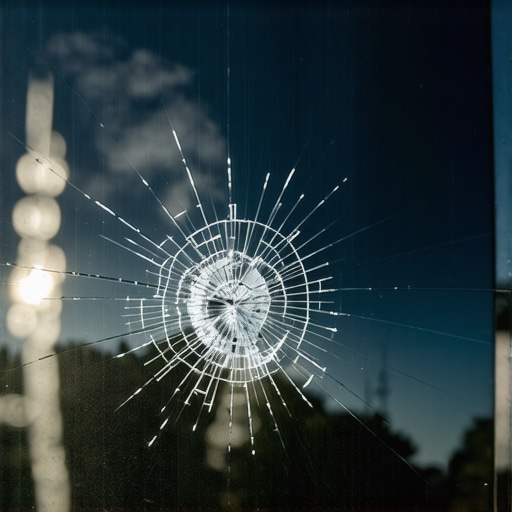
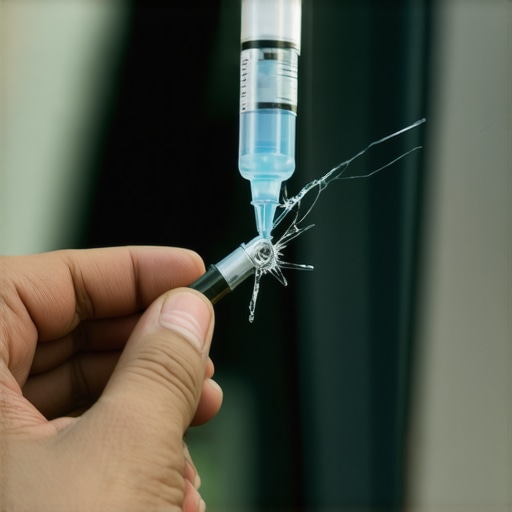
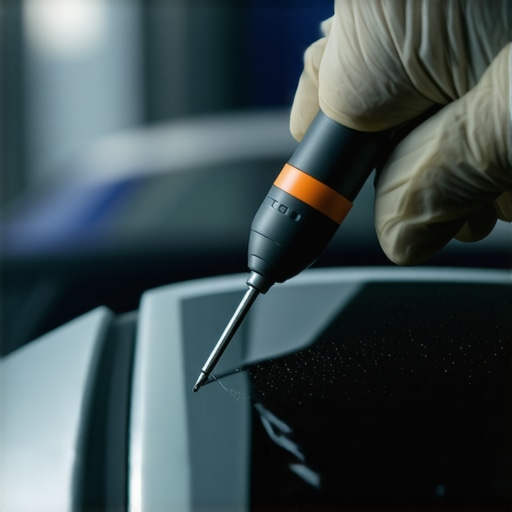
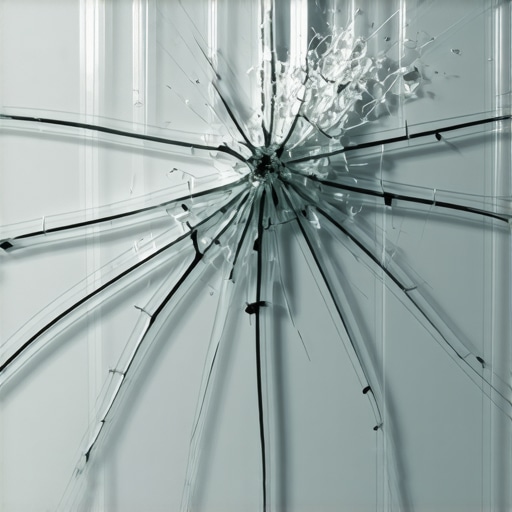
When you call for chip repair, you aren’t just paying for glue. You are paying for the injection of a high-refractive-index resin that must match the light-bending properties of the glass exactly. If the chip has been exposed to the elements for more than 48 hours, the ‘pit’ fills with microscopic road grime and car wax. Even the most skilled glass installer cannot Shim or clean a microscopic fissure once it is contaminated. The resin will not bond. This is why we insist on same-day intervention. We use a vacuum bridge to evacuate the air from the ‘Rough Opening’ of the chip—yes, we treat every fracture like a miniature architectural opening—and then we force the resin in under high pressure. If the crack has already ‘spider-webbed,’ meaning it has more than three legs extending from the center, the structural integrity is compromised beyond the limits of ASTM E2112 standards.
“The structural integrity of the glazing system relies on the continuity of the glass surface; any breach, however small, compromises the entire assembly under wind load.” – ASTM E2112 Standard Practice
Climate Logic: The Southern Heat Factor
In hot, southern climates, the enemy is not the cold but the radiant energy. If your glass is hit by a rock and you leave it in the sun, the air trapped inside the ‘Bullseye’ or ‘Star Break’ expands rapidly. This is basic thermodynamics. As the air expands, it acts like a wedge, driving the crack deeper into the glass. This is why we utilize mobile service units equipped with UV-shielding tents. We have to cool the glass down to a specific ‘Rough Opening’ temperature before we can even begin the chip repair. If the glass is too hot, the resin will cure prematurely, leaving a visible scar and a weak bond. We also look at the Weep Hole logic of the frame; if water cannot escape the Sash, it pools at the bottom Sill Pan, and the resulting humidity further weakens any existing rock chips through constant vapor pressure.
The Reality of ROI: Repair vs. Replacement
Many homeowners and drivers think they are saving money by waiting. But let’s look at the math. A chip repair is a fraction of the cost of a full glass replacement. Once a crack extends past the length of a credit card, the structural bond is gone. You can no longer rely on the glass to provide structural support in a rollover or a high-wind event. We don’t just ‘caulk-and-walk’ these repairs. We analyze the Muntin spacing or the frame support to ensure that once the resin is cured, the glass can again handle the positive and negative wind pressures it was designed for. Using Flashing Tape or temporary seals is a fool’s errand. You need a permanent chemical bond, and you need it before the first thermal cycle of the day occurs.
Conclusion: Precision Over Convenience
The exact moment a rock chip becomes unrepairable is the millisecond it reaches the edge of the glass or the moment it is contaminated by outside moisture. Don’t be fooled by high-pressure sales tactics suggesting that any crack can be fixed. If the structural ‘Rough Opening’ of the fracture is too large, the only safe option is a full replacement by a certified glass installer. Demand same-day service and ensure your technician understands the difference between a surface pit and a structural delamination. Your safety depends on the integrity of that glass envelope.