Why your mobile tech uses a vacuum pump for chip repairs
When you see a glass installer pull up to your driveway for a same-day chip repair, you might expect a simple squeeze of glue and a quick wipe. However, if that tech is a true professional, they are carrying a specialized vacuum bridge. To the untrained eye, it looks like a glorified suction cup. To a master glazier with 25 years in the field, it is the only way to ensure the structural integrity of the laminated glass is restored. A chip is not just a cosmetic blemish: it is a structural breach in an amorphous solid that is constantly under tension. Understanding why a vacuum pump is non-negotiable requires us to look at the molecular level of the glass and the physics of atmospheric pressure.
The Condensation Crisis: A Master Glazier Narrative
I recall a specific call from a homeowner who was convinced their high-performance laminated window was failing. They called me in a panic because their new windows were sweating in a very localized spot: right around a small stone chip. I walked in with my hygrometer and showed them the humidity was 60 percent. It was not the windows failing: it was their lifestyle choices combined with a breach in the glass envelope. The chip had allowed moisture to penetrate the space between the glass ply and the PVB (Polyvinyl Butyral) interlayer. Without a vacuum-sealed repair, that moisture remains trapped, leading to delamination. I had to explain that simply smearing resin over the top would trap that humidity, eventually turning a tiny chip into a massive milky cloud of glass failure. This is why we use a vacuum: to evacuate the contaminants before the healing begins.
The Physics of the Vacuum Phase
Glass is an amorphous solid. It does not have a neat crystalline structure. When an object impacts the glass, it creates a void. This void is immediately filled with air, microscopic glass shards, and moisture from the environment. If you attempt to inject resin into that void without removing the air, you are fighting physics. The air acts as a cushion, preventing the resin from reaching the microscopic fissures at the ends of the break. We call these the legs of the chip. A mobile service professional uses a vacuum pump to create a pressure differential. By lowering the pressure inside the break to a near-vacuum, the air is forced out. This is not a one-step process. A professional glazier will cycle the pump between vacuum and pressure modes. The vacuum pulls the air out, and the subsequent pressure phase forces the resin into the now-empty space. This ensures the resin reaches every micron of the Rough Opening created by the impact.
“Installation and repair procedures are just as critical as the glass performance itself. A high-performance glass system repaired poorly will eventually fail under thermal load.” NGA Glazing Manual
Resin Viscosity and Refractive Index
The resin used in glass repair is a sophisticated polymer designed to mimic the refractive index of the glass itself. Refractive index refers to how light bends as it passes through a medium. If the resin has a different index than the glass, you will see a scar. But the resin cannot do its job if it cannot penetrate the break. This is where the vacuum pump is essential for managing resin viscosity. Viscosity is measured in centipoise. A low-viscosity resin flows easily into tight cracks but requires a deep vacuum to clear the path. As the mobile tech applies the bridge, they are monitoring the flow. If they see a tiny bubble, the repair is a failure. That bubble is a pocket of air that will expand when the sun hits the glass, leading to a crack. In the world of glass, we talk about the Dew Point. If the temperature of the glass drops below the dew point of the air trapped in a chip, you get internal condensation. The vacuum pump is the only tool that effectively eliminates this risk by removing the air entirely before the UV curing process begins.
Climate Logic: Thermal Stress and Expansion
The necessity of a vacuum-assisted repair is magnified by your local climate. In regions where there is a significant delta between indoor and outdoor temperatures, glass undergoes intense thermal stress. If you are in a cold northern climate, you are likely running a heater inside while the exterior pane is subjected to sub-zero temperatures. This creates a temperature gradient across the glass thickness. The exterior pane wants to contract, while the interior pane remains stable. This tension puts immense pressure on any chip or crack. If that chip was repaired without a vacuum, the microscopic air pockets left behind will expand and contract at different rates than the glass and resin. This is the primary cause of a chip turning into a full-length crack across the Sash. A same-day chip repair is only a permanent fix if the vacuum phase has successfully removed the air that would otherwise act as a wedge during thermal expansion. We must also consider the UV radiation. In southern climates, the sun’s radiant heat can bake a glass surface to temperatures exceeding 150 degrees Fahrenheit. Without a vacuum-sealed bond, the resin can pull away from the glass walls, a phenomenon known as daisy-shaping.
“Standard practice for the repair of laminated automotive or architectural glass requires the evacuation of air from the break prior to the introduction of repair resin to ensure long-term stability.” NWRA ROLAGS Standard
The Anatomy of the Repair Bridge
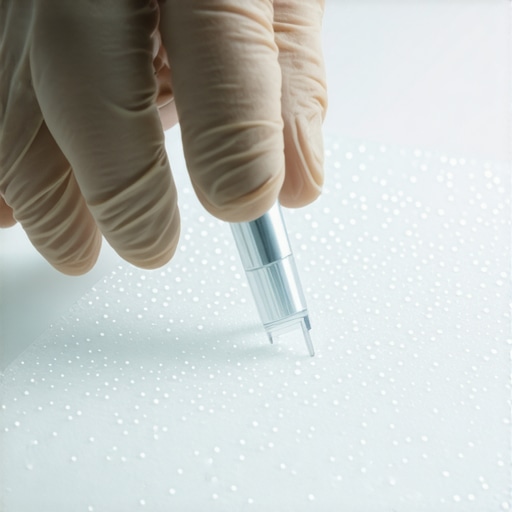
The tool the tech uses is called a bridge or an injector. It consists of a leveling assembly that sits over the impact point. The tech must carefully Shim the bridge to ensure it is perfectly perpendicular to the glass surface. Even a slight tilt can lead to an improper seal, allowing air to leak back into the vacuum chamber. Once the bridge is set, the injector is lowered. The tech then engages the vacuum pump. You can actually see the air being pulled out of the break: it looks like tiny silver bubbles rising through the resin. This is the moment of truth. If the tech is rushing, they might skip the second or third vacuum cycle. But a master glazier knows that some chips, especially star breaks, have hidden chambers that only open up after several minutes of sustained vacuum. Only after the tech is certain that every leg of the break is clear do they switch the pump to pressure mode to lock the resin in place.
The Role of the PVB Interlayer
Architectural and automotive glass is typically laminated, meaning there is a plastic interlayer (PVB) sandwiched between two sheets of glass. When a chip occurs, it usually only affects the outer layer. However, the impact often creates a tiny separation between the glass and the PVB. This is called delamination. If a mobile service tech does not use a vacuum, they cannot hope to fill that tiny separation. The vacuum pulls the resin into that gap, re-bonding the glass to the interlayer. This is vital for safety. In the event of a second impact, that re-bonded area will hold together. If the repair was just a surface-level resin dab, the glass would be significantly weaker at that point. We do not just look at the glass: we look at the entire assembly, from the Glazing Bead to the interior Muntin. While a chip repair is localized, its impact on the structural integrity of the Operable window or the windshield is total. Water management is a science, and a vacuum pump is the primary tool for keeping water out of the laminate layers where it can cause the most damage.
Why Same-Day Service Matters
The longer a chip sits, the more contaminants it collects. Road salt, windshield washer fluid, and dust all settle into the break. A same-day glass installer is preferred because the break is still clean. However, even with same-day service, the vacuum pump is the only way to ensure those fresh contaminants are removed. If you wait, the moisture in the air will begin to oxidize the PVB interlayer, leading to a permanent yellowing or clouding that even the best resin cannot fix. When you hire a mobile service, you are paying for the expertise of the tech and the quality of their vacuum equipment. A cheap repair kit from a big-box store relies on a simple plunger, which rarely creates enough of a vacuum to be effective. A professional-grade vacuum pump can reach 28 inches of mercury, which is necessary for a truly clear and structural repair. Don’t be fooled by high-pressure sales tactics that claim the vacuum isn’t necessary for small chips. The physics do not change based on the size of the hole. Air is the enemy of glass, and the vacuum pump is the only weapon we have to defeat it.
“,”image”:{“imagePrompt”:”A close-up, high-detail shot of a professional glass repair bridge mounted on a laminated glass surface. A vacuum pump is connected via a thin hose, and tiny air bubbles are visible being pulled out of a star-shaped chip. The lighting is sharp, showing the texture of the glass and the precision of the metal repair tool.”,”imageTitle”:”Professional Vacuum Bridge for Glass Chip Repair”,”imageAlt”:”A professional glazier using a vacuum pump and bridge to repair a glass chip in a mobile service setting.”},”categoryId”:1,”postTime”:”2023-10-27T10:00:00Z”}