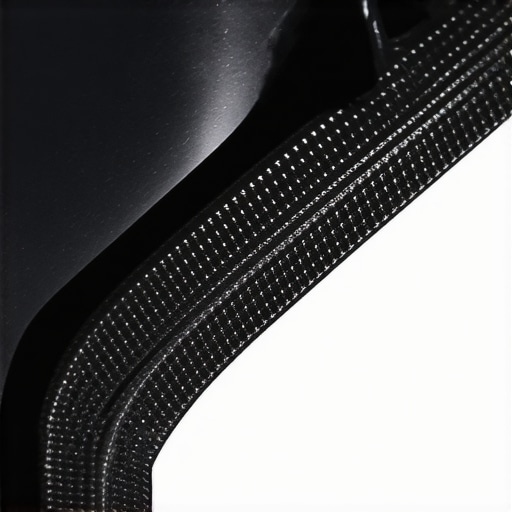
Why your windshield black border is crucial for the adhesive
The Mystery of the Ceramic Frit: More Than Just Aesthetics
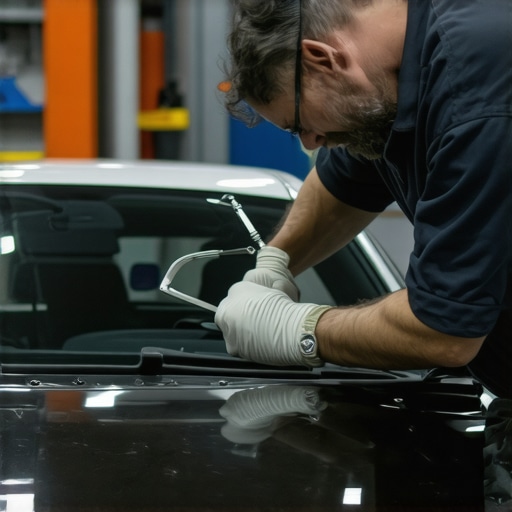
If you look closely at the edges of your vehicle’s windshield, you will notice a persistent black band that transitions into a series of diminishing dots. In the glazing trade, we do not call this a decoration. This is the ceramic frit. As a glass installer with over two decades in the field, I have seen too many DIY attempts and cut-rate mobile services treat this border as a mere visual border. In reality, that black band is the frontline of your vehicle’s structural integrity. When we talk about same-day mobile service, the speed of the job never overrides the physics of the bond between that frit and the urethane adhesive.
“Installation is just as critical as the window performance itself. A high-performance window installed poorly will fail.” AAMA Installation Masters Guide
I once pulled a windshield out of a late-model SUV in a humid coastal town where the glass literally lifted away from the frame with a suction cup. The previous installer had skipped the essential step of cleaning the frit and applying a proper primer. The urethane had stayed stuck to the pinchweld, but it never shook hands with the glass. This is the equivalent of building a house on a foundation of sand. That black border, the frit, is actually a baked-in ceramic layer that provides a roughened surface at the microscopic level, allowing the high-viscosity urethane to bite into the glass. Without it, you are relying on the smoothness of the glass itself, which is a recipe for catastrophic failure during an airbag deployment.
The Science of UV Protection and Polymer Degradation
Why is it black? The answer lies in the destructive power of ultraviolet radiation. Urethane, the primary adhesive used by any professional glass installer, is incredibly strong but has a fatal weakness: it is photosensitive. Prolonged exposure to sunlight will cause the polymer chains in the adhesive to break down, a process known as photo-degradation. This is where the black border becomes a literal shield. By being opaque to UV rays, the frit protects the bond line from the sun’s energy. If your windshield lacked this border, the adhesive would eventually turn brittle and chalky, losing its grip on the rough opening of the vehicle frame. When we perform a chip repair, we are dealing with the optical layer, but when we do a full replacement, we are managing the structural chemistry of this bond.
Thermal Stress and the Dot Matrix
The transition from a solid black band to a dot matrix is not for style; it is an exercise in thermal management. Glass is a poor conductor of heat, but the black ceramic absorbs solar energy rapidly. In a high-heat climate, the temperature differential between the black border and the clear center of the windshield can be staggering. This gradient creates internal stress in the glass. The dot matrix acts as a thermal buffer, tapering the heat absorption so the glass does not suffer from thermal shock or cracking. This is particularly vital for mobile service technicians who are often performing installs in direct sunlight. We have to account for the expansion and contraction of the glass while the urethane is still in its initial tack phase.
“The retention of the windshield is a primary safety function, as it provides a backstop for the passenger side airbag and contributes to the structural rigidity of the roof.” FMVSS 212 Structural Integrity Standards
The Anatomy of the Bond: Urethane and the Pinchweld
When a glass installer prepares your vehicle, they are looking at the pinchweld, the metal ledge where the glass sits. We must ensure that the rough opening is free of corrosion. If I see a speck of rust, the same-day service slows down immediately. You cannot bond to oxidation. We use a specific bead geometry, often a triangular cut, to ensure that when the glass is set, the urethane collapses and spreads evenly across the ceramic frit. This ensures a watertight seal that can withstand the positive and negative pressures of highway speeds. Unlike a standard home window where a glazing bead might hold the glass in place, your windshield is a stressed member of the vehicle’s chassis. It provides up to 60 percent of the structural strength in a rollover accident.
Climate Logic: Why Temperature Dictates the Install
The physics of the adhesive bond changes based on your geography. In colder northern climates, the viscosity of the urethane increases, making it harder to extrude and slower to cure. We often have to use chemically accelerated adhesives to ensure a Safe Drive Away Time (SDAT). Conversely, in southern regions with high humidity, the moisture in the air actually speeds up the curing process of many urethanes, but it can also cause the adhesive to ‘skin over’ too quickly before the glass is even set. A professional glass installer monitors the dew point and ambient temperature before the first bead of glue is ever laid down. This is the difference between a window that stays put for twenty years and one that starts whistling on the highway after six months.
The Role of the Glass Installer in the Modern Era
Modern windshields are no longer just pieces of glass; they are sensor platforms. With the advent of ADAS (Advanced Driver Assistance Systems), cameras are often mounted directly behind the glass, looking through a specific cleared section of the frit. If the glass is not positioned with millimeter precision within the rough opening, your lane-departure warning or emergency braking could fail. This is why we use shims and spacers to ensure the glass is perfectly centered. The frit provides the necessary masking for these sensors, ensuring that the camera only sees the road and not the interior reflections of the dashboard. When you call for a chip repair or a full replacement, you are hiring someone to calibrate the most sensitive safety component of your car.
Final Verdict: Respect the Black Band
Next time you see a technician performing a mobile service on your vehicle, look for the attention they pay to that black border. If they are touching it with greasy fingers or failing to prime it, they are compromising your safety. The frit is the bridge between the chemical world of adhesives and the physical world of automotive glass. It manages heat, blocks UV, and provides the mechanical key for the urethane to grab. It is the silent protector of the bond. Never settle for a ‘caulk and walk’ technician who treats your windshield replacement like a simple glass swap. It is a complex glazing operation that requires precision, patience, and a deep respect for the materials involved.