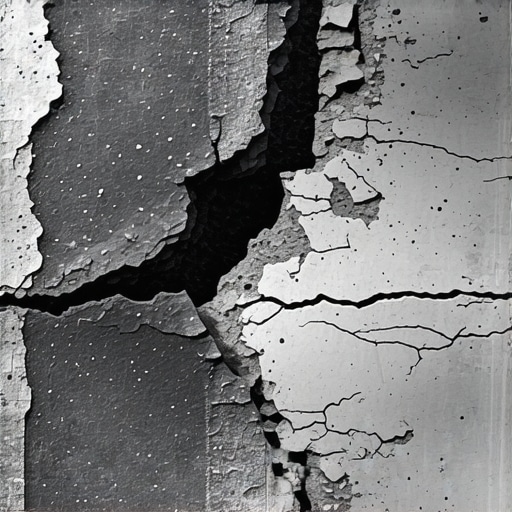
The difference between a surface pit and a structural crack
The Microscopic Reality of Glass Failure
In twenty-five years of handling glazing units, I have seen homeowners ignore a tiny ‘flea bite’ on their glass only to wake up to a six-foot fracture. As a master glazier, I don’t look at glass as a static object. It is a supercooled liquid under constant tension. When we discuss the difference between a surface pit and a structural crack, we are really talking about the physics of stress distribution across the glazing bead and the sash. A professional glass installer knows that every imperfection is a potential failure point, and understanding the ‘why’ behind the damage is the only way to determine if a chip repair is viable or if a full replacement is the only safe path forward.
The Stress Point Scare: A Narrative of Neglect
I recall a call from a homeowner in a high-wind zone who had a small pit in their tempered sliding door. The previous mobile service technician had told them it was just cosmetic. I walked in with my digital hygrometer and a laser level, and I could see the deflection in the frame. That ‘cosmetic’ pit was located right at the edge of the rough opening where the shim had slipped, putting uneven pressure on the glass. Within an hour of my arrival, the temperature dropped, the frame contracted, and that pit served as the epicenter for a catastrophic failure. It did not just crack; it granulated. This is why a same-day assessment is not just a convenience; it is a safety requirement. If that installer had understood the shingle principle of water management and structural load, they would have known that any pit near the edge of a sill pan is a ticking time bomb.
“Installation is just as critical as the window performance itself. A high-performance window installed poorly will fail.” – AAMA Installation Masters Guide
Surface Pits: The Physics of the ‘Flea Bite’
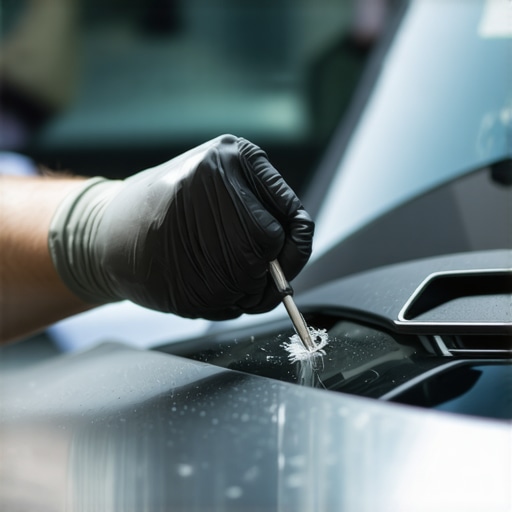
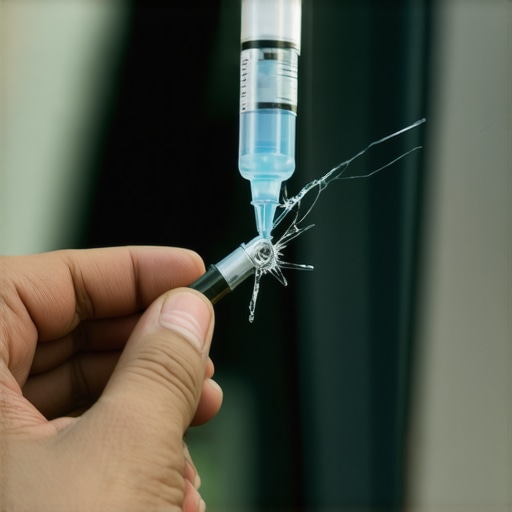
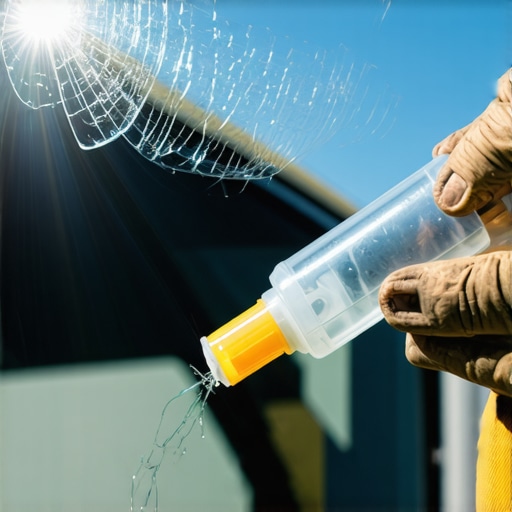
A surface pit is generally a localized impact crater where a small amount of glass has been displaced. In the industry, we call these ‘pockmarks’ or ‘flea bites.’ They typically occur on the outer surface (Surface #1) from debris. From a technical standpoint, a pit is safe if it does not penetrate the compression layer of the glass. In annealed glass, this is a judgment call; in tempered glass, any pit that reaches the center tension zone will cause the entire pane to explode. When a glass installer performs a chip repair, they are using a clear resin with a refractive index nearly identical to glass. This resin is injected under pressure to fill the void, restoring the glazing bead‘s aesthetic while preventing moisture from entering the pit and expanding during a freeze-thaw cycle.
Structural Cracks: When the Molecular Bond Breaks
A structural crack is an entirely different beast. These are often caused by thermal stress or frame deflection. If the rough opening was not sized correctly, or if the flashing tape was applied in a way that traps moisture against the wooden sash, the resulting rot can cause the frame to sag. This sag puts a ‘point load’ on the glass. Unlike a pit, a crack has a ‘tip’ where the stress is concentrated. As the building shifts or temperatures change, that stress tip moves, extending the crack. This is the difference between a chip repair and a total loss.
“Structural integrity of the fenestration assembly depends on the continuous support of the glass within the frame and the frame within the wall.” – ASTM E2112 Standard Practice
The Climate Logic: Why U-Factor and Condensation Matter
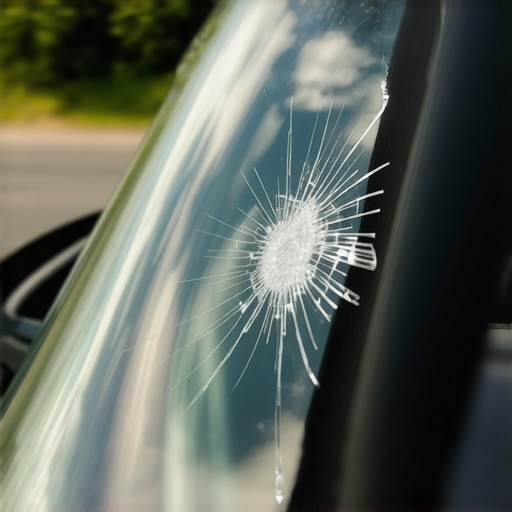
In colder climates, the delta between the interior and exterior temperatures creates a massive thermal pull on the glass. If you have a crack, the U-Factor of that window drops to near zero. The Argon or Krypton gas fill escapes, and you lose your thermal break. A mobile service must evaluate if the crack is a ‘stress crack’ (usually starting from the edge and moving inward in a wavy pattern) or an ‘impact crack’ (a starburst pattern). If it is thermal stress, simply replacing the glass won’t work; you have to fix the weep hole or the sill pan that is causing the temperature imbalance. Without addressing the root cause, your new same-day glass will crack in the exact same spot within a year.
Identifying the ‘Runaway’ Fracture
How do you know if you are looking at a repairable pit or a terminal crack? First, look at the edges. A pit is circular and contained. If you see even a hair-thin line extending from the pit, it has become a fracture. Second, check the operable parts of the window. If a window becomes difficult to slide or the muntin looks crooked, the glass is likely under structural pressure. A glass installer will use a suction cup to gently apply pressure near the damage; if the damage moves, it is structural. Professional chip repair is for the center-of-glass impacts that do not threaten the overall stability of the pane.
The Final Verdict on Maintenance
Do not trust an installer who relies on a ‘caulk-and-walk’ philosophy. If you have a pit, get a mobile service to seal it immediately to prevent water ingress. If you have a crack, stop looking for a chip repair solution and start looking at why your frame is failing. Whether it is a failed flashing tape or a blocked weep hole, the glass is usually just the messenger for a deeper structural issue. Understanding the physics of glass integrity is the difference between a home that is weather-tight and one that is slowly rotting from the inside out.