The best way to protect your screen from micro-scratches
Understanding the Vulnerability of Architectural Glass
A homeowner called me in a panic because their brand new floor-to-ceiling tempered panels were covered in hazy micro-webs. I walked in with my hygrometer and a high-intensity inspection lamp. I showed them the humidity was 60 percent and the dust on the glass wasn’t just dirt; it was abrasive silica. It wasn’t a defect in the windows; it was their maintenance lifestyle and the lack of protective understanding during a nearby renovation. This is the reality of modern glazing. We are no longer dealing with simple soda-lime glass in every opening. We are dealing with sophisticated optical systems. When people talk about a screen or a glass pane, they often overlook the fact that glass, while hard, is highly susceptible to the laws of friction and thermal stress.
“Installation is just as critical as the window performance itself. A high-performance window installed poorly will fail.” – AAMA Installation Masters Guide
The best way to protect your glass from micro-scratches starts with understanding the molecular battle on the surface. Glass is rated around 5.5 to 7 on the Mohs scale of hardness. Common environmental debris, particularly in areas with high wind or construction, often contains quartz or sand which sits at a 7. When these particles settle on your glass, any physical movement across the surface acts like a diamond-tipped stylus. This is why a mobile service for same-day chip repair is so vital. A chip is not just a cosmetic flaw; it is a point of concentrated stress where the glass can begin to propagate a crack. If you do not address these minor abrasions immediately, the expansion and contraction cycles of the glass will exacerbate the damage.
The Physics of Surface Abrasion and SHGC
In hot climates, such as those found in Texas or Florida, the Solar Heat Gain Coefficient (SHGC) is the metric that dictates your comfort. We often use Low-E coatings on Surface #2 to reflect the sun’s heat before it can enter the building envelope. However, if these surfaces are not protected from micro-scratches, the integrity of the coating can be compromised. A micro-scratch isn’t just a line you see; it’s a valley in the glass that can trap moisture and pollutants. In a high-heat environment, that trapped moisture expands, leading to potential delamination of the coating or, in extreme cases, contributing to spontaneous breakage if the glass is under high thermal stress.
Protecting the glass requires a multi-layered approach. First, we look at the glazing bead and the weep hole system. If your windows are not draining water properly, minerals can build up on the glass surface. These mineral deposits, often called hard water spots, are incredibly difficult to remove without causing further micro-scratches. A professional glass installer will ensure that the rough opening is properly flashed with flashing tape and that a sill pan is installed. This manages water flow and prevents the stagnant conditions that lead to glass degradation. If the sash is not perfectly square within the frame, the operable parts of the window may rub against the weatherstripping, dragging grit across the glass surface with every movement.
Why Same-Day Chip Repair is Non-Negotiable
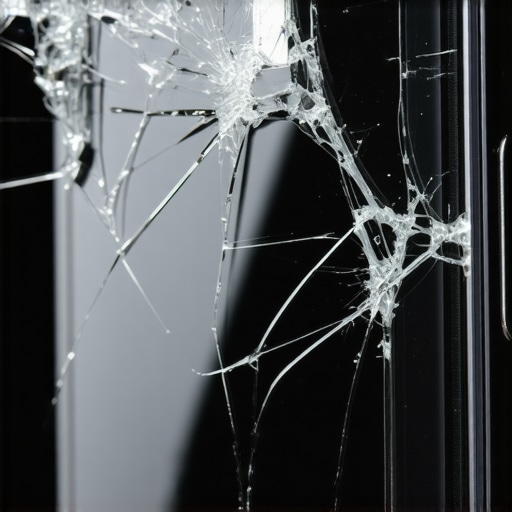
When I talk about chip repair, I am talking about structural stabilization. A chip in a piece of tempered or laminated glass disrupts the tension-compression balance. Tempered glass is under immense internal stress; that is what makes it strong. But a deep scratch or a small chip provides a path for that stress to release. Using a mobile service for an immediate fix involves injecting a high-grade resin that matches the refractive index of the glass. This resin bonds to the glass at a molecular level, filling the micro-scratch or chip and preventing it from becoming a full-blown fracture. This is especially critical in regions where temperature swings are common. A cold night followed by a hot, sunny morning can turn a 2mm chip into a 2-foot crack in a matter of hours.
“Properly designed and installed flashing is the most effective means of preventing water intrusion into the wall assembly at the window-to-wall interface.” – ASTM E2112 Standard Practice
To truly protect the glass, you must also consider the muntin bars and how they interact with the panes. In many modern windows, these are internal, but for those with external grids, the points of contact are prime locations for grit accumulation. During the installation phase, I always insist on a protective film that remains until the very last coat of paint is dry. I have seen too many hundred-thousand-dollar glazing packages ruined because a drywaller used a metal scraper to remove mud from a pane. That is a crime in the world of professional glazing. A micro-scratch created by a metal tool is deep and jagged, and it can never be fully polished out without creating a lens effect in the glass.
The Technical Maintenance Protocol
If you want to maintain the optical clarity of your glass, you must abandon the idea of using old newspapers or dry rags. You need to use a high-volume, low-pressure rinse to remove the heavy particulates first. Only then should you use a dedicated glazing lubricant and a microfiber cloth. For those in coastal environments, the salt spray adds another layer of complexity. Salt crystals are sharp. If you wipe a salt-crusted window with a dry cloth, you are essentially sanding the glass. This is where the importance of a professional glass installer comes in; we can apply hydrophobic coatings that make the glass surface so smooth that water and debris simply cannot grip it. This reduces the frequency of cleaning and significantly lowers the risk of micro-scratches occurring during the maintenance cycle. Remember, the goal is to keep the glass as pristine as the day it was pulled from the lehr at the factory. Every scratch is a failure of the protection system, and every chip is a countdown to a replacement bill you don’t want to pay. Invest in same-day repair and professional-grade coatings to keep your view clear and your glass structurally sound for the next thirty years. “