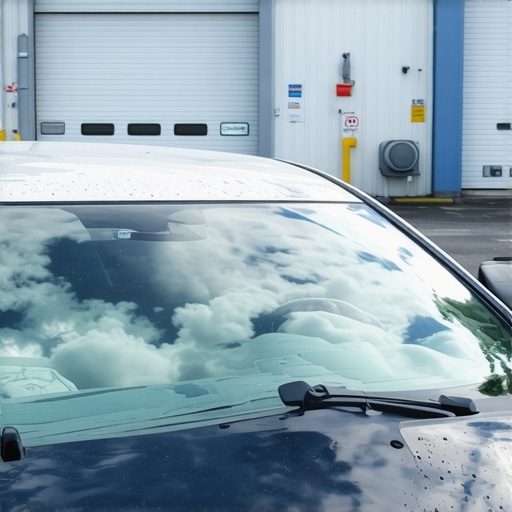
Why your windshield resin takes longer to cure today
Understanding the Physics of the Cure in Modern Glass Repair
As a master glazier who has spent nearly three decades looking at everything from the glazing bead on a storefront to the complex laminate of a luxury sedan, I can tell you that glass is alive. It reacts to every degree of temperature change and every percentage point of humidity. When you call for a mobile service for a same-day chip repair, you are at the mercy of the atmosphere. A homeowner called me in a panic because their new windows were ‘sweating.’ I walked in with my hygrometer and showed them the humidity was 60 percent. It wasn’t the windows; it was their lifestyle. The same principle applies to your vehicle. If your glass installer is struggling to get that resin to kick today, it isn’t necessarily the product. It is the physics of the environment.
“Installation is just as critical as the window performance itself. A high-performance window installed poorly will fail.” – AAMA Installation Masters Guide
The resin used in a modern chip repair is not simple glue. It is a sophisticated anaerobic or UV-activated polymer designed to match the refractive index of the glass exactly. For a same-day service to be successful, the glass installer must navigate the variables of the dew point and ambient ultraviolet radiation. If the sun is obscured by heavy cloud cover, the wavelength of light required to trigger the photo-initiators in the resin is filtered out. This slows the cross-linking of molecules, turning what should be a ten-minute cure into a forty-minute waiting game.
The Science of Thermal Mass and Molecular Bonding
Glass is a significant heat sink. In a residential setting, we talk about the rough opening and how we shim a window to ensure it sits perfectly level within the structure. In the world of mobile service, the ‘rough opening’ is the chip itself, and the resin must be shimmed into that microscopic space using pressure and vacuum cycles. If the glass temperature is too low, the resin viscosity increases. It becomes thick, stubborn, and refuses to flow into the micro-cracks that radiate from the impact point. This is why a professional glass installer will often use a pre-heating element or a heat lamp to stabilize the surface before the injection begins.
In colder climates, such as those found in Minneapolis or Chicago, the enemy is the U-Factor of the glass itself. While a low U-Factor is excellent for keeping heat inside a home, the thermal conductivity of a windshield means that the outer surface can be significantly colder than the interior air. This temperature differential creates stress. If an installer applies a high-viscosity resin to a cold, stressed surface, the bond will be superficial. It might look clear for an hour, but as soon as the vehicle hits a pothole or the defroster kicks on, the repair will fail because the resin did not achieve a deep molecular anchor.
The Role of UV Radiation and Atmospheric Interference
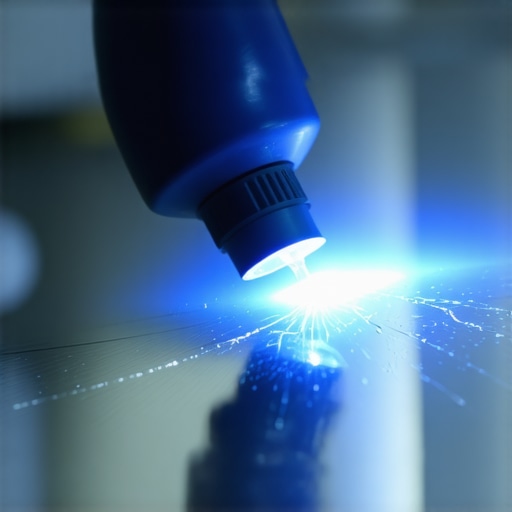
Why does the resin take longer today? Look at the sky. Even if it looks bright, the presence of specific aerosols or high-altitude moisture can scatter the UV-A and UV-B rays. For a mobile service technician, the curing lamp is their most vital tool, but it must compete with the ambient environment. In high-humidity scenarios, a thin film of moisture can settle into the pit of the chip. Water is the ultimate contaminant in glazing. Just as a sash in a wood window will rot if the weep hole is blocked and water sits in the sill pan, a windshield repair will become cloudy if moisture is trapped beneath the curing resin.
“The successful installation of any glazing material is dependent upon the environmental conditions during the application of sealants and adhesives.” – ASTM E2112 Standard Practice for Installation of Exterior Windows
We must also consider the chemical composition of the resin. Most high-end resins are acrylic-based. These polymers require a specific energy threshold to begin the polymerization process. When the temperature drops, the kinetic energy of the molecules decreases. They move slower, find their partners slower, and bond slower. A professional knows that on a day like today, they cannot rush the process. The same-day promise depends on technical patience, not just speed.
The Importance of Professional Grade Mobile Service
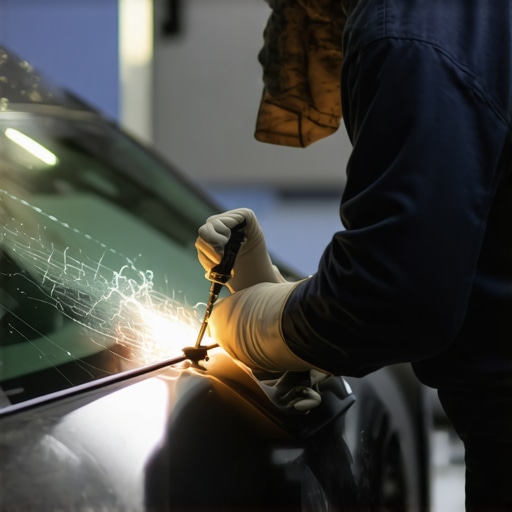
Many consumers believe that a chip repair is a DIY task they can perform with a kit from a hardware store. This is a fallacy that ignores the complexity of glass tension. A master glazier understands that the glass around a chip is under incredible load. The windshield is a structural component of the vehicle. If the resin does not cure correctly due to environmental mismanagement, the structural integrity is compromised. A mobile service professional uses vacuum injectors to remove the air from the break before introducing the resin. This ensures that when the UV light finally hits the repair, there are no air pockets to expand and contract with the heat.
We also have to look at the ‘Refractive Index.’ This is the measurement of how light bends as it passes through a material. If the cure is too slow or too fast, the resin can shrink or distort. This creates a ‘ghost’ or a shimmer in the glass that can be distracting to the driver. A controlled cure, even if it takes longer on a cloudy or cold day, is always preferable to a rushed job that leaves the glass looking like it has a permanent smudge.
Climate-Specific Strategies for Glass Technicians
In the southern heat, the challenge is the opposite. The glass is so hot that the resin can flash-cure or boil before it has fully permeated the break. Here, the glass installer must use a cooling strategy, perhaps working in the shade or using a specialized cooling gel around the repair site. But today, with the slow cure, we are looking at the lack of energy. The resin is waiting for the photons to strike. Without those photons, the liquid remains a liquid, vulnerable to dust, rain, and wind.
When I think about the thousands of windows I have installed, the lesson is always the same: respect the material. Whether you are fitting a double-hung sash into a frame or injecting resin into a bullseye break on a highway, the glass dictates the timeline. If your technician tells you it will take an extra twenty minutes today, they aren’t being slow; they are being a craftsman. They are waiting for the chemistry to catch up with the environment. They are ensuring that the bond is permanent and that the weep hole of the repair is clean, the shim of the resin is level, and the glazing bead of the finish is smooth.
Final Thoughts on Maintenance and Care
Do not ignore a chip because the weather is bad. In fact, that is when you need a professional the most. A chip that is exposed to the freeze-thaw cycle of a damp, cold day will quickly turn into a crack that spans the entire width of the glass. By the time that happens, a simple repair is no longer an option, and you are looking at a full replacement. Trust the mobile service experts who understand the nuances of the cure. They know why it takes longer today, and they have the tools to make sure it is done right regardless of the sky above.
[REPLACE_WITH_IMAGE_PLACEHOLDER]