Why a cold windshield cracks faster when the defroster hits it
The Morning the Glass Screamed: A Lesson in Thermal Dynamics
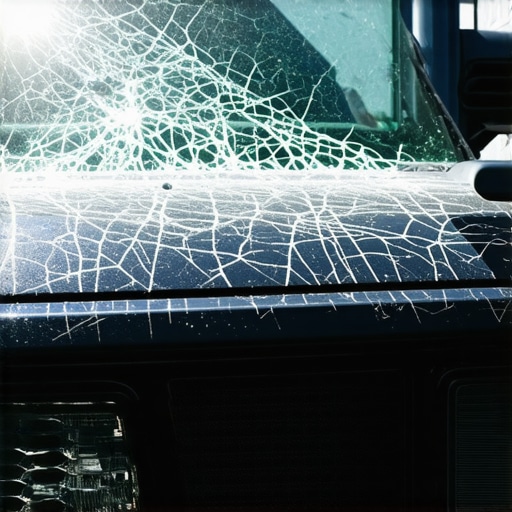
In my twenty-five years as a glass installer, I have seen every manner of structural failure imaginable. I have witnessed high-rise curtain walls buckle under wind load and historic wood sash windows rot into mulch because of poor water management. But one of the most common calls I get during a deep freeze involves a homeowner standing in their driveway, staring at a massive fissure across their windshield that was not there five minutes prior. A driver called me recently in a panic because their windshield was ‘sweating’ on the inside, and as soon as they blasted the defroster, a loud crack echoed through the cabin. I walked up with my hygrometer and thermal imaging camera to show them exactly what happened. It was not a defective product; it was a physics-based inevitability. The humidity inside the vehicle was high, but the real culprit was the delta between the exterior temperature and the concentrated heat of the defroster vents. This is the reality of thermal shock.
“Installation is just as critical as the window performance itself. A high-performance window installed poorly will fail.” – AAMA Installation Masters Guide
The Science of Thermal Expansion and Glass Stress
To understand why a cold windshield fails when the heat hits it, we have to look at the molecular level. Glass is an amorphous solid, primarily composed of silicon dioxide. While it appears rigid and immovable, it is subject to the laws of thermodynamics. Specifically, we must discuss the Coefficient of Thermal Expansion (CTE). When you apply heat to a substance, the molecules begin to vibrate more rapidly, requiring more space and causing the material to expand. In a building, we manage this in the rough opening by using shims and flexible sealants to allow the sash or frame to move without breaking the glass. However, an automotive windshield is bonded directly to the pinch weld of the vehicle frame with high-modulus urethane.
When your car sits in sub-zero temperatures, the glass contracts. It is under a specific state of tension. When you start the engine and immediately direct the defroster onto the base of the glass, you are introducing a radical thermal gradient. The interior surface of the glass (Surface #4 in glazing terms) begins to expand rapidly as it absorbs infrared radiation and convective heat. However, the exterior surface (Surface #1) remains at the ambient outdoor temperature. Because glass is a poor conductor of heat, the energy does not transfer through the thickness of the pane instantly. This creates a massive internal struggle. The expanding interior layer wants to grow, but the frozen exterior layer resists. If there is even a microscopic chip repair needed or a tiny pit in the glazing bead area, that flaw acts as a stress concentrator. The tension exceeds the modulus of rupture, and the crack propagates instantly.
Why the ‘Chip’ is a Ticking Time Bomb
Many drivers ignore a small stone chip, thinking it is merely a cosmetic nuisance. As a master glazier, I tell you that a chip is a structural compromise. In architectural glazing, we worry about ‘edge bite’ and ‘cover’ because the edges of a glass lite are where 80% of breaks originate. In a vehicle, a chip is a localized disruption of the glass’s integrity. When the defroster hits that chip, the thermal stress concentrates at the sharpest point of the pit. Think of it like a wedge being driven into a log. The heat provides the force, and the chip provides the starting point. This is why same-day attention to small damage is non-negotiable. If you wait until the first frost, you are no longer looking at a simple chip repair; you are looking at a full replacement. Our mobile service technicians often spend their entire mornings during the first cold snap of November replacing glass that could have been saved with a twenty-minute resin injection in July.
“Glazing systems must be designed to withstand the anticipated thermal stresses without breakage or permanent deformation.” – ASTM E2112 Standard Practice
The Role of Laminated Glass Architecture
Windshields are not a single solid piece of glass. They are a ‘sandwich’ consisting of two layers of annealed glass bonded together by a Polyvinyl Butyral (PVB) interlayer. This construction is designed for safety, ensuring that if the glass breaks, the shards remain adhered to the plastic inner layer rather than flying into the cabin. However, this multi-layered approach also complicates thermal management. The PVB layer acts as an insulator, further slowing the transfer of heat from the inside lite to the outside lite. In a North/Cold climate like Minneapolis or Chicago, the U-Factor of the glass is critical. While we don’t rate car windows with NFRC labels like we do residential operable windows, the same logic applies. Lower U-Factors mean better insulation, but the physical stress of the temperature difference remains. When the inner pane expands while the outer pane is anchored by ice, the sheer stress on the PVB interlayer is immense.
Managing the Heat: A Professional Recommendation
If you want to avoid a visit from a glass installer this winter, you must manage your ‘Dew Point’ and thermal ramp-up. Do not blast the defroster on high immediately upon starting the car. Instead, allow the cabin to warm up gradually. This allows the glass to reach a state of thermal equilibrium slowly, reducing the peak stress on the material. Furthermore, ensure your weep holes in the cowl area are clear of leaves and debris. If water pools at the base of the windshield and freezes, it creates mechanical pressure against the bottom edge of the glass, which, when combined with thermal shock from the defroster, makes a crack almost certain. As a specialist who has spent decades looking through muntins and fixing failed seals, I can tell you that prevention is always cheaper than the cure. Treat your glass with the respect a structural component deserves, and it will keep the elements out as intended.