How to spot a scammy mobile glass company
The Anatomy of a Glazing Scam
In the high-stakes world of structural integrity and thermal management, a mobile glass company that prioritizes speed over science is a liability to your property. For twenty-five years, I have lived by the physics of the wall. I have seen the aftermath of the caulk-and-walk artists who disappear as soon as their taillights fade. Identifying a fraudulent or incompetent mobile service requires more than checking a Yelp review; it requires an understanding of the rough opening, the chemical properties of sealants, and the inescapable laws of thermodynamics.
I once pulled a vinyl window out of a house in a sun-drenched coastal suburb where the header was completely black with rot. The mobile glass installer had promised a same-day swap but relied entirely on the nailing fin and a bead of cheap latex caulk instead of proper flashing tape or a sill pan. The water had been bypassing the unit for three years, feeding a fungal colony that eventually cost the homeowner twenty thousand dollars in structural repairs. This is the reality of hiring a glass installer who treats your home like a temporary fix rather than a permanent shelter.
Red Flag One: The Same-Day IGU Promise
One of the most common deceptions in the mobile glass industry involves Insulated Glass Units (IGUs). If a mobile service claims they can replace a dual-pane IGU on the same day they measure it, you are likely being lied to or sold a sub-standard product. A proper IGU consists of two panes of glass separated by a spacer bar filled with desiccant. These units must be factory-sealed with a primary seal of polyisobutylene (PIB) and a secondary seal of silicone or polysulfide. This process requires controlled environments and curing time to ensure the argon gas fill remains trapped and the dew point stays below negative forty degrees.
“Installation is just as critical as the window performance itself. A high-performance window installed poorly will fail.” – AAMA Installation Masters Guide
A scammy mobile tech might try to install a single pane of glass into a sash designed for an IGU, or worse, they might attempt to ‘re-seal’ a foggy unit on-site. Field-sealing an IGU is a temporary patch that ignores the saturated desiccant within the spacer. Within months, the internal moisture will return, causing permanent etching on the interior glass surfaces. A legitimate glass installer will measure your sash, order a custom-fabricated IGU, and return for a precise installation once the unit has been vacuum-sealed and certified.
Climate Logic: The Southern Heat Factor
In hot, southern climates, the enemy is not just the air temperature; it is the Solar Heat Gain Coefficient (SHGC). This is the fraction of incident solar radiation that actually enters a building. In regions like Texas or Arizona, a mobile installer who does not discuss the placement of the Low-E coating is doing you a massive disservice. For optimal cooling, the Low-E coating must be on Surface Number Two: the inward-facing side of the exterior pane. This reflects long-wave infrared radiation back toward the sun before it can cross the air gap. If an installer slaps in a clear, non-coated pane during a chip repair or glass swap, your air conditioning unit will work thirty percent harder to combat the radiant heat transfer.
The Technical Failure of ‘Fast’ Chip Repair
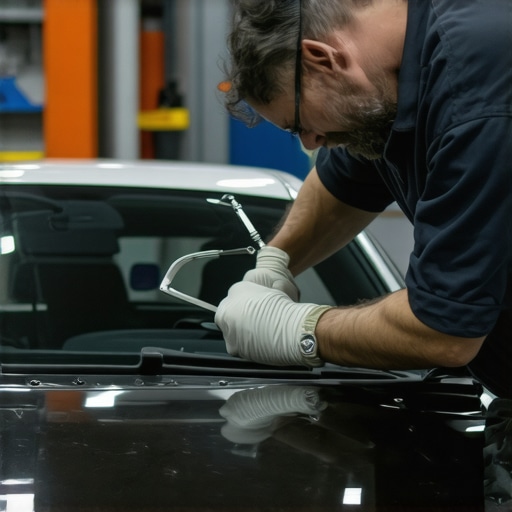
The term chip repair is often used as bait by fly-by-night mobile operations. A legitimate repair involves injecting a high-viscosity, UV-curable acrylic resin into the glass fracture. This requires cleaning the break of all moisture and debris using a vacuum pressure tool. Scammy companies often skip the vacuum phase, simply dabbing resin over the impact point. This traps air and moisture inside the chip. When the glass expands and contracts due to thermal stress, the trapped air expands, causing the chip to blossom into a full-length crack across the entire sash. You must demand to see their bridge tool and injector; if they are using a syringe and a prayer, send them away.
The Missing Hardware: Shims and Weep Holes
If you watch a mobile installer work and they do not reach for a bag of shims, your installation is doomed. A window must be perfectly level and plumb within the rough opening to ensure the operable parts of the sash function correctly. Without high-density plastic shims, the weight of the glass will eventually cause the frame to sag, leading to air bypass and binding hardware. Furthermore, check the exterior of the frame. Many incompetent installers will caulk over the weep holes. These small openings are engineered to allow water that enters the glazing bead area to exit the frame. Plugging these holes turns your window frame into a reservoir, leading to internal rot and hardware corrosion.
“The primary purpose of flashing is to shed water to the exterior of the building envelope.” – ASTM E2112
Identifying Professional Equipment
A professional mobile glass installer operates a specialized vehicle, not a sedan with a ladder rack. They should carry a variety of glazing beads, as these vinyl or aluminum strips that hold the glass in place often break during extraction. A scammer will simply goop the glass in with structural silicone and call it a day. Look for a suction cup lifter with a vacuum gauge, a digital caliper for measuring glass thickness to the nearest tenth of a millimeter, and a hygrometer to assess the site’s humidity levels. If they cannot explain the difference between a muntin and a meeting rail, they have no business touching your glazing. A master glazier knows that every component, from the sill pan to the head flashing, must work in a hierarchy of water management. Anything less is just a hole in your wall waiting to leak.
{“@context”: “https://schema.org”, “@type”: “HowTo”, “name”: “How to Verify a Mobile Glass Installer”, “step”: [{“@type”: “HowToStep”, “text”: “Inspect the technician’s tools for vacuum injection kits and digital calipers.”}, {“@type”: “HowToStep”, “text”: “Verify the location of Low-E coatings using a glass thickness and coating detector.”}, {“@type”: “HowToStep”, “text”: “Ensure the installer uses shims and maintains clear weep holes in the frame.”}]}