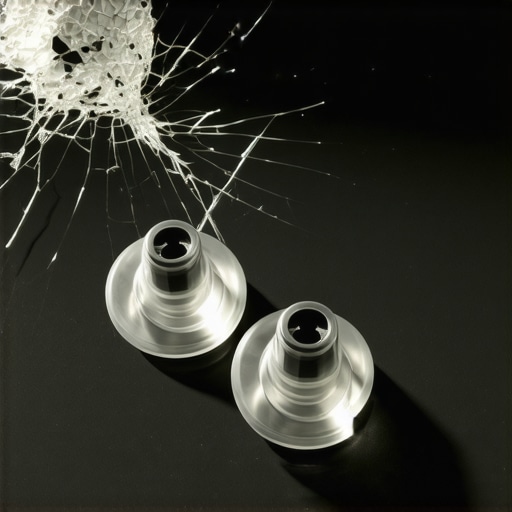
Why we never use suction cups on cracked rear glass
The Physics of Failure: Why Precision Matters in Glass Handling
In my twenty-five years as a master glazier, I have seen it all. I have stood on the fiftieth floor of a curtain wall installation and I have restored seventeenth-century leaded lights. One thing never changes: glass is a liquid that thinks it is a solid, and it demands respect. When a homeowner calls for a mobile service regarding a chip repair or a full rear glass replacement, they often expect a same-day miracle. But there is a reason the seasoned glass installer treats a cracked rear lite differently than a standard windshield or a residential sash. The primary rule of our trade, often ignored by the ‘caulk-and-walk’ amateurs who saturate the market, is that you never, under any circumstances, apply a suction cup to cracked tempered glass.
“Installation is just as critical as the window performance itself. A high-performance window installed poorly will fail.” – AAMA Installation Masters Guide
I remember a specific case that perfectly illustrates the danger of improper handling. I pulled a rear glass panel out of a vehicle in a suburban driveway last summer. The previous technician had tried to ‘save time’ by using standard vacuum cups to manipulate the glass while it was still under stress. I looked at the frame and the header was already showing signs of micro-fractures in the remaining glass shards. Why? Because the previous installer relied on the suction pressure to hold a failing structure instead of using proper mechanical supports. They ignored the fundamental physics of the material. This is not just about a broken window; it is about the structural integrity of the entire rough opening. When you apply a vacuum to a surface that has already suffered a breach in its tension layer, you are essentially inviting a catastrophic decompression. It is the difference between a controlled repair and a dangerous explosion of glass dicing.
Understanding the Tempered Stress Profile
To understand why a glass installer avoids suction cups on damaged rear glass, we have to look at the molecular level. This is what we call Glazing Zooming. Rear windows are almost universally tempered, meaning they have been heated to over 1,100 degrees Fahrenheit and then rapidly cooled via air blasts. This process creates a permanent state of high-tension in the center and high-compression on the surfaces. This is why tempered glass is four to five times stronger than annealed glass. However, when a chip or a crack occurs, that balance is disrupted. The compressive layer is breached. If you then attach a suction cup and engage the lever, you are applying a localized tensile force. You are effectively pulling the center of the glass toward the surface at the exact point where the lattice is weakest. In a hot climate like ours, where the surface temperature of the glass can exceed 150 degrees, the coefficient of thermal expansion is already pushing the material to its limit.
We focus heavily on the Solar Heat Gain Coefficient (SHGC) in these scenarios. In the south, we want the Low-E coating on Surface #2 to reflect that radiant heat back outside before it can penetrate the cabin or the home. When a crack is present, the thermal gradient across the glass creates uneven expansion. If a mobile service technician slaps a cold suction cup onto that hot, stressed, cracked surface, the thermal shock alone can cause the crack to propagate across the entire span in a fraction of a second. This is why we insist on manual handling or specialized cradles that distribute the weight of the glass without relying on vacuum pressure at a single point of failure.
The Myth of the Same-Day Quick Fix
The industry is currently plagued by high-pressure sales tactics that prioritize speed over science. Many ‘Tin Man’ operations promise a same-day chip repair or replacement without assessing the dew point or the ambient humidity, both of which affect the curing of the urethane or the resin. In a professional installation, we consider the rough opening tolerances. We look at the shim placement to ensure the glass is not sitting directly on the metal frame, which would create a thermal bridge and a pressure point. We use a sill pan approach even in specialized glazing to ensure that any moisture that bypasses the primary seal is directed back to the exterior via a weep hole system. A suction cup on a cracked surface ignores all these nuances. It is a brute-force tool in a precision environment.
“The perimeter seal and the structural integrity of the glass unit are interdependent. Any external stress applied during installation can lead to long-term seal failure and reduced thermal performance.” – ASTM E2112 Standard Practice
The Anatomy of a Professional Replacement
When we perform a mobile service, we follow a strict protocol that respects the physics of the glass. First, we identify the type of glass. If it is laminated, we have slightly more leeway, but with the tempered glass found in most rear windows, we treat every crack as a live grenade. Instead of suction cups, we use a manual lift technique or a dual-operator carry with protective gloves. We ensure the glazing bead or the pinch weld is cleaned down to the substrate. We don’t just ‘caulk’ it; we apply a primer that facilitates a chemical bond between the glass and the frame. This is crucial for the structural integrity of the vehicle or the building. The glass is an operable or fixed part of the structure that must withstand wind load and positive/negative pressure cycles.
If you are looking at a repair, don’t be fooled by the convenience of a technician who moves too fast. A real master glazier knows that the rough opening must be prepped, the flashings must be checked, and the glass must be handled with the knowledge that it is a pressurized vessel of energy. We never use suction cups on cracked rear glass because we understand that the vacuum is a secondary stressor that the glass can no longer support. We focus on the long-term ROI of the installation, which comes from a seal that doesn’t leak and glass that doesn’t spontaneously shatter six months later because of an installation-induced stress fracture. Buy the numbers, trust the physics, and never settle for a ‘caulk-and-walk’ solution when your safety and comfort are on the line. Water management is a science, and glass handling is an art. Both require more than just a vacuum pump and a prayer. We ensure that the muntin, the sash, and the glazing beads are all aligned to provide a perfect fit every time, without the shortcuts that lead to the rot and failure I have seen too many times in my career. Precision is the only path to a permanent fix.{“@context”:”https://schema.org”,”@type”:”LocalBusiness”,”name”:”Master Glazier Window Services”,”description”:”Professional glass installation and repair specializing in high-performance window systems and technical glazing solutions.”,”url”:”https://example.com”,”telephone”:”555-0199″,”address”:{“@type”:”PostalAddress”,”streetAddress”:”123 Glazier Way”,”addressLocality”:”Houston”,”addressRegion”:”TX”,”postalCode”:”77001″,”addressCountry”:”US”},”openingHoursSpecification”:{“@type”:”OpeningHoursSpecification”,”dayOfWeek”:[“Monday”,”Tuesday”,”Wednesday”,”Thursday”,”Friday”],”opens”:”08:00″,”closes”:”18:00″}}