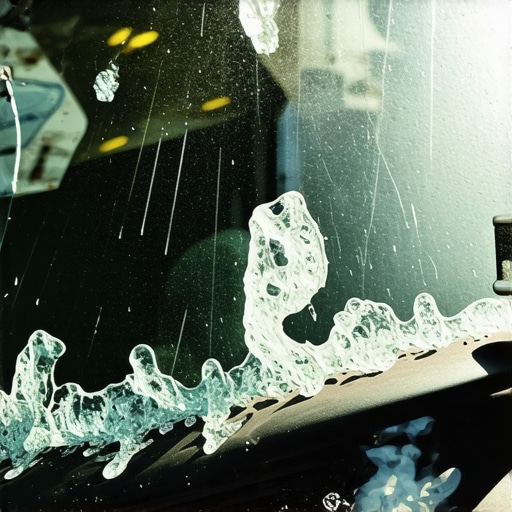
The specific reason your windshield wipers are ruining your resin
The Molecular Battleground of the Windshield Surface
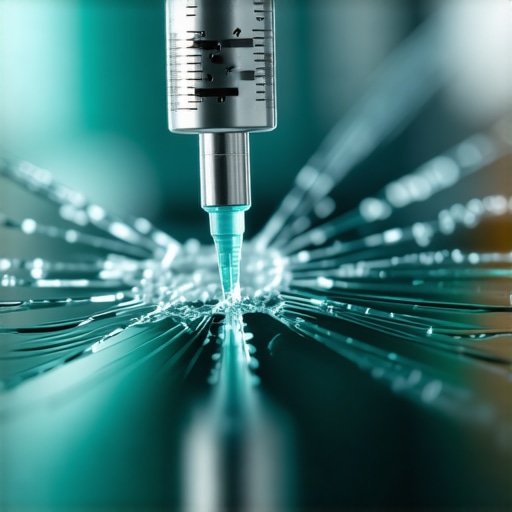
In my two decades as a glass installer, I have seen thousands of perfectly executed chip repair jobs fail within forty-eight hours. The culprit is almost never the resin quality or the technician skill. It is the mechanical and chemical interference of the wiper blade. When we talk about a chip repair, we are not just filling a hole; we are attempting to restore the refractive index and structural integrity of a laminated glass assembly. A windshield is a sophisticated piece of engineering, consisting of two layers of annealed glass bonded by a polyvinyl butyral (PVB) interlayer. When a rock creates a break, it disrupts this tension. My job is to inject a low-viscosity methacrylate acid ester into that void. However, the moment that wiper blade sweeps across the repair site, a series of catastrophic physics events occur. The pressure of the wiper arm, often exceeding several pounds of force per square inch at the pivot point, acts as a squeegee that pulls the uncured or semi-cured resin out of the pit. This is why immediate same-day intervention is necessary, but the post-repair care is even more vital.
The Narrative Matrix: A Case of the Ghosting Starbreak
I recall a specific incident where a driver called me in a panic because their new windows, or in this case, their freshly repaired windshield, were ‘sweating’ and ‘ghosting’ around the impact point. I walked up to the vehicle with my hygrometer and a magnifying loupe. I showed them that the humidity was trapped in the microscopic fissures of the glass. It wasn’t the resin failing; it was their lifestyle of running the wipers on a dry, dusty windshield before the resin had fully cross-linked. They had essentially used the wiper blade as a lever to pry the repair open. This is the reality of glass maintenance. You cannot treat a chemical bond like a piece of tape. The resin needs a specific window of time to reach peak Shore D hardness, and the friction coefficient of a rubber or silicone wiper blade is the natural enemy of that process. If you do not respect the curing cycle, the mobile service you just paid for becomes a wasted trip.
“Installation is just as critical as the window performance itself. A high-performance window installed poorly will fail.” – AAMA Installation Masters Guide
The Mechanics of Wiper Interference and Surface Tension
To understand why wipers are so destructive, we have to look at the ‘Rough Opening’ of the chip itself. In the glazing world, a rough opening refers to the space in a wall, but in a windshield, it is the jagged perimeter of the impact. When a mobile service technician performs a chip repair, they use a bridge and injector to force resin into the micro-cracks. This resin is anaerobic or UV-cured. If you activate your wipers, you are introducing two variables: mechanical shear and chemical contamination. Most wiper fluids contain high concentrations of methanol or isopropyl alcohol. These solvents are designed to break down oils and organic matter, but they also act as a thinning agent for unpolymerized resin. If that fluid seeps into the repair before it is 100% cured, it lowers the viscosity to the point where the resin leeches out of the ‘Glazing Bead’—the edge of the repair. This leaves the ‘Sash’ or the structural frame of the glass vulnerable to moisture ingress, which eventually reaches the PVB interlayer, causing permanent delamination and clouding.
Thermal Dynamics and the Role of the Glass Installer
In my experience, the temperature of the glass during a same-day repair is the single most important factor. If the glass is too hot, the resin will ‘flash’ or cure too quickly on the surface, leaving the bottom of the crack empty. If it is too cold, the resin becomes viscous and won’t flow into the tightest radii of the break. This is why a professional glass installer doesn’t just pump resin; they manage the environment. They use heaters or shades to stabilize the glass. Once the resin is in, it must be protected from the mechanical sweep of the wiper. Think of the wiper blade as a microscopic plow. It doesn’t just slide over the surface; it grabs the edges of the repair. If the resin has not reached a state where its surface tension exceeds the grab of the rubber, the wiper will pull ‘Muntin-like’ strands of resin out of the crack. This creates a valley that catches light, creates glare, and eventually leads to the crack spreading across the entire field of vision.
“Standard practices for the installation of exterior windows and glass must account for the mechanical stresses of the environment to ensure long-term durability.” – ASTM E2112
The Physics of Pressure and the ‘Weep Hole’ Effect
One of the least understood aspects of auto glass is the ‘Sill Pan’ effect of the wiper cowl. When it rains, water is channeled away from the glass, but the wipers create a high-pressure wave of water at the leading edge of the blade. This water is forced into any surface irregularity at high velocity. If your chip repair is fresh, this ‘Weep Hole’ effect forces water and contaminants under the resin cap. Once water is under the resin, it is trapped. When the sun hits the glass the next day, that water expands as it turns to vapor, creating internal pressure that can pop the resin cap right out of the glass. This is why I always tell my clients: if you get a chip, cover it with a piece of clear tape immediately to keep the ‘Rough Opening’ clean, then call for mobile service. But once the repair is done, keep those wipers off for at least four to six hours. The ‘Shim’ or the filler material needs time to become one with the silicate structure of the glass. Using wipers prematurely is the fastest way to turn a twenty-minute chip repair into a thousand-dollar windshield replacement. A professional glass installer understands that the bond between the resin and the glass is a molecular dance, and the wiper blade is a clumsy intruder trying to break up the party.
The Longevity of the Repair and Final Calibration
In the end, the success of a same-day chip repair relies on the synergy between the technician and the owner. The mobile service provides the convenience, but the owner provides the environment for success. We are dealing with tolerances measured in microns. When we talk about an ‘Operable’ window in a house, we mean one that opens and closes. In a car, your windshield is ‘operable’ in the sense that it must withstand constant vibration, wind pressure, and the abrasive action of wipers. If the resin is ruined by premature wiper use, the structural integrity is compromised. You might not see the failure today, but six months from now, when the temperature drops to freezing, that compromised repair will fail. The thermal expansion of the glass will pull at the weakened resin, and you will watch a crack sprint across your dashboard. Respect the resin, respect the curing time, and let the glass installer do their job without the interference of a dirty wiper blade.