
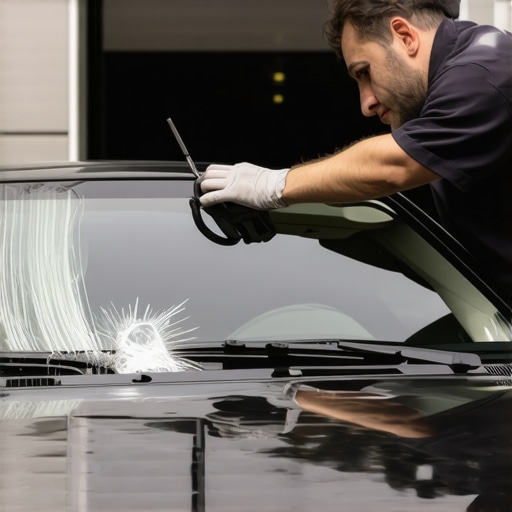
Stop the $1,200 Crack: 3 Chip Repair Rules for 2026
I have spent twenty-five years staring through glass, and if there is one thing I can tell you, it is that a window is a living, breathing component of your structure. It expands, it contracts, and it fights a constant battle against atmospheric pressure and thermal gradients. When a rock hits your glass, it is not just a cosmetic blemish; it is a structural breach. I have seen homeowners ignore a pinhead-sized nick in April only to find a three-foot fissure across their line of sight by July. They call me when the damage is done, and instead of a simple repair, I am quoting them for a full unit replacement because the integrity of the glazing bead and the internal seal has been compromised.
“Installation is just as critical as the window performance itself. A high-performance window installed poorly will fail.” – AAMA Installation Masters Guide
I remember a call last winter from a homeowner in a panic. Their windows were ‘sweating’ on the inside of the double-pane assembly. I arrived with my hygrometer and a thermal camera, and what I found was classic. It was not a manufacturing defect; it was a tiny, unaddressed stone chip near the edge of the glass. That chip had created a micro-fracture that allowed the argon gas to escape and moisture-laden air to infiltrate the IGU (Insulated Glass Unit). The dew point inside that window had shifted so far that the moment the exterior temperature dropped, the glass clouded over permanently. Their ‘lifestyle’ of ignoring maintenance had turned a fifty-dollar mobile service call into a twelve-hundred-dollar replacement nightmare.
The Molecular Reality of Chip Repair in 2026
To understand why you need a professional glass installer, you have to understand the physics of laminated glass. Most modern glazing involves multiple layers of glass bonded with a PVB (Polyvinyl Butyral) interlayer. When a chip occurs, you are witnessing the separation of the glass from this interlayer. The ‘chip’ is actually an air pocket where the refractive index has changed, making the damage visible. A proper repair is not just ‘filling a hole.’ It involves using a vacuum-pressure tool to evacuate the air and moisture from that pocket and injecting a specialized UV-cured resin that matches the refractive index of the glass perfectly. We are talking about 1.52 on the scale. If the resin is off, the repair will be visible and the structural bond will be weak.
As we move into 2026, the technology has shifted. We are no longer just using basic resins. We are using polymers that are designed to handle the extreme thermal expansion of modern high-performance glass. If you have a window with a low-E coating on Surface #2, the glass is actually designed to reflect heat. This creates a massive temperature differential between the outer lite and the inner lite. In a cold climate, the exterior glass can be sub-zero while the interior is seventy degrees. That stress is concentrated right at the site of the chip. This is why same-day service is no longer a luxury; it is a technical necessity to prevent the crack from ‘running’ under thermal load.
Rule 1: The Quarter and the Corner
The first rule of 2026 glass maintenance is the size and location metric. If a chip is smaller than a quarter, it is usually a candidate for repair. However, as an experienced glass installer, I look at more than just size. I look at the proximity to the sash and the glazing bead. If the chip is within two inches of the edge of the frame, the ‘shingle principle’ of structural glass comes into play. The edges of the glass are under the highest amount of tensile stress due to the way they are shimmed into the rough opening. A chip in this ‘stress zone’ will almost always migrate into a full-length crack if not addressed within hours. This is where mobile service becomes your best friend. You need a technician who can stabilize that break before the next thermal cycle begins.
“Edge-area cracks represent a structural compromise that often necessitates full lite replacement rather than localized repair.” – ASTM E2112 Installation Standards
In our technical world, we call these ‘edge cracks.’ Unlike a bullseye in the center of the pane, an edge crack is fighting against the mechanical pressure of the frame itself. If the installer did not leave proper tolerances in the rough opening, or if the house has settled, that glass is already under pressure. Adding a chip to that equation is like pulling the pin on a grenade. I have walked into jobs where the mere act of closing the operable sash caused a chip to shatter the entire pane because the frame was slightly out of square.
Rule 2: The Contamination Clock
The second rule is about what you cannot see: moisture and chemical contamination. The moment a chip happens, the PVB interlayer is exposed to the elements. Road salt, window cleaner, and even rainwater contain minerals and chemicals that degrade the bonding agent. If you wait a week to call for chip repair, you have likely allowed enough contamination into the break that the resin will not bond properly. This results in a repair that looks ‘cloudy.’ In 2026, we utilize hydrophobic cleaners during the repair process, but even the best tech cannot reverse the yellowing of a contaminated interlayer. Same-day intervention is the only way to ensure the repair is invisible and permanent.
Think about the dew point. When the temperature drops at night, moisture condenses inside that tiny chip. When it freezes, it expands. We call this ‘ice-wedging’ in the trade. It is the same process that creates potholes in the street, and it will destroy your window just as effectively. A mobile service technician will use a dry-out procedure to ensure no moisture is trapped under the resin. If you skip this step, you are just sealing a ticking time bomb into your glass.
Rule 3: Thermal Logic and the Low-E Factor
The third rule is specific to your climate logic. If you are in a cold northern region, your windows are designed with a low U-Factor to keep heat in. This means the exterior glass stays much colder than the interior. This temperature delta creates ‘bowing’ in the glass, a phenomenon where the panes actually curve slightly. If there is a chip in that glass, the bowing action puts the break under constant mechanical stress. You cannot afford to wait. In these climates, we use resins with higher elasticity to move with the glass as it fluctuates throughout the day.
Conversely, in hot southern climates, the solar heat gain (SHGC) is the enemy. Your glass is likely treated with a Low-E coating on Surface #2 to reflect the sun’s infrared radiation. This means the outer lite gets incredibly hot. I have measured surface temperatures of 150 degrees on a tinted window in July. When you blast the air conditioning inside, the thermal shock at the site of a chip is extreme. This is the number one cause of ‘spontaneous’ glass breakage that isn’t actually spontaneous—it’s just a neglected chip meeting a hot day. A professional glass installer understands these coatings and ensures the repair doesn’t create a ‘hot spot’ that could lead to further cracking.
The Value of the Professional Installer
Don’t be fooled by DIY kits you see in the store. They use a one-size-fits-all resin that doesn’t account for the glass thickness, the type of laminate, or the specific climate needs of your region. A master glazier evaluates the break under magnification, determines the bridge pressure needed to flex the glass just enough to accept the resin, and uses high-intensity UV lamps to ensure a full cure. We are managing the ‘weep holes’ of the system, ensuring that the repair doesn’t interfere with the window’s ability to shed water. We look at the sill pan and the flashing tape to make sure the overall installation is still sound. Repairing the glass is only half the job; protecting the structural integrity of the window assembly is the other. In 2026, with the cost of high-performance glass skyrocketing, a same-day chip repair is the smartest investment you can make in your home’s envelope. Stop the crack before it costs you a fortune.