The difference between a pit and a crack in your glass
The Professional Reality of Glass Integrity
In twenty-five years of handling everything from high-altitude curtain walls to residential double-hung units, I have seen every possible failure of the glazing substrate. I once sat across from a high-pressure glass salesman who was trying to convince a homeowner that a minor surface pit necessitated a full sash replacement costing three thousand dollars. I had to step in and explain the physics of the glass to the homeowner: the ROI on replacing a perfectly functional insulated glass unit just for a surface pit is essentially zero. A pit is not a crack, and a crack is not a death sentence for your window if you understand the structural mechanics at play. My job as a master glazier is to look past the surface and evaluate the molecular stress of the pane. When you are dealing with a hole in your wall, you are dealing with a complex thermal barrier, and understanding whether that barrier is compromised requires more than a quick glance.
“Installation is just as critical as the window performance itself. A high-performance window installed poorly will fail.” ASTM E2112 Standard Practice
The Anatomy of a Glass Pit: Surface Tension and Hertzian Cones
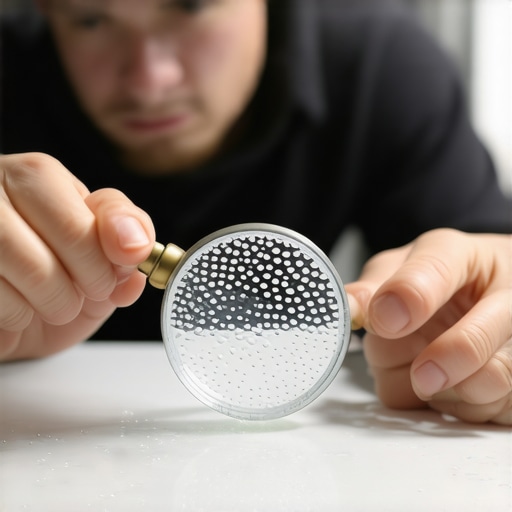
A pit is a localized loss of glass material on the surface of the pane, usually caused by a high-velocity impact from a small object like a pebble or a piece of hail. In the world of glass installer technicals, we refer to this as a Hertzian cone fracture. When the object hits the glass, it creates a compression zone that results in a small, shallow crater. In most residential glazing, this pit does not penetrate the full thickness of the glass lite. If the pit is on the exterior surface of a tempered pane, it rarely spreads because the outer layers are under intense compressive stress. However, in annealed glass, a pit can become a nucleation point for a future crack if thermal stress becomes too great. When we talk about mobile service and chip repair, we are usually discussing the process of filling this void with a high-refractive-index resin that matches the optical properties of the soda-lime glass. This resin is cured with ultraviolet light to stabilize the area, preventing dirt and moisture from entering the pit and potentially causing further degradation of the glazing bead or the sash assembly.
The Mechanics of a Crack: When Stress Exceeds Strength
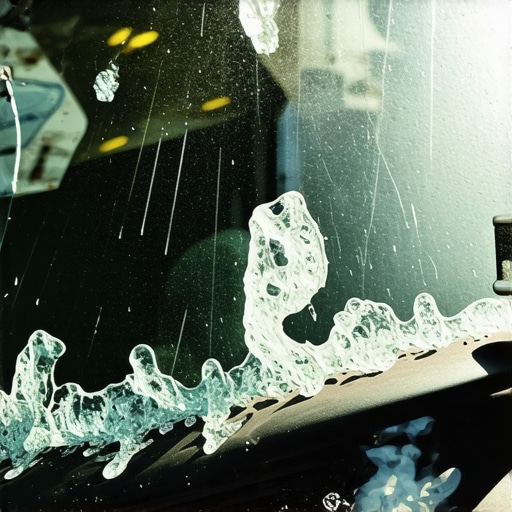
A crack is a far more serious structural event. Unlike a pit, a crack represents a complete separation of the glass fibers. Cracks usually start at the edge of the glass, hidden behind the glazing bead or the stop, where the glass was cut. This is why the rough opening of a window is so critical: if the window is not shimmed correctly or if the rough opening is too tight, the building’s natural settling puts pressure on the frame. This pressure translates into the glass, leading to what we call a stress crack. A stress crack often looks like a long, wandering line that doesn’t have a clear impact point. In cold climates like Chicago or Minneapolis, where the U-Factor is the primary concern, a crack is a catastrophic failure. Once the glass is cracked, the argon or krypton gas fill between the panes escapes, and moisture-laden air enters. This leads to the failure of the desiccant in the warm-edge spacer, resulting in permanent fogging and a total loss of thermal efficiency. If you see a crack, especially one that spans more than a few inches, same-day service from a professional glass installer is necessary to determine if the sash can be salvaged or if the entire unit must be replaced.
“Glass repair must restore both the optical clarity and the structural capacity of the pane to withstand design wind loads.” American Architectural Manufacturers Association (AAMA)
Climate Logic: How Temperature Dictates Repair Priority
The urgency of your chip repair depends heavily on your local climate. In northern environments, the primary enemy is heat loss and the dew point. If you have a pit in your glass during a sub-zero January, the temperature differential between the interior (70 degrees) and the exterior (-10 degrees) creates massive thermal tension. The interior surface of the glass wants to expand while the exterior surface wants to contract. This tension can turn a minor pit into a full-length crack in a matter of hours. This is why we prioritize Low-E coatings on Surface #3 in cold climates to reflect heat back into the room. Conversely, in the hot south, Solar Heat Gain Coefficient (SHGC) is the metric that matters. A crack in a window in Phoenix or Miami allows the conditioned air to escape and high-energy infrared radiation to pour in, forcing your HVAC system to work overtime. In these regions, we look for Low-E on Surface #2 to bounce that heat away before it ever enters the building envelope. Whether it is a mobile service call for a minor chip or a major glass replacement, the goal is always to maintain the integrity of that thermal barrier.
Why Same-Day Professional Evaluation is Essential
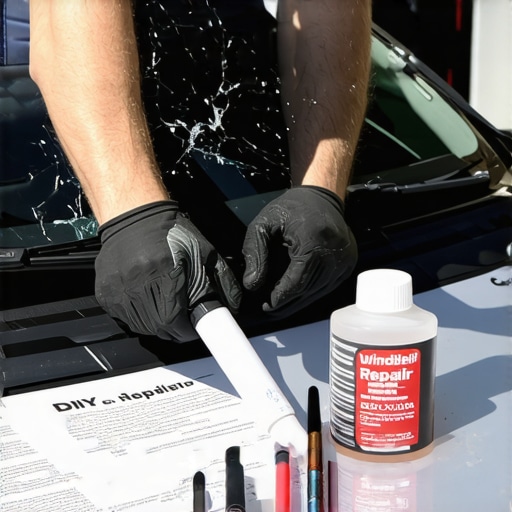
Many homeowners think a small chip is just a cosmetic issue, but as someone who has performed thousands of installations, I can tell you that moisture is the silent killer of window frames. If a pit is deep enough to reach the laminate layer in a safety glass unit, or if a crack allows water to bypass the glazing bead, you are looking at potential rot in the sash or the sill pan. Weep holes in the bottom of the frame are designed to handle water, but they cannot manage water that is leaking through the glass itself. When a glass installer arrives for a same-day repair, they aren’t just looking at the hole; they are looking at the shims, the flashing tape, and the overall alignment of the operable parts of the window. A professional repair involves cleaning the damaged area, removing any loose shards, and injecting a resin that has a lower viscosity than water to ensure it penetrates every microscopic fissure. This is not a task for a DIY kit from a big-box store; it requires the precision of a master glazier to ensure the repair holds under the wind loads and temperature swings your home faces every single year.
{
“@context”: “https://schema.org”,
“@type”: “HowTo”,
“name”: “How to Identify if Your Glass Damage is a Pit or a Crack”,
“step”: [
{
“@type”: “HowToStep”,
“text”: “Clean the glass surface with a microfiber cloth to remove dust and debris.”,
“name”: “Surface Preparation”
},
{
“@type”: “HowToStep”,
“text”: “Run a fingernail gently across the damage. If it catches in a small, circular depression without long lines extending, it is a pit.”,
“name”: “Tactile Inspection”
},
{
“@type”: “HowToStep”,
“text”: “Look at the damage from a 45-degree angle. If you see a line reflecting light through the thickness of the glass, it is a crack.”,
“name”: “Visual Verification”
},
{
“@type”: “HowToStep”,
“text”: “Check for moisture or fogging between the panes, which indicates the seal has been compromised by the damage.”,
“name”: “Seal Integrity Check”
}
]
}