The flashlight trick for finding hidden windshield cracks
The Master Glazier Perspective on Automotive Transparency
As a master glazier with over 25 years in the trade, I look at glass differently than most. To me, glass is a structural component under constant tension, managing a delicate balance between external pressure and internal stability. When we talk about finding a crack in a windshield, we are not just looking for a blemish; we are identifying a structural failure in a laminated glass system. Most drivers wait until a crack is six inches long before they call a mobile service, but by then, the structural integrity of the Polyvinyl Butyral (PVB) interlayer may already be compromised. This is where the flashlight trick becomes your most valuable diagnostic tool.
A homeowner called me in a panic last winter because their new glass seemed to be ‘sweating’ and eventually developed a hairline fracture right across the line of sight. I walked in with my hygrometer and a high-intensity LED light. I showed them that the humidity in the cabin was nearly 65 percent, and when they blasted the defroster on a frozen pane, they induced a thermal shock. It wasn’t a defect in the glass; it was the physics of moisture and rapid expansion. That tiny, invisible pit from a highway stone acted as the stress concentrator. If they had used the flashlight trick a week earlier, a simple chip repair would have saved the entire assembly.
“Installation is just as critical as the window performance itself. A high-performance window installed poorly will fail.” AAMA Installation Masters Guide
The Physics of the Flashlight Trick
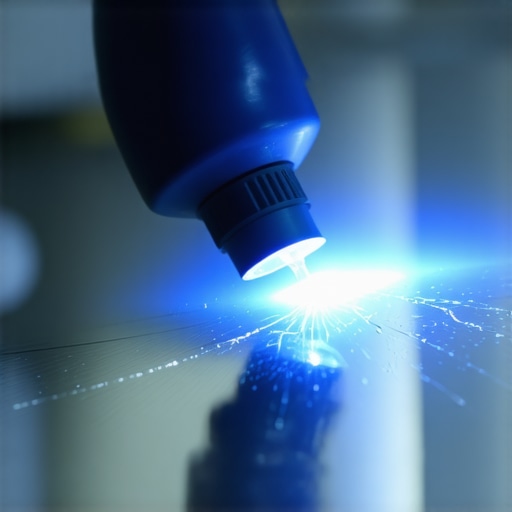
Why does a flashlight reveal what the naked eye misses? It comes down to the refractive index. In a perfect sheet of laminated glass, light passes through the outer lite, the PVB interlayer, and the inner lite with minimal deviation. However, when a stone impacts the surface, it creates a void. This void is filled with air. Air has a refractive index of approximately 1.0, while glass sits around 1.5. When you angle a concentrated beam of light—at about a 45-degree angle—across the surface, the light hits that air-to-glass interface and reflects differently. The crack or chip will ‘glow’ because the light is being trapped and bounced within the fracture walls. This is total internal reflection in action.
The Anatomy of a Failing Windshield
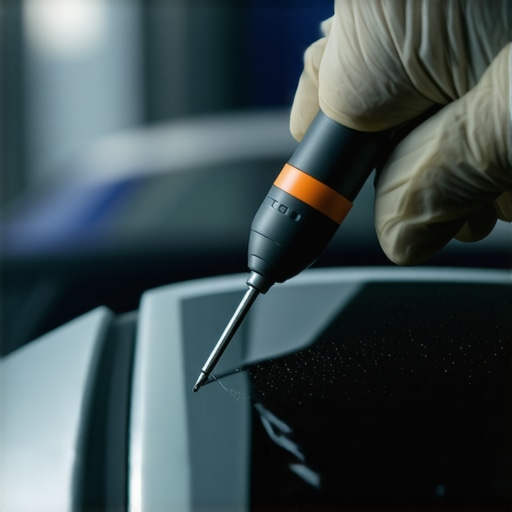
When I perform an installation autopsy on a failed windshield, I rarely see a clean break. Usually, it is a story of neglect. A mobile service provider who understands the trade knows that a chip is a gateway for contaminants. If you find a ‘star’ or ‘bullseye’ using the flashlight trick, you are seeing the glass layers separating from the plastic membrane. If water enters that space and freezes, the expansion force is enough to split the glass further. This is why same-day service is not just a marketing gimmick; it is a technical necessity to seal the ‘rough opening’ of the fracture before the environment destroys the bond.
Why Same-Day Chip Repair is Critical
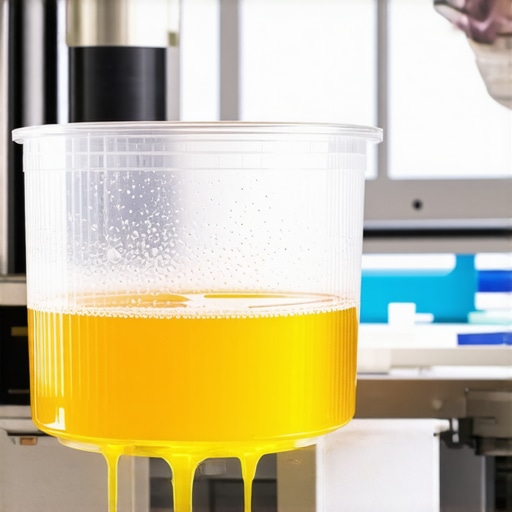
In the world of professional glazing, we understand that glass is essentially a supercooled liquid that behaves like a solid. It is constantly moving. As your vehicle hits a pothole or twists during a turn, the windshield absorbs that torsional stress. A chip repair involves injecting a clear, UV-curable resin into the void you found with your flashlight. This resin is formulated to match the refractive index of the glass. By filling the air gap, we eliminate the light refraction and, more importantly, the stress concentration point. Without this, that tiny pit will eventually follow the path of least resistance, usually spanning the entire width of the pane during the next major temperature shift.
“Water penetration is the primary cause of glazing system failure. Proper management of the drainage plane and seal integrity is mandatory for longevity.” ASTM E2112 Standard Practice
Mobile Service and the Cleanliness Standard
A true glass installer does not just ‘caulk and walk.’ When a mobile service unit arrives, the environment must be controlled. If there is dust or moisture inside the chip, the resin will not bond to the PVB. I have seen countless DIY kits fail because the user did not clear the ‘weep hole’ of the crack. A professional uses a vacuum tool to suck the air out of the fracture before pressure-injecting the resin. We also check the ‘glazing bead’—the molding around the glass—to ensure that no water is bypassing the primary seal and hitting the pinch weld, which can lead to rust and eventual seal failure. Using the flashlight trick after a repair is also a great way to verify the quality of the work; a perfect repair should be nearly invisible under the beam.
Thermal Stress in Different Climates
Depending on where you live, the enemy of your glass changes. In northern climates, the U-Factor of your glass matters because of the massive delta between the sub-zero exterior and the heated interior. This thermal gradient creates tension in the glass. In southern climates, the Solar Heat Gain Coefficient (SHGC) is the concern. Intense UV radiation can degrade the edges of a poorly installed windshield if the glass installer didn’t use an OEM-quality primer. Regardless of the climate, the flashlight trick works the same way: it finds the hidden weakness before the environment exploits it.
The Glazier’s Final Word on Maintenance
Do not ignore the small things. If you see a glimmer in your peripheral vision while driving toward the sun, grab a high-lumen flashlight that night. Shine it parallel to the glass surface from the outside while someone looks from the inside. If you see a bright spark within the glass, that is a fracture waiting to grow. Calling for a same-day chip repair is the difference between a fifty-dollar fix and a five-hundred-dollar replacement. In glazing, precision is everything, and proactive maintenance is the only way to ensure your ‘viewing sash’ remains clear and safe for the long haul. Remember, your windshield is a safety device, not just a piece of glass. It supports the roof in a rollover and provides the backstop for the passenger-side airbag. Treat it with the technical respect it deserves.
{“@context”:”https://schema.org”,”@type”:”HowTo”,”name”:”How to Use the Flashlight Trick to Find Windshield Cracks”,”step”:[{“@type”:”HowStep”,”text”:”Wait for low-light conditions, such as dusk or inside a garage.”},{“@type”:”HowStep”,”text”:”Hold a high-intensity LED flashlight at a 45-degree angle to the windshield surface.”},{“@type”:”HowStep”,”text”:”Slowly sweep the beam across the glass while looking for bright reflections or ‘glowing’ spots within the glass layers.”},{“@type”:”HowStep”,”text”:”Inspect identified spots closely for pits or radiating lines that indicate a chip or crack.”},{“@type”:”HowStep”,”text”:”Mark the location on the outside with a grease pencil and call a mobile service for same-day repair.”}]}