The trick to getting adhesive off your dashboard
The Chemistry of Adhesion: A Master Glazier’s Perspective on Dashboard Recovery
In twenty-five years of handling everything from high-performance curtain walls to delicate historic restorations, I have learned one universal truth: glass and its surrounding structures are a system. When someone asks me about the trick to getting adhesive off a dashboard, they aren’t just asking for a cleaning tip. They are asking how to manage a polymer-based bond on a surface that has been subjected to thousands of hours of Solar Heat Gain and UV degradation. As a glass installer who deals with structural silicones and urethanes daily, I look at your dashboard not as a piece of plastic, but as the horizontal sill of your vehicle’s primary glazing system.
The Condensation Crisis: A Lesson in Surface Science
Before we break down the solvents, let’s talk about why your dashboard environment is so volatile. A homeowner once called me in a panic because their new windows were ‘sweating.’ I walked in with my hygrometer and showed them the humidity was 60 percent. It wasn’t the windows; it was their lifestyle choices affecting the dew point. In a vehicle, that ‘sweating’ often occurs because of the off-gassing of adhesives and cleaners. When you leave a sticky residue from a phone mount on your dash, you aren’t just looking at an eyesore; you are looking at a localized site for chemical bonding that changes how the glass behaves at the margin. That residue can actually trap moisture, leading to localized fogging that mimics a seal failure in a double-pane unit.
“Installation is just as critical as the window performance itself. A high-performance window installed poorly will fail.” – AAMA Installation Masters Guide
Understanding the Surface: The Dashboard as a Sill Pan
In residential construction, we use a Sill Pan to ensure that any water or debris is directed away from the Rough Opening. Your dashboard acts in a similar capacity for your windshield. It is the catchment area for everything that passes through the glass. Most modern dashboards are made of Thermoplastic Olefin (TPO) or Acrylonitrile Butadiene Styrene (ABS). These materials are designed to be durable, but they are porous at a microscopic level. When an adhesive is applied, the long-chain polymers of the glue intertwine with the plastic substrate. To remove it without scarring the ‘Glazing Bead’ of your interior trim, you must understand the physics of the bond.
The Thermal Logic of Adhesive Removal
If you are in a Southern climate like Phoenix or Florida, your dashboard is a heat sink. The Solar Heat Gain Coefficient (SHGC) of your windshield determines how much energy is being dumped onto that adhesive. In these hot zones, the adhesive has likely undergone a process called ‘cross-linking,’ where heat has permanently hardened the bond. Conversely, in a Northern climate like Minneapolis, the plastic is brittle. If you try to scrape a Sash or a dashboard in sub-zero temps, you will cause a fracture.
“Proper material selection must account for the specific thermal stresses of the geographic location.” – NFRC Performance Guidelines
The Step-by-Step Technical Protocol
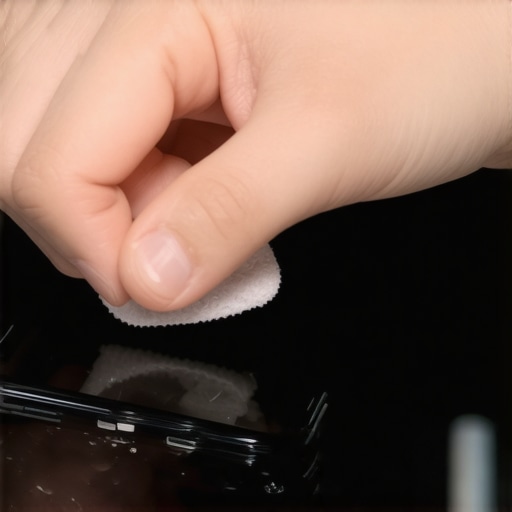
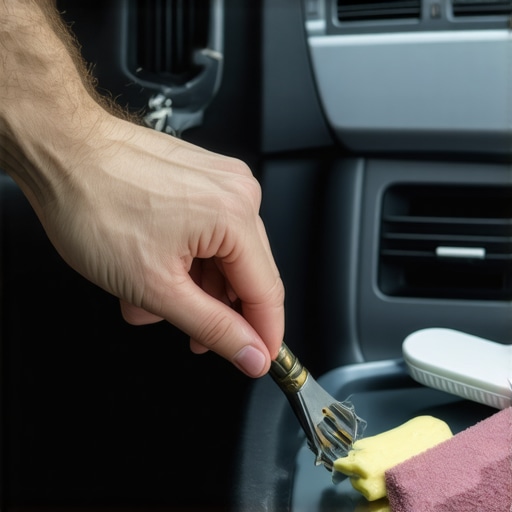
Step one is always thermal manipulation. I don’t use a heat gun; I use a controlled warm air flow to reach the ‘glass transition temperature’ of the adhesive. This is the point where the polymer moves from a hard, glassy state to a rubbery, compliant state. Once the adhesive is pliable, you need a solvent that respects the surface tension of the plastic. Most ‘Tin Man’ installers will tell you to use a heavy degreaser. I tell you to use 70 percent Isopropyl Alcohol or a specialized citrus-based solvent that has been tested for TPO compatibility. You apply the solvent to a microfiber cloth, not the dash. This prevents the liquid from running into the Weep Hole equivalent of your defrost vents.
Mobile Service and the Importance of Chip Repair
When we talk about a mobile service or same-day chip repair, we are talking about maintaining the structural integrity of the glass. If you are cleaning your dash and notice a small pit in the glass, that is a Rough Opening failure in the making. A glass installer uses a bridge and injector to fill that void with resin, but if you have been spraying aerosol cleaners or ‘adhesive removers’ wildly near that chip, the oils will contaminate the break. A contaminated chip cannot be repaired properly. It’s like trying to apply Flashing Tape to a wet Muntin; it simply won’t hold. The vacuum seal required for a quality chip repair depends on a clean, dry surface.
The Mechanical Interface: Shims and Clearances
Even in automotive glass, we think about Shim placement. When your windshield was installed, it was set on blocks to ensure it didn’t touch the metal frame. The dashboard sits just below this interface. When you are scrubbing adhesive off, you must be careful not to push debris into the gap between the dash and the glass. This gap is Operable in the sense that it allows for the expansion and contraction of the different materials. If you pack that gap with gunk, you create a pressure point that can lead to a stress crack the next time the sun hits the glass.
Conclusion: The Professional Standard
Whether you are dealing with a historic wood Sash or a modern automotive dashboard, the principle remains: manage the chemistry, respect the physics, and don’t take shortcuts. A ‘caulk-and-walk’ mentality will leave you with a ruined dashboard and a cracked windshield. If the adhesive won’t budge, or if you notice the glass integrity is compromised, call a professional glass installer. We have the tools to measure the moisture, the heat, and the bond strength to ensure your ‘hole in the wall’ remains a window to the world, not a source of frustration.