How the sun’s heat turns a tiny chip into a massive bill
The Silent Stress of Thermal Expansion
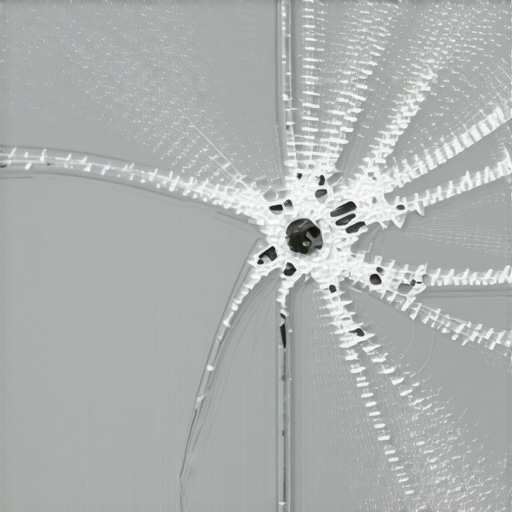
As a master glazier with over 25 years in the field, I have seen a thousand homeowners look at a tiny stone chip and say, ‘I will get to that next month.’ But physics does not wait for your schedule. A window is not a static object; it is a dynamic barrier that undergoes immense physical stress every time the sun crests the horizon. When you have a chip, you no longer have a solid piece of glass. You have a structural failure waiting for a catalyst. In my time, I have watched those tiny points of impact turn into full-on fractures in the time it takes to grab a cup of coffee. This is not bad luck. It is the result of thermal stress and the unforgiving nature of glass chemistry.
The Narrative Matrix: A Midsummer Thermal Crisis
I recall a specific afternoon in the peak of July when a homeowner called me in a panic. They had a small nick in their south-facing sliding door. They had been running the air conditioning at a crisp 68 degrees while the exterior glass surface was baking in 100-degree direct sunlight. I walked in with my hygrometer and my infrared thermometer. The exterior glass temperature was pushing 150 degrees, while the interior was barely 72. That 78-degree ‘Delta-T’ or temperature difference was creating massive internal tension. Suddenly, there was a sound like a pistol shot. The chip had finally given way, spidering across the entire pane. It was not the windows; it was the physics of thermal shock meeting a compromised glazing surface. If they had called for a mobile service the day the chip happened, a simple resin injection would have saved the three-thousand-dollar custom tempered unit.
“Installation and maintenance are just as critical as the window performance itself. A high-performance window or glass unit that has its structural integrity compromised by even minor damage will fail under normal thermal cycling.” – AAMA Installation Masters Guide
The Science of the ‘Sun-to-Bill’ Pipeline
To understand why same-day repair is a financial necessity rather than a luxury, we have to look at how solar energy interacts with glass. When we talk about solar heat, we are talking about Solar Heat Gain Coefficient (SHGC). In hotter climates, we want a low SHGC to keep the heat out. Most modern windows use a Low-E coating, usually on Surface #2 (the inner face of the outer pane), to reflect that short-wave infrared radiation. However, when a chip exists, it creates a ‘stress concentrator.’ As the sun hits the glass, the molecules expand. In a perfect pane, that expansion is uniform. But at the site of a chip, the glass is jagged. The expansion pushes against those irregular edges, forcing the crack to migrate. This is how a glass installer goes from a fifty-dollar repair to a full-frame replacement.
The Anatomy of Glass Failure
Whether we are talking about an operable sash or a fixed picture window, the mechanics remain the same. The glass is held in place by a glazing bead, which provides the necessary pressure to keep the unit sealed. When the glass expands from solar absorption, it also presses against the shims within the frame. If the rough opening was not perfectly square, or if the installer skipped the sill pan, the frame might not allow for the necessary movement. This external pressure, combined with the internal thermal expansion at the chip site, creates a pincer move that destroys the glass. We call this ‘thermal stress breakage,’ and it is the primary reason why a ‘wait and see’ approach to glass damage is a recipe for a massive bill.
Decoding the NFRC Labels
When I sit down with a client to discuss replacement glass, I always point them to the NFRC (National Fenestration Rating Council) labels. You need to understand two key numbers: the U-Factor and the SHGC. In a hot climate where the sun is your primary enemy, the SHGC is the king. A lower number means less solar heat is transmitted. But even the best glass cannot compensate for a physical breach. Once that chip occurs, the gas fill (usually Argon) that sits between the panes in an Insulated Glass Unit (IGU) can start to leak. Once that gas is gone, your U-Factor spikes, your energy bills climb, and your interior comfort vanishes. The sun’s heat is no longer being managed; it is being invited into your living room.
“The thermal performance of a fenestration product is dependent on the integrity of the glass seals and the continuity of the glazing material. Any breach in the glass surface can lead to rapid degradation of the insulating properties.” – NFRC Technical Handbook
Why Mobile Service and Same-Day Repair Matter
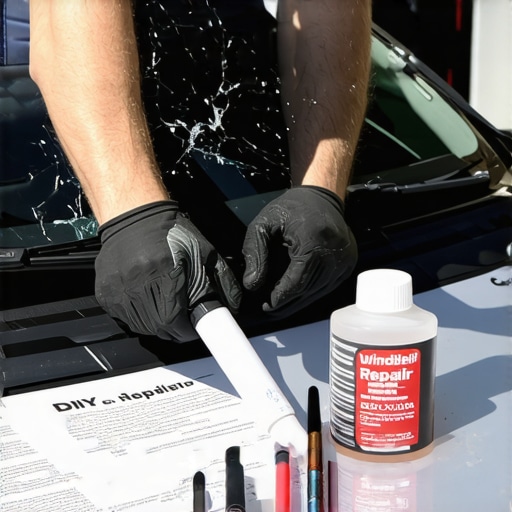
The reason I always advocate for a same-day glass installer is that glass ‘breathes.’ As the temperature drops at night, the glass contracts. This ‘cycling’ happens every 24 hours. Each cycle acts like a tiny hammer hitting that chip, driving the crack deeper. A mobile service technician can arrive, vacuum out the air and moisture from the chip, and inject a specialized UV-curable resin. This resin has a refractive index nearly identical to the glass itself, making the repair nearly invisible. More importantly, it restores the structural integrity of the pane, allowing it to handle the thermal expansion of the next sunrise. We are not just fixing a cosmetic blemish; we are restoring the engineering of the window.
The Glazier’s Verdict
Do not buy into the hype of the high-pressure salesman who tells you that you need to replace every window in your house because of one crack. However, do not ignore the science of the sun. If you catch a chip early, you are managing your home’s thermal envelope. If you wait, you are just waiting for the invoice to grow. Water management and thermal management are the two pillars of a long-lasting home. Keep your glazing bead tight, ensure your weep holes are clear so moisture does not build up and contribute to edge rot, and never, ever let a chip sit in the sun for more than 24 hours. The cost of a technician today is a fraction of the cost of a full sash replacement tomorrow. Professional glass care is not about the glass; it is about the physics of the hole in your wall. Protect it accordingly.