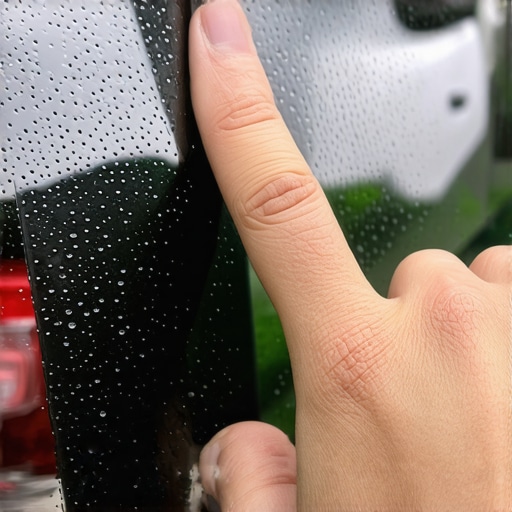
The 30-second tap test for your new windshield
The Sound of Safety: Why Your Windshield Needs a Hearing Test
Most vehicle owners treat a windshield replacement like a grocery run: they want it fast, cheap, and done in their driveway. But as someone who has spent twenty-five years staring through various grades of silicate and laminated safety glass, I can tell you that the convenience of a mobile service often masks the technical failures of a rushed installation. A windshield is not merely a transparent shield against bugs; it is a structural component of your vehicle’s safety cell. It supports the roof in a rollover and provides the backstop for the passenger-side airbag. If that bond fails, the glass is just a heavy projectile. This is where the 30-second tap test becomes your first line of defense against a ‘caulk-and-walk’ installer.
The Rust Reveal: A Cautionary Tale from the Field
I remember pulling a windshield out of a late-model SUV in a driveway in the suburbs. The owner had used a budget glass installer six months prior who promised a same-day chip repair that turned into a full replacement. As I slid my cold knife through the urethane, I didn’t feel the consistent resistance of a healthy bond. Instead, the glass practically lifted off. The previous installer had scratched the pinchweld with a metal scraper and failed to apply a zinc-rich primer. The entire metal header was bubbling with rust. This wasn’t just a leak; it was a structural catastrophe waiting to happen. The installer relied on the thickness of the urethane bead to hide the fact that they hadn’t actually bonded the glass to the frame. The owner had no idea until I showed him the flakes of oxidized steel falling onto his dashboard.
“Installation is just as critical as the window performance itself. A high-performance window installed poorly will fail.” AAMA Installation Masters Guide
The Physics of the Bond: Why Urethane Matters
In the world of automotive glazing, we don’t use ‘glue.’ We use high-modulus, non-conductive moisture-cured urethane. This is a complex polymer that requires specific environmental conditions to reach its full design strength. When you opt for a mobile service, the installer is at the mercy of the ambient humidity. In colder, northern climates, the curing process slows down significantly. If it is too dry, the urethane stays tacky but never develops the cross-linked molecular structure required for a ‘Safe Drive Away Time’ or SDAT. A professional glass installer must calculate the dew point before even opening the tube. We are looking for the ‘Rough Opening’ of the vehicle—the pinchweld—to be perfectly clean and primed. Any contamination, from finger oils to dust, prevents the urethane from ‘wetting’ the surface. If the glass doesn’t achieve 100 percent adhesion, you lose the structural integrity of the A-pillar.
How to Perform the 30-Second Tap Test
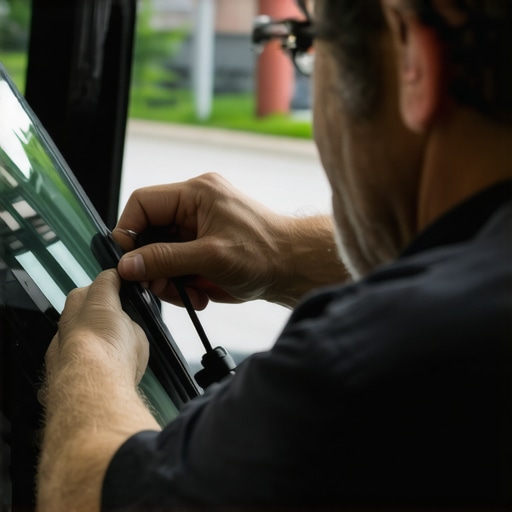
Once the installer says the job is finished, don’t just sign the tablet and walk away. Wait at least thirty minutes for the initial skin to form, then perform a systematic tap test. Start at the top corner of the glass near the roofline. Using your knuckle, tap firmly but gently every three inches along the perimeter. You are listening for a consistent, solid ‘thud.’ If you hear a ‘clack’ or a hollow, higher-pitched ringing sound, you have found a void. A void is a section where the urethane bead was too thin, or where it pulled away from the glass during the setting process. This is often caused by ‘setting the glass’ too late after the bead was laid, allowing the urethane to ‘skin over’ and preventing a chemical bond. If you find a hollow spot, that window is a failure. It will whistle at highway speeds, it will leak in a car wash, and it will fail in a collision.
The Same-Day Trap: Chip Repair vs. Replacement
Many customers ask for a chip repair when they actually need a replacement. A chip repair is a structural resin injection designed to stop the spread of a crack. However, if the impact is in the ‘acute area’ (directly in the driver’s line of sight) or within three inches of the edge, a repair is a compromise. Edge cracks are particularly dangerous because they compromise the tension of the tempered outer layer. A mobile service might offer a quick fix, but a true glazier knows that once the structural integrity of the laminate is breached near the frit (the black painted edge), the glass is compromised. We see it all the time: a small chip that wasn’t properly vacuum-sealed by a budget tech turns into a foot-long crack the moment the defroster hits the cold glass in January.
“Proper installation requires the management of water, air, and structural loads simultaneously.” ASTM E2112 Standard Practice
Environmental Constraints of the Mobile Service
If you are in a cold climate, the ‘same-day’ promise is often a lie. Most professional-grade urethanes require a minimum temperature of 40 degrees Fahrenheit to cure. If an installer is working in your driveway in 20-degree weather, they are either using a specialized (and expensive) cold-weather adhesive or they are giving you a bond that will never reach full strength. Furthermore, the ‘Weep Hole’ in a vehicle’s cowl must be clear. If the installer blocks these with excess urethane, water will back up into your cabin. A master glazier doesn’t just slap the glass in; they check the drainage, they shim the glass so it sits perfectly centered in the opening, and they ensure the ‘Muntin’ or trim pieces are snapped back into place without breaking the retaining clips. Don’t be fooled by the speed; demand the science.