How a leaky windshield destroys your car’s electrical system
The Silent Killer: How a Leaky Windshield Destroys Your Car’s Electrical System
Most drivers view a windshield as a simple piece of glass designed to keep the wind out of their faces and the rain off their laps. However, as an ASE Master Certified and GM Master Technician, I look at a windshield and see a critical structural component and a high-tech seal for the vehicle’s most sensitive components. Over my decades in the shop, I have seen “minor” drips – the kind of leaks that owners ignore for months – lead to total vehicle losses. When water breaches the urethane seal of your glass, it doesn’t just make your carpets smell like mildew; it initiates a silent, aggressive assault on your car’s central nervous system.
A leaking windshield is a ticking time bomb for your vehicle’s electronics. Modern cars are rolling supercomputers, packed with miles of wiring and dozens of control modules tucked into every crevice of the dashboard and kick panels. When moisture enters this environment, it doesn’t just sit there. It migrates, corrodes, and eventually destroys. By the time you see the “Check Engine” light or experience a “ghost” in the machine, the damage is often already measured in the thousands of dollars. Understanding the relationship between a faulty seal and electrical failure is the only way to protect your investment before it’s too late.
The Anatomy of a Leak: Why Gravity is Your Wiring’s Worst Enemy
Water behaves in predictable ways, but its path through a vehicle’s interior is often deceptive. Many owners believe that if they don’t see water dripping directly onto their laps, the leak isn’t “that bad.” This is a dangerous misconception. When a windshield seal fails, water typically enters at the top or the sides of the glass. Gravity then pulls that moisture down the A-pillars – the structural posts on either side of your windshield.
The A-pillars are not hollow voids; they are packed with wiring looms for side-curtain airbags, overhead consoles, sunroof motors, and vanity lights. Through a process known as capillary action, or “wicking,” water can travel along the inside of a wiring harness. Much like a straw, the space between the copper strands and the plastic insulation allows water to move horizontally and even upward against gravity. This means a leak at the top-left corner of your windshield can eventually cause a short circuit in a module located under the passenger seat.
In my experience, I’ve seen faulty seals prevent a car from starting entirely by shorting out the ignition trigger wire. When moisture settles into a connector, it creates a bridge between pins that were never meant to touch. This can trick the car’s security system into thinking it’s being stolen, or worse, it can send a 12-volt surge into a 5-volt data line, instantly “bricking” an expensive computer. To prevent this, you must know how to spot a bad windshield seal before it leaks significantly enough to reach these looms.
The “Nervous System” Under Attack: ECU, BCM, and Fuse Boxes
Modern vehicles rely on a complex network known as the CAN-bus (Controller Area Network). Think of this as the internet for your car, where the Engine Control Unit (ECU), Body Control Module (BCM), and Transmission Control Module (TCM) all talk to each other. Because manufacturers want to maximize cabin space, these modules are often mounted behind the dashboard or behind the plastic “kick panels” near your feet – exactly where water from a windshield leak naturally drains.
The Body Control Module (BCM) is the most frequent victim. The BCM acts as the “brain” for your car’s interior, managing everything from your power locks and windows to your interior lighting and wipers. When water enters a BCM, it causes “cross-talk” between circuits. This is why you might see your headlights flash when you hit the turn signal, or your horn might start honking for no reason. When these issues arise, a standard car electrical system repair becomes significantly more complex because the technician isn’t just chasing a broken wire – they are dealing with a compromised logic board.
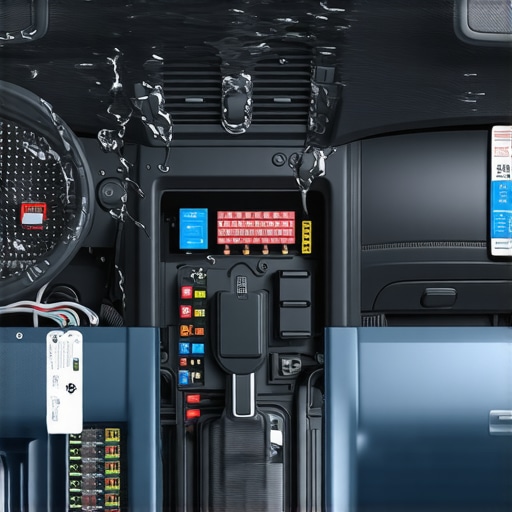
Fuse boxes, or Power Distribution Centers (PDCs), are also highly vulnerable. These are often located in the footwells. If water drips into the back of a fuse box, it can bridge multiple high-current circuits. I have seen fuse boxes literally melt from the inside out because a windshield leak caused a constant, low-grade short that generated enough heat to liquefy the plastic housing but not enough to “pop” the fuse.
The Science of Corrosion: Why “Drying It Out” Isn’t Enough
One of the most common mistakes vehicle owners make is thinking that once the leak is “patched” and the carpet is dry, the danger has passed. Unfortunately, the moment water hits a powered electrical circuit, a process called electrolysis begins. Electrolysis is an electrochemical reaction that occurs when electricity passes through a liquid containing ions (like rainwater or car wash soap). This reaction accelerates the oxidation of copper wiring at an astronomical rate.
Technicians call the result “the green crust” or verdigris. This green powder is actually the copper of your wiring being eaten away and turned into a non-conductive salt. Even if you dry the car out, that crust remains. It is hygroscopic, meaning it will pull moisture out of the air on humid days, reactivating the corrosion process. This is why electrical issues from a leak often appear months after the leak was supposedly fixed.
The financial impact of this corrosion is staggering. A main under-dash wiring harness for a modern SUV can cost upwards of $8,200 for the part alone. When you add the 20 to 40 hours of labor required to remove the entire interior, dashboard, and steering column to replace it, the repair cost often exceeds the value of the vehicle. This is why insurance companies frequently “total” cars that have suffered significant water intrusion; the long-term reliability of the electrical system can no longer be guaranteed.
Warning Signs: Is Your Car Haunted or Just Leaking?
Before your car leaves you stranded, it will likely give you several warning signs that moisture has breached the perimeter. These symptoms are often dismissed as “glitches,” but in the world of auto service and repair, they are red flags for water damage.
- “Ghost” Electronics: Your windshield wipers turn on when you start the car, or your radio volume fluctuates on its own. This is a classic sign of BCM interference.
- Unexplained Battery Drain: If your battery is dead every morning, a “parasitic draw” caused by moisture in a connector could be keeping a module awake all night.
- The Damp Smell: If your car smells like a wet basement after a storm, water is pooling somewhere. Check the carpet under the floor mats; if it’s wet, your electronics are already in the splash zone.
- Warning Lights: If the ABS, Airbag, or Traction Control lights flicker intermittently, it’s a sign that the data signals are being corrupted by moisture. You might also notice why your windshield sensors are acting crazy after a storm – the ADAS cameras mounted to the glass are often the first to fail when a seal goes.
- HVAC Malfunctions: If your heater only blows on high or your vents won’t switch positions, water may have shorted the blower motor resistor or the climate control head. If this happens, you should look for auto ac repair near me to diagnose whether the issue is mechanical or electrical.
The Financial Reality: Repair vs. Replacement Costs
The cost of ignoring a leaky windshield scales exponentially. A professional windshield reseal or replacement might cost between $300 and $1,200 (depending on whether the glass can be saved and if recalibration is needed). Compare that to the cost of electrical failure:
- Minor Connector Cleaning: $200 – $500. This involves a tech finding the damp connector, pinning it out, and using contact cleaner.
- BCM Replacement: $800 – $2,500. This includes the part and the necessary programming to “marry” the new computer to your VIN.
- Wiring Harness Repair: $1,500 – $4,000. This involves cutting out sections of corroded wire and soldering in new leads – a labor-intensive process.
- Full Vehicle Rewire: $5,000 – $10,000+. At this stage, the vehicle is usually a total loss.
If you suspect a leak, taking your vehicle to a reputable auto repair shop for a diagnostic is essential. They can perform a “leak test” using a specialized ultrasonic tool or a simple soapy water solution to identify the breach before the “green crust” takes hold. Many owners also underestimate the cost of skipping a professional windshield recalibration, which is necessary for the safety sensors that are often the first victims of water damage.
Why DIY Sealants Make the Problem Worse
When a driver notices a leak, the first instinct is often to head to the hardware store for a tube of silicone sealant. Stop. From a master technician’s perspective, this is the worst thing you can do. Hardware store silicone contains acetic acid, which can actually accelerate the corrosion of the metal pinch-weld around your windshield.
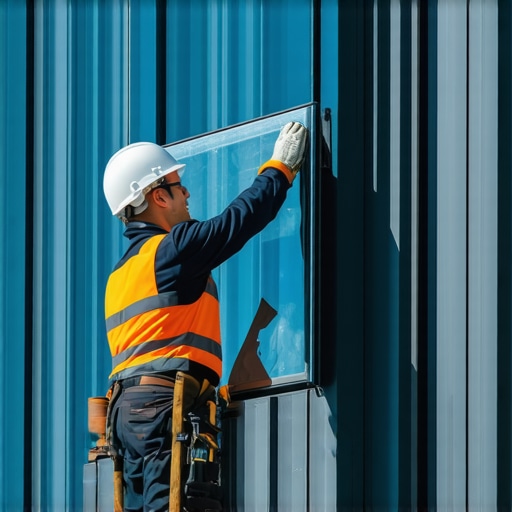
Furthermore, “slapping” sealant over a leak doesn’t stop the water; it often just redirects it. I have seen DIY repairs that successfully stopped water from dripping on the driver’s feet, only to channel that same water directly into the main fuse box. Professional glass technicians use specific primers and high-viscosity urethanes that create a molecular bond between the glass and the frame. There is a reason why professional glass techs use a primer before the glue; it prevents the very rust and delamination that lead to these catastrophic leaks.
Additionally, improper DIY handling can lead to further issues. You need to know how to protect your car’s interior during a glass swap to ensure that the process of fixing the leak doesn’t introduce more debris into your sensitive electronics.
Conclusion: Protecting Your Investment
Your vehicle is likely one of the most expensive things you own, and its electrical system is its most vulnerable asset. A leaky windshield is not a cosmetic issue; it is a structural and electronic emergency. Once water finds its way into your wiring harnesses and control modules, the clock starts ticking. The “green crust” of electrolysis doesn’t sleep, and it doesn’t go away on its own.
If you see even a hint of moisture on your A-pillars, smell mildew in your cabin, or notice “ghost” electrical issues, do not wait. Early intervention can mean the difference between a simple $300 glass repair and an $8,000 total electrical failure. Don’t let a preventable leak turn your high-tech vehicle into a high-priced paperweight. Visit a trusted auto repair center today for a full inspection. Taking action now is the only way to ensure your car’s nervous system stays dry, functional, and safe for the road ahead.