How a mobile technician handles rain during a repair
Mobile Glass Repair Strategies: How Professionals Manage Rain and Moisture for Same-Day Chip Restoration
A professional glass installer views a windshield or a residential pane as a sophisticated barrier system, not just a transparent sheet. When the clouds open up and the humidity spikes, the complexity of a mobile service doubles. Most people think a little rain just means a wet technician, but in the world of high-precision glazing, moisture is a chemical antagonist. It threatens the structural integrity of the repair and the molecular bond of the resin. I have spent over two decades in this trade, and I have seen far too many ‘caulk-and-walk’ amateurs try to push resin into a water-logged chip, only to have the entire sash fail within forty-eight hours.
The Condensation Crisis: A Reality Check on Moisture
I remember a call-out in the middle of a humid July afternoon. A homeowner was frantic because their same-day repair was ‘sweating.’ I arrived with my hygrometer and found the relative humidity inside the vehicle was hovering at 75 percent. They thought the glass was leaking; I had to show them that it was their own HVAC settings and the external dew point colliding on the glass surface. This wasn’t a failure of the glass installer; it was a fundamental misunderstanding of how moisture behaves on a non-porous surface. When rain is present, we aren’t just fighting the droplets we see; we are fighting the microscopic vapor that settles into the rough opening of a stone chip or a crack. If that moisture isn’t evacuated, the repair is doomed from the start.
“Installation is just as critical as the window performance itself. A high-performance window installed poorly will fail.” AAMA Installation Masters Guide
The Physics of the Chip: Why Water is a Barrier
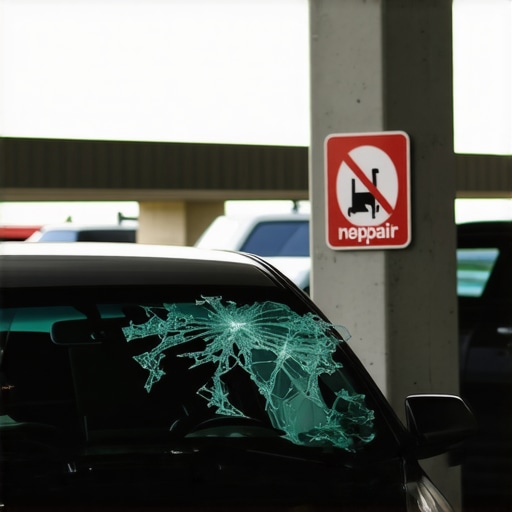
When a stone hits your glass, it creates a rough opening in the laminate or the outer layer of the tempered unit. This break is a vacuum waiting to be filled. In dry conditions, we fill it with an anaerobic resin. However, water has a high surface tension. If a chip repair site is even slightly damp, the water occupies the micro-fissures through capillary action. Since oil-based resins and water do not mix, the moisture acts as a physical wall, preventing the resin from reaching the ends of the ‘legs’ of the break. To a master glazier, this is unacceptable. We use moisture displacement heaters and vacuum-pressure cycles to ensure the cavity is bone-dry before the first drop of resin is introduced. We don’t just ‘fill’ a hole; we manage the environment inside the glass.
Surface Tension and the Glazing Bead
In a mobile service environment, we often have to create a micro-climate. If it is raining, we utilize specialized canopies or suction-mounted umbrellas that protect the work area. But the protection goes deeper than just keeping the tech dry. We have to look at the glazing bead and the perimeter seals. If water is allowed to pool around the edge of the glass during a repair, it can wick into the polyvinyl butyral (PVB) interlayer. This leads to delamination, a milky white discoloration that no amount of resin can fix. A true professional understands the ‘shingle principle’—water must always be directed down and away from the critical bond site. Whether we are dealing with an operable window or a fixed automotive unit, the management of the weep hole and the drainage path is paramount during a wet-weather chip repair.
“The presence of moisture during the application of fenestration sealants and resins can reduce adhesion by up to 90%, leading to premature structural failure.” ASTM E2112 Standard Practice
Thermal Dynamics in Wet Weather Repairs
In northern, colder climates, rain often comes with a rapid drop in glass temperature. This affects the viscosity of the repair resin. As a specialist, I monitor the U-Factor of the glass environment. If the glass is too cold because of the rain, the resin won’t flow; it becomes thick and stubborn. We must carefully shim our expectations and use controlled heat to bring the glass to an optimal 70 degrees Fahrenheit. This allows the resin to penetrate the break while ensuring that we don’t cause a thermal shock crack. We aren’t just mechanics; we are managing the thermodynamics of the glass. We look at the muntin bars in residential units or the frit band in automotive glass to understand how heat will dissipate across the surface. If you don’t account for the thermal gradient of wet glass, you will end up with a stress crack that turns a simple chip repair into a full replacement job.
The Importance of UV Curing and Humidity
The final stage of a same-day service is the cure. We use specific wavelengths of ultraviolet light to harden the resin. Rain clouds block natural UV, and high humidity can interfere with the chemical cross-linking of the polymer. This is why we use high-intensity UV lamps powered by the mobile rig. We don’t rely on the sun. We ensure that the glazing bead is clean and that no moisture is trapped under the curing film. By controlling the light and the moisture, we ensure that the refractive index of the repair matches the glass, making the damage nearly invisible. If your installer doesn’t mention the dew point or doesn’t use a moisture-evacuation tool on a rainy day, they aren’t providing a professional service; they are just gambling with your safety.
Choosing the Right Professional for the Job
When you call for a glass installer, you are paying for their ability to handle the variables. Anyone can fix a chip on a sunny, 75-degree day. It takes a master to perform a permanent chip repair during a coastal downpour or a humid morning. Look for technicians who discuss the flashing tape requirements in residential settings or the vacuum-pressure ratios in automotive work. Ask them how they handle the ‘shingle principle’ when the sky is gray. A dedicated expert won’t compromise on the physics of the bond just to get to the next job. They will take the time to dry, heat, and prep the site, ensuring that the rough opening is chemically ready for a permanent weld. In this industry, quality is measured in microns and minutes of patience. Don’t settle for a repair that will fail the next time the temperature swings; demand a glazier who respects the science of the rain.