Why your side windows are harder to fix than your windshield
The Shattered Reality of Automotive Glass
I recently pulled a jagged, failed side window out of a mid-sized sedan in the middle of a Chicago January. The owner had tried to use a DIY resin kit on a small nick in the glass. Why was this a disaster? The previous technician had failed to explain that side glass is an entirely different animal than the laminated safety glass in a windshield. The header was filled with microscopic glass shards that had worked their way into the window regulator, effectively grinding the motor to a halt. This is what happens when you treat tempered glass with the same logic as laminated glass. It is not just about the crack; it is about the internal tension of the material itself.
The Physics of the Shield vs. The Side
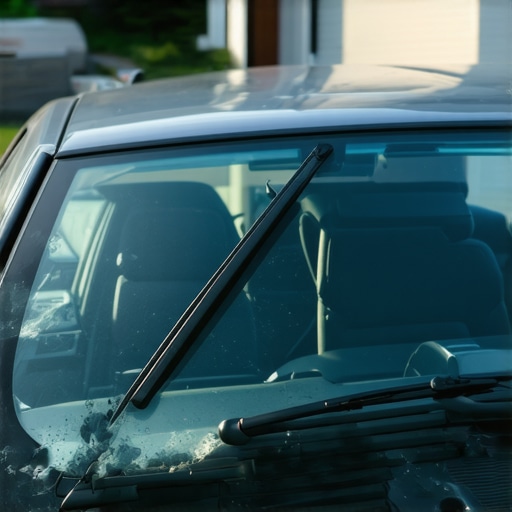
To understand why a mobile service can easily handle a chip repair on your windshield but might struggle with a side window, we have to look at the molecular structure. Your windshield is a sandwich. It consists of two layers of annealed glass bonded together by a polyvinyl butyral (PVB) interlayer. This interlayer is the hero of the story. When a rock hits the windshield, the PVB holds the glass in place, preventing the crack from spider-webbing across the entire surface instantly. This allows a glass installer to inject a clear resin into the Hertzian cone of the chip, restoring structural integrity.
Side windows, however, are almost exclusively tempered glass. During the manufacturing process, the glass is heated and then rapidly cooled with high-pressure air blasts, a process we call quenching. This creates intense compressive stress on the surface and tensile stress in the core. The glass is essentially a coiled spring. If you nick it deep enough to reach that tension zone, the entire pane does not just crack; it undergoes a total catastrophic failure. It turns into thousands of small cubes. You cannot perform a chip repair on a grenade that has already had the pin pulled.
“Installation is just as critical as the window performance itself. A high-performance window installed poorly will fail.” – AAMA Installation Masters Guide
The Cold Climate Crisis: Why U-Factor Matters
In northern regions like Minneapolis or Chicago, the enemy of your glass is the dew point and thermal expansion. When you have a chip in a laminated windshield, moisture gets trapped inside the crack. When that moisture freezes, it expands. Because the windshield is fixed into a rigid rough opening with high-modulus urethane, that expansion has nowhere to go but through the glass, lengthening the crack. This is why same-day service is vital in cold climates. If you wait until the first frost, that tiny chip will be a foot-long crack by morning.
With side windows, the thermal stress is even more localized. Because the side glass is an operable unit, it moves up and down within a track. If the glass is chipped near the edge, the mechanical pressure from the window seals combined with the contraction of the cold glass can cause the entire pane to explode while you are driving. This is not just a nuisance; it is a safety hazard that leaves your interior exposed to the elements instantly.
The Anatomy of a Side Window Replacement
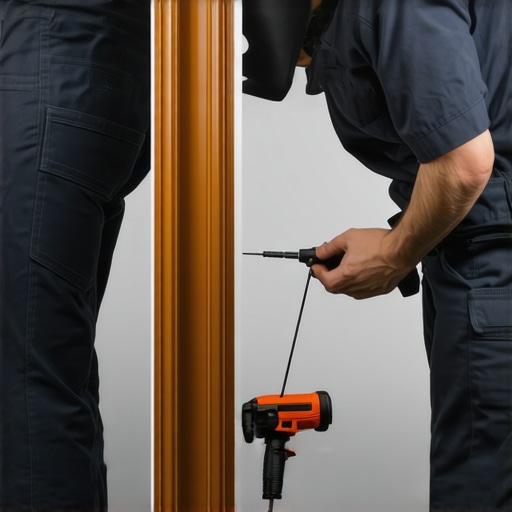
Replacing a side window is a surgical procedure compared to the relatively straightforward process of a windshield swap. While a windshield is an external glue-in job, the side window is part of a complex mechanical assembly. To do it right, a glass installer must perform an autopsy of the door panel. This involves removing the interior trim, disconnecting the power window regulator, and ensuring the weep hole at the bottom of the door is not clogged with glass dust. If those weep holes are blocked, water will pool inside your door, leading to the same rot issues I have seen in poorly flashed residential windows.
“The integrity of the fenestration system depends on the proper management of water and air infiltration at the rough opening.” – ASTM E2112 Standard Practice
We use shims and specific glazing bead tolerances in residential work to ensure a window sits level, but in a car door, the glass must be perfectly aligned within the tracks. If the alignment is off by even a few millimeters, the glass will bind, putting undue stress on the regulator and eventually causing the glass to shatter again. This is why the mobile service you choose needs to be more than just a guy with a vacuum; they need to understand the mechanical tolerances of the door assembly.
The Economics of Same-Day Service
Many homeowners and drivers balk at the cost of a full side window replacement versus a chip repair. They see a small mark and want a quick fix. But the ROI on a proper replacement is measured in safety and vehicle longevity. A high-pressure salesman might tell you that any glass will do, but in reality, the solar heat gain coefficient (SHGC) of your side windows affects how hard your AC works. Modern side glass often has infrared-reflecting coatings that keep your cabin cool. If you replace that with cheap, non-coated glass, you will feel the radiant heat on your arm all summer long, regardless of how high the AC is blowing.
Water Management: The Hidden Danger
When glass breaks inside a door, it is not just the visible pieces that matter. Small fragments can puncture the vapor barrier inside the door panel. This barrier is what keeps rain from soaking into your interior carpet. A professional glass installer will always check this barrier. Without it, you are looking at mold growth and electrical shorts. It is the same principle as a sill pan in a house: you have to assume water will get in and you have to give it a clear, controlled path to get back out. This level of detail is why a side window job takes more time and precision than a windshield repair.
Do not settle for a caulk-and-walk technician. Whether it is your home or your vehicle, the glass is a barrier against a hostile environment. It requires respect for the physics of the material and the mechanics of the installation. When you see a chip in your windshield, get it fixed today. When your side window breaks, make sure the person fixing it knows that they are dealing with a pressurized system, not just a piece of clear rock.