The danger of letting a tiny crack sit through a freeze
The Microscopic Catalyst: Why Winter is the Enemy of Glass
You hear it on the highway: a sharp metallic ‘clack’ as a piece of road debris strikes your glass. You look over, see a tiny pit no larger than a grain of salt, and exhale. It did not shatter. You think you have time. As a master glazier with over two decades in the field, I can tell you that you are currently looking at a physics experiment waiting to go catastrophic. In a temperate climate, you might get lucky for a few weeks. In a freeze, you are on a countdown. A window is a high-tension system, a balance of structural integrity and thermal resistance. When you introduce a chip, you have created a focal point for stress that the glass was never designed to handle.
The Condensation Crisis: A Narrative of Neglect
I recall a specific morning in late December when a homeowner called me in a panic because their glass had seemingly ‘exploded’ overnight. I walked in with my tools and found a massive spider-web fracture radiating from a single, tiny impact point near the corner of the pane. I sat down and explained the reality: I walked in with my hygrometer and showed them the humidity inside was 60 percent, while the outside temperature had plummeted to ten degrees. It was not the windows failing; it was the physics of moisture. Water vapor had found its way into a microscopic chip in the outer glazing. When the sun went down and the mercury dropped, that water transitioned from a liquid to a solid. As any first-year physics student knows, water expands by approximately nine percent when it freezes. Inside the tight confines of a glass fissure, that expansion exerts thousands of pounds of hydrostatic pressure per square inch. The glass had no choice but to yield. This is why a mobile service for chip repair is not a luxury; it is a structural necessity.
“Installation and maintenance are just as critical as the window performance itself. A high-performance window with even minor structural compromise will fail under thermal stress.” AAMA Installation Masters Guide
The Physics of Thermal Shock and U-Factor
When we talk about windows in cold climates, the U-Factor is king. The lower the U-Factor, the better the window is at retaining heat. However, a crack destroys the thermal envelope. If you have double-pane or triple-pane units, a crack often breaches the seal of the IGU (Insulated Glass Unit). Once that seal is gone, your expensive Argon or Krypton gas fill escapes, replaced by moisture-laden ambient air. This leads to internal condensation and a total loss of R-value. In freezing conditions, the interior surface of the glass stays warm while the exterior stays frigid. This thermal gradient creates internal tension. Glass expands when warm and contracts when cold. A chip creates a ‘weak link’ where these opposing forces meet. Without a same-day chip repair, the constant cycling of the defrost setting in a car or the furnace in a home creates a ‘pumping’ action that drives the crack deeper into the sash. For those in the North, the enemy is Heat Loss and the inevitable ice-wedging that occurs when liquid snow-melt enters a crack during the day and freezes solid at night.
The Anatomy of the Repair: Why the Glass Installer Matters
Do not be fooled by DIY resin kits sold at big-box stores. A professional glass installer understands the importance of the Rough Opening and the Glazing Bead. When we perform a chip repair, we are not just ‘filling a hole.’ We are using high-index resins that match the refractive index of the glass and, more importantly, we are vacuum-sealing the repair to ensure no oxygen or moisture remains trapped. If moisture is left behind, the next freeze will simply pop the repair right out of the glass. We look at the Sill Pan and the Weep Hole to ensure that as we work, the moisture management system of the entire frame is functioning. If your installer just ‘caulks and walks,’ find a new one. A real pro checks the Shims to ensure the frame hasn’t shifted, which could be putting unnecessary pressure on the glass, making it more prone to cracking during a temperature swing.
“Standard practice for the installation of exterior windows requires that all components be free of defects that could compromise the air or water barrier of the building envelope.” ASTM E2112 Standard Practice
Mobile Service: The Only Logical Response
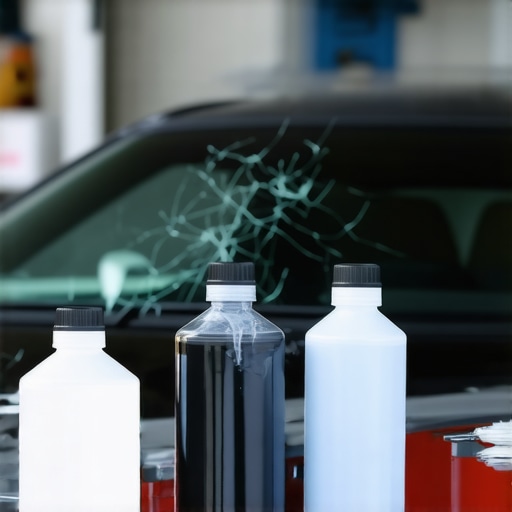
Many people wait because they don’t want to take the time to visit a shop. This is a mistake. A mobile service is designed specifically to mitigate the risk before the next weather front moves in. By the time you drive to a facility, the vibration of the road and the wind pressure against the glass can turn that tiny pit into a full-length fracture. A professional glass installer can stabilize the chip on-site, injecting the resin into the microscopic ‘legs’ of the crack to prevent them from spreading. This is especially vital for the ‘Muntin’ areas or near the edge of the glass where the tension is highest. We use specialized UV lights to cure the resin instantly, restoring the structural integrity of the pane so it can handle the expansion and contraction of the next freeze cycle.
The Math of Modern Glazing: Don’t Buy the Hype, Buy the Numbers
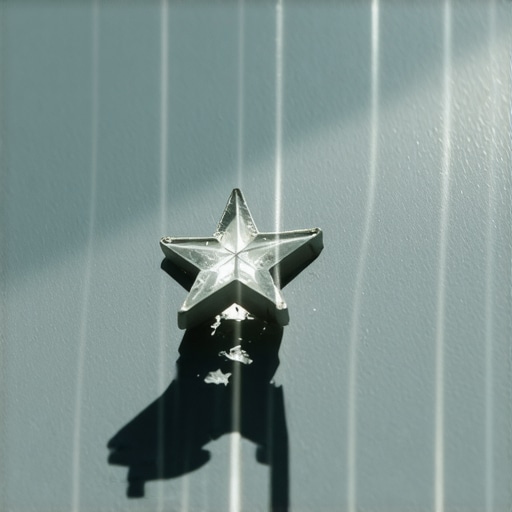
I often see high-pressure salesmen trying to sell specialized coatings as a fix-all. While Low-E coatings on Surface #3 are brilliant for reflecting heat back into your home during a Minneapolis winter, they do nothing for structural integrity. If you have a crack, that coating is already compromised. The ROI on a same-day repair is infinite when compared to the cost of a full IGU replacement. Once a crack reaches the edge of the glass, the pane is unrepairable. You are no longer looking at a fifty-dollar fix; you are looking at hundreds of dollars for a new custom-cut pane, new Glazing Beads, and the labor to reset the Sash. Be proactive. Watch for the ‘star’ or ‘bullseye’ pattern in your glass. If you see it, the clock is ticking. Don’t wait for the first frost to turn a minor annoyance into a total failure. Physics doesn’t care about your schedule; it only cares about the path of least resistance, and that path is the crack in your window.