Why professional resin is better than store-bought glue
The Anatomy of a Fracture: Why Your Glass Repair Fails Before It Starts
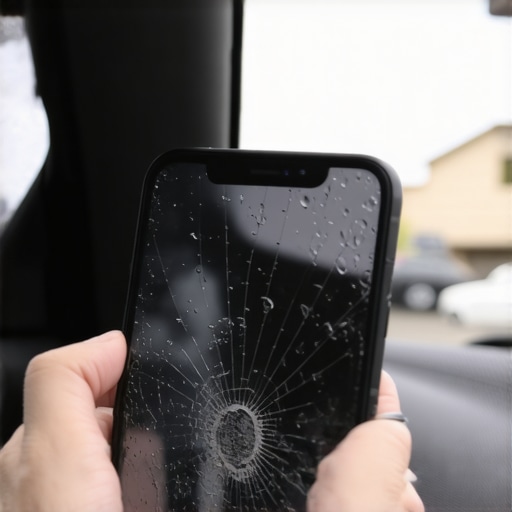
As a master glazier with over two decades of experience handling everything from monolithic plate glass to insulated glazing units (IGUs), I have seen a disturbing trend in the DIY market. It starts with a small bullseye or star-break on a pane, and the homeowner immediately reaches for a five-dollar tube of cyanoacrylate or ‘all-purpose’ clear glue. This is where the disaster begins. I recall sitting across from a property manager who had attempted to ‘seal’ a series of chips on a high-exposure storefront using a retail-grade adhesive kit. By the time I arrived with my hygrometer and thermal camera, the sun had already baked that cheap glue into a yellowed, brittle mess that had actually expanded the fracture. I had to explain that while he saved twenty dollars on the ‘fix,’ he had now compromised the entire sash and would likely need a full replacement because the retail glue prevented a proper professional resin from ever bonding with the glass molecules. It was a classic case of short-term savings leading to long-term structural failure.
“Installation and repair procedures are critical to the lifecycle of the fenestration system. A repair that does not restore the structural integrity or the optical clarity of the glass is not a repair, but a temporary mask.” – AAMA Glass Maintenance and Repair Standard
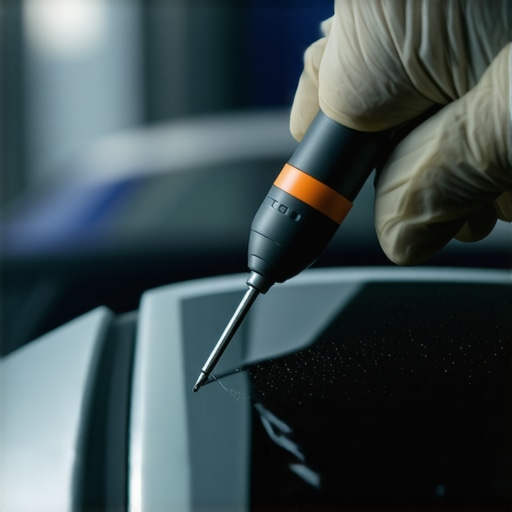
When we talk about professional glass repair, we are not talking about ‘glue.’ We are talking about anaerobic and UV-curable resins engineered with a specific refractive index. A glass installer looks at a chip as a breach in a pressurized system. Professional resin is designed to mimic the optical properties of glass—specifically, a refractive index of approximately 1.51. When a mobile service technician arrives for a same-day chip repair, they aren’t just squirting liquid into a hole. They are using a bridge and injector tool to create a vacuum, pulling the air out of the fracture and replacing it with a resin that has a lower viscosity than water, allowing it to penetrate the microscopic fissures via capillary action.
The Physics of Viscosity and Surface Tension
Retail glues are far too thick. In the world of glazing, we measure viscosity in centipoise (cP). A standard store-bought glue might have a viscosity of 100-500 cP, which is like trying to shove cold molasses into a hairline crack. It stays on the surface, creating a ‘plug’ but leaving the air pockets inside the fracture. Under the intense heat of the southern sun—where solar heat gain can raise glass temperatures to 150 degrees Fahrenheit—those trapped air pockets expand. This creates internal pressure against the glazing bead and the frame. Professional resins, however, are often as thin as 10-20 cP for initial penetration, followed by a thicker pit-filler resin to seal the surface. This ensures that the rough opening of the fracture is completely structural again.
Thermal Stress and the South-Facing Enemy
In hot climates, the enemy is Solar Heat Gain. If you use a retail adhesive on a south-facing window, you are asking for a stress crack. These glues do not have the same thermal expansion coefficient as silicate glass. As the pane heats up and expands, the glue remains rigid or, conversely, softens too much. This differential movement pulls at the glass fibers. A professional glass installer uses resins that are ‘thermally matched.’ This is particularly important for operable windows where the vibration of opening and closing the sash can cause a poorly repaired chip to ‘run’ across the entire pane. By opting for a mobile service that specializes in same-day repairs, you ensure that the resin is cured under controlled UV exposure, creating a permanent molecular bond that can withstand the mechanical stresses of the window unit.
“The longevity of a glass repair is determined by the adhesive’s ability to resist UV degradation and maintain a seal against moisture infiltration.” – ASTM E2112 Standard Practice
The Flashing and Moisture Problem
Many homeowners don’t realize that a chip is a gateway for moisture. If water enters a fracture and freezes, or even if it just sits there, it can begin to delaminate the glass or attack the flashing tape and sill pan through redirected runoff. In my years of chip repair, I have seen ‘weep holes’ in window frames clogged with the residue of failed DIY glue jobs. When the glue fails and flakes off, it migrates into the window’s drainage system. A professional resin is hydrophobic and chemically inert once cured. It doesn’t just fill the hole; it restores the ‘shingle principle’ of the glass surface, ensuring water sheds off the pane and into the proper drainage channels of the frame, rather than dwelling in the fracture.
The Importance of Professional Tools: Beyond the Tube
The mobile service professional brings more than just resin. They bring a 12-volt drill with a carbide bit to ‘pop’ the end of a crack, relieving the stress point—a process known as ‘bullseyeing’ the termination. They use a polishing cork and cerium oxide to restore the glazing surface to a factory-clear finish. A glass installer also understands the shim requirements if the repair is near the edge of the frame, ensuring that the pressure from the rough opening isn’t exacerbating the crack. You simply cannot get this level of mechanical restoration from a blister-pack kit at a hardware store. Real chip repair is an act of engineering, not a craft project. It requires an understanding of how the glass interacts with the muntin bars and the overall structural load of the wall.
Summary of Professional Resin Advantages
- Refractive Match: Professional resins disappear because they bend light at the same angle as glass.
- Mechanical Strength: Restores up to 95% of the original structural integrity of the pane.
- UV Stability: Will not yellow, shrink, or become brittle under intense solar radiation.
- Vacuum Injection: Removes air pockets that cause crack propagation.
- Same-Day Efficiency: Prevents a small chip from becoming an expensive replacement.
Ultimately, your windows are the primary defense against the elements. Treating a fracture with subpar materials is like putting a band-aid on a structural timber. It might look covered, but the rot is still happening underneath. When you see a chip, call for a professional mobile service immediately. The science of resin is the only thing standing between a simple fix and a total window failure.