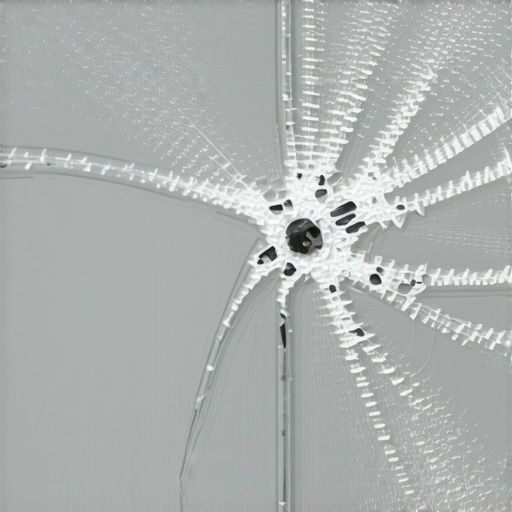
Why your windshield chip turned into a long crack overnight
The Anatomy of a Sudden Fracture
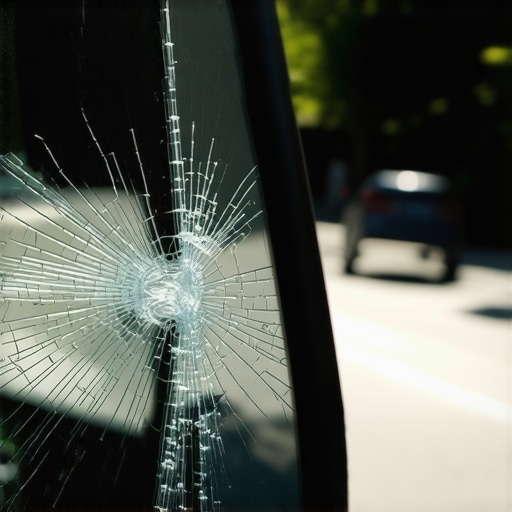
You parked your vehicle in the driveway with a minor, barely noticeable rock chip. By 7:00 AM, a jagged fissure spans the entire width of the glass. This is not bad luck: it is the inevitable result of thermal physics acting upon a compromised laminated structure. As a master glazier with a quarter-century in the field, I have seen thousands of homeowners stunned by this overnight transformation. To understand why this happens, we must look past the surface and examine the internal stress profiles of automotive glass.
The Narrative Matrix: A Case of Thermal Shock
A driver once called me in a panic because their windshield was ‘sweating’ and then suddenly groaned and cracked right before their eyes. I arrived with my hygrometer and an infrared thermometer. I showed them that while the exterior glass surface was a frigid 15 degrees Fahrenheit, they had blasted the interior defrost to 85 degrees. The humidity inside the cabin was nearly 60 percent due to wet floor mats. It was not a defective product: it was a massive thermal gradient. The glass did not have a choice; the rapid expansion of the inner ply against the frozen outer ply reached the limit of the material’s elasticity. In the world of high-performance glazing, we call this thermal shock. When a chip is present, it acts as a stress concentrator, providing a path of least resistance for that energy to release.
The Molecular Reality of Laminated Glass
Automotive windshields are not a single slab of glass. They are a sandwich consisting of two layers of annealed glass bonded by a Polyvinyl Butyral (PVB) interlayer. This interlayer is designed to absorb energy during an impact, but it also creates a complex tension environment. When a stone strikes the outer layer, it creates a ‘break’ in the silica-oxygen network. Even if the chip looks stable, the structural integrity of that outer ply is gone. Unlike an operable window sash in a residential home where the glass might be held loosely by a glazing bead, a windshield is urethane-bonded to the vehicle frame, which we can consider the rough opening. This rigid mounting means the glass cannot expand or contract freely as temperatures fluctuate.
“Installation is just as critical as the window performance itself. A high-performance window installed poorly will fail.” – AAMA Installation Masters Guide
The Role of the PVB Interlayer and Moisture
One of the primary culprits in overnight cracking is moisture ingress. Water finds its way into the void created by the chip. If the temperature drops below freezing, that water expands by approximately 9 percent. This hydraulic pressure is exerted directly against the fragile edges of the glass crack. Because glass is an amorphous solid with high compressive strength but relatively low tensile strength, the expansion of freezing water is more than enough to drive the crack forward. This is why a same-day chip repair is not just a convenience: it is a structural necessity to seal the breach before the environment can exploit it. A mobile service technician uses a vacuum-pressure tool to extract air and moisture from the break, replacing it with a specialized resin that has a similar refractive index and expansion coefficient as the glass itself.
NFRC Logic: The North/Cold Climate Context
In colder regions like Minneapolis or Chicago, the U-Factor of your glass system becomes the dominant metric. While we do not use NFRC labels on car glass in the same way we do for a residential triple-pane argon-filled unit, the physics remains. In a cold climate, the enemy is the temperature differential. The interior of the car is a pocket of heat, while the exterior is a heat sink. The U-Factor, or the rate of heat transfer, determines how quickly the glass temperature stabilizes. If you have a chip, the uneven heating caused by your car’s HVAC system creates a localized area of expansion. If the chip is near the edge of the glass where it is bonded to the cold metal frame, the stress is even higher. We often see ‘runners’ start from the edge and move inward because the glass at the perimeter is shimmed and glued tightly, leaving no room for movement.
“Glazing systems must be designed to accommodate the thermal expansion and contraction of all components without causing damage to the glass or the surrounding structure.” – ASTM E2112 Standard Practice
The Mechanics of Professional Repair
When a glass installer approaches a chip repair, they are performing a delicate balancing act. The process involves cleaning the rough opening of the break, ensuring no glass shards or dirt remain. Using a bridge and injector, the technician forces resin into the microscopic fissures of the break. This resin must be cured with specific ultraviolet wavelengths to ensure it bonds to the silica. If this is not done quickly, the chip becomes a long crack. Once a crack exceeds the size of a dollar bill, the structural integrity of the outer ply is compromised beyond the point where resin can safely bridge the gap. At that stage, a full replacement is the only viable path to safety. This involves cutting the old urethane bead, cleaning the pinch weld, and applying a new primer and adhesive system that meets Federal Motor Vehicle Safety Standards.
Why Mobile Service is a Strategic Choice
Waiting to visit a shop is often the catalyst for a total glass failure. The vibration of driving, combined with the wind pressure exerted on the glass at highway speeds, is often enough to trigger a crack. A mobile service minimizes this risk by bringing the repair to the vehicle while it is in a static state. By stabilizing the chip where the car sits, the glazier prevents the mechanical and thermal stresses of travel from worsening the damage. This is the difference between a fifty-dollar repair and a five-hundred-dollar replacement. In the glazing industry, we prioritize water management and stress distribution. A chip is a failure in both categories. It allows water into the laminate and concentrates stress in a single point. Resolving it immediately is the only way to maintain the safety parameters of the original equipment manufacturer.
The Math of Glass Replacement ROI
Many homeowners view glass as a simple commodity, but the engineering involved in a modern windshield is immense. Beyond the glass itself, many units now include muntin-like frit patterns for UV protection and integrated sensors for advanced driver assistance systems. The ROI on a same-day chip repair is nearly instantaneous when you consider the cost of recalibrating cameras and sensors associated with a full windshield replacement. Do not be misled by the small size of the initial damage. The physics of thermal expansion is relentless, and a chip is a ticking clock. When the dew point shifts and the temperature drops, that small pit in your glass will seek equilibrium by expanding. Ensuring the seal is restored before that happens is the mark of a well-maintained vehicle and a savvy owner who understands the technical realities of modern glazing materials. Always choose an installer who understands the shingle principle of water shedding and the importance of a clean, well-primed surface for any bonding work. Technical precision beats a quick fix every time.