The science of how glass resin seals a chip
The Physics of the Fracture
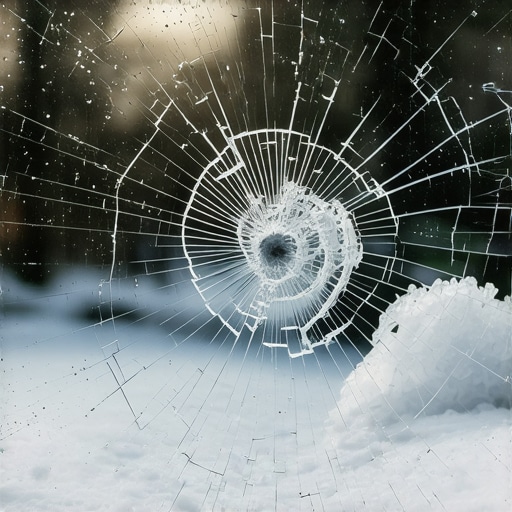
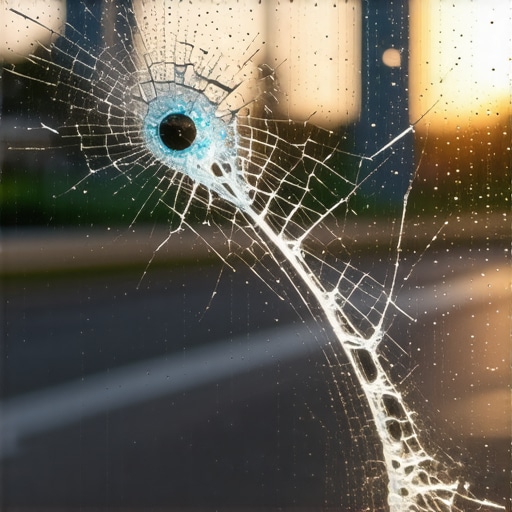
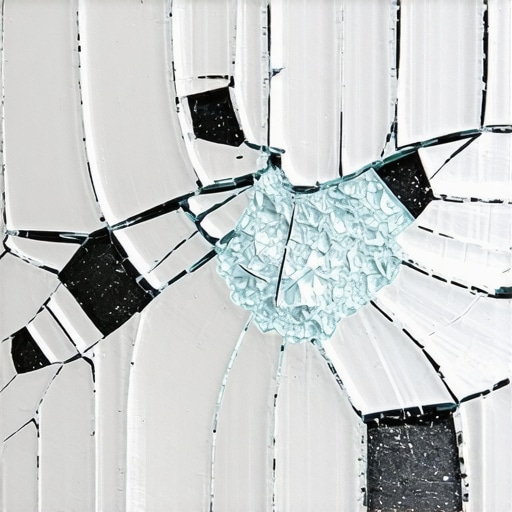
To understand how a glass installer saves a windshield or a high-performance window, you first have to understand the molecular chaos of an impact. When a stone hits a pane of glass, it is not just a hole; it is a localized failure of a brittle solid. Glass is an amorphous solid that lacks a long-range periodic atomic structure. When an object strikes it, the energy must go somewhere. In laminated safety glass, that energy is absorbed by the outer ply and the Polyvinyl Butyral (PVB) interlayer. This creates a ‘break’ that is actually a complex geometry of air pockets and micro-fractures. If you leave that air in there, the refractive index changes from 1.52 (glass) to 1.00 (air), which is why you see the dark circle or the ‘star’ legs. My job as a glazier is to replace that air with something that matches the light-bending properties of the glass exactly.
The Moisture Crisis: A Case Study
A homeowner called me in a panic because their new windows were ‘sweating’ inside a small chip they had ignored for a month. I walked in with my hygrometer and showed them the humidity in their home was 60 percent. But the real problem was inside the glass itself. Rainwater and cleaning chemicals had seeped into the chip via capillary action. I had to explain to them that glass is not as ‘solid’ as it looks; it is porous at a microscopic level when the surface tension is broken. Because they waited, the moisture had begun to attack the PVB interlayer, leading to a milky white haze known as delamination. I spent two hours with a vacuum pump and a heat gun just to dry the ‘Rough Opening’ of that tiny crack before I could even think about resin. It wasn’t the window’s fault; it was a failure to manage the micro-environment of the break. This is why a mobile service for chip repair is vital; the sooner you seal the breach, the less likely you are to face a total structural failure.
“Installation is just as critical as the window performance itself. A high-performance window installed poorly will fail.” – AAMA Installation Masters Guide
The Chemistry of the Cure
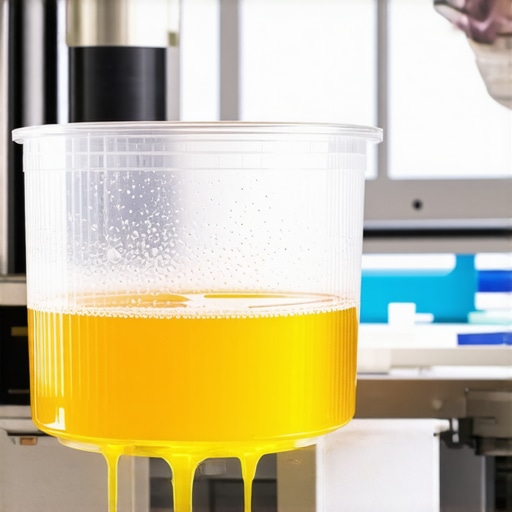
The secret to a successful repair lies in the methacrylate-based resin. This is not some hardware-store glue. This is a highly engineered polymer designed with a specific refractive index. When we perform a same-day chip repair, we are essentially performing a molecular bridge. We use a bridge and injector tool to create a seal over the pit. First, we pull a vacuum to evacuate every molecule of air and moisture. If you skip this, the resin will only coat the surface, and the crack will continue to grow due to thermal expansion. Once the vacuum is held, we switch to a pressure cycle. This forces the resin into the furthest reaches of the star-break legs. We are looking for ‘wet-out,’ the moment the black lines of the crack disappear. This is the resin displacing the air and matching the refractive index of the surrounding glass.
“Glass behaves as a brittle solid; even microscopic flaws serve as stress concentrators that significantly reduce the material’s load-bearing capacity.” – ASTM C1036 (Standard Specification for Flat Glass)
Thermal Stress and the Expansion Coefficient
Why do chips turn into cracks? It comes down to the coefficient of thermal expansion. In a cold climate, you turn on the defroster or the indoor heater. The inner surface of the glass expands while the outer surface, cooled by the winter air, remains contracted. This differential stress concentrates at the tip of the chip. A chip is a ‘stress riser.’ It is a point where the glass’s ability to resist tension is compromised. By injecting a resin that maintains a similar modulus of elasticity to the glass, we distribute that stress more evenly. The resin must be hard enough to support the glass structure (often reaching a Shore D hardness of 80 to 90) but flexible enough to move with the glass as it cycles through temperatures from minus 20 to 120 degrees Fahrenheit. Without this balance, the ‘Shim’ of resin would simply pop out during the first hard freeze.
The Curing Process: 365 Nanometers of Strength
Once the resin is injected, it remains a liquid. It is anaerobic, meaning it won’t cure just by sitting there. We use a UV light source tuned specifically to 365 nanometers to trigger the photo-initiators in the resin. This causes a rapid polymerization, cross-linking the molecules into a solid structure. During this stage, I often use a curing film to keep the resin from shrinking back out of the pit. We aren’t just filling a hole; we are restoring the ‘Sash’ of the break’s internal structure. After the cure, the excess resin is scraped away with a razor blade at a 90-degree angle to ensure the ‘Glazing Bead’ of the repair is flush with the original surface. This prevents wiper blades or window seals from catching on the repair and pulling it out.
Why Professional Mobile Service Matters
You see those DIY kits at the auto parts store, and you think you can do it yourself. Here is what they don’t tell you: those kits lack the ability to pull a true vacuum. They rely on gravity or a simple plastic syringe. Without a professional-grade vacuum, you are trapping air inside the resin. That air will expand and contract, eventually causing the resin to yellow and pop out. A professional glass installer uses a bridge made of stainless steel or high-grade aluminum to maintain a perfect seal over the impact point. We also have different viscosities of resin. If the temperature is 95 degrees, I use a thicker resin to prevent it from ‘blossoming’ out of the crack. If it is 40 degrees, I use a thinner, more aggressive resin that can penetrate the tightest micro-fractures. It is a science of viscosity, temperature, and pressure.
The Economics of Same-Day Repair
Waiting is the most expensive thing a property owner can do. A chip is a 15-minute fix that costs a fraction of a full replacement. Once that chip spreads into a crack that exceeds the length of a dollar bill, the structural integrity of the pane is gone. In many modern vehicles, the windshield is a structural component that supports the roof during a rollover. In residential glazing, a crack in a tempered or dual-pane unit means the argon gas has escaped and the U-Factor has plummeted. By opting for a same-day mobile service, you are essentially ‘weather-stripping’ your glass. You are preventing the ‘Weep Hole’ effect where moisture enters the unit and creates a permanent foggy mess. Don’t listen to the salesman who says you need a whole new window for a 10mm chip. If the seal isn’t broken on a dual-pane unit, or if the chip is in the outer ply of a windshield, the science of resin is your best friend.