How to handle a rock chip before the heat turns it into a crack
The Volatile Physics of Laminated Glass
Most vehicle owners and property managers view a rock chip as a minor cosmetic blemish, a tiny star or bullseye in the glass. As a master glazier with over 25 years of experience handling everything from monolithic plate glass to high-performance laminated units, I see something far more dangerous: a compromised structural diaphragm. When a projectile strikes your glass, it does more than create a hole; it creates a localized zone of high-intensity stress. In the trade, we look at glass not as a static solid but as a supercooled liquid that is constantly reacting to its environment. This is especially true when we discuss the coefficient of thermal expansion.
The Thermal Ticking Clock: Why Heat is the Catalyst
I recently sat across from a homeowner who was trying to save twenty dollars by using a DIY repair kit he bought at a gas station. He was working on his car in the middle of a 95-degree afternoon in Phoenix. I had to explain to him why his ‘quick fix’ was actually a recipe for a total glass failure. By the time he applied the resin, the glass surface temperature had exceeded 130 degrees. The air trapped inside the chip expanded, and as he applied pressure, the entire thing spidered across the width of the glass. I call this the ‘Tin Man’ mistake: focusing on the sale or the shortcut rather than the material science. In hot climates, the Solar Heat Gain Coefficient (SHGC) isn’t just a number on a window sticker; it is a force that determines the lifespan of your repair. When the sun hits a rock chip, the glass expands. However, the damaged area cannot expand at the same rate as the surrounding intact glass. This differential stress is what drives a small chip to become a full-length crack. This is why a mobile service and same-day chip repair are not just conveniences: they are technical necessities to stabilize the glass before the next thermal cycle.
“Installation and repair procedures are just as critical as the glass performance itself. A high-performance glazing unit that is compromised and then improperly serviced will inevitably fail under thermal load.” AAMA Installation Masters Guide
The Anatomy of a Professional Chip Repair
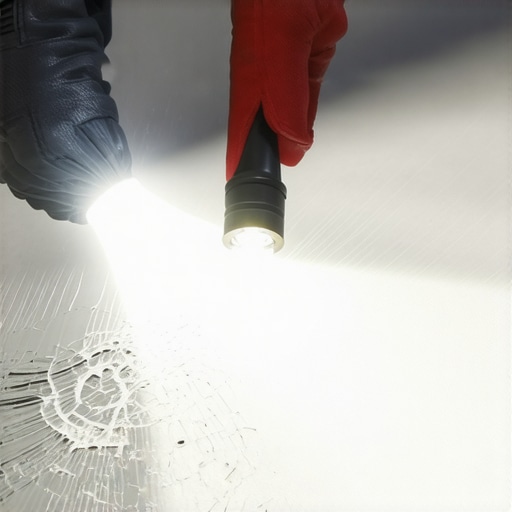
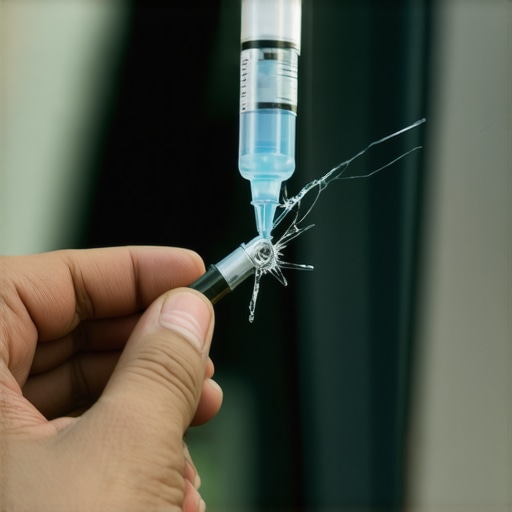
When a professional glass installer arrives for a same-day repair, they are performing a delicate surgical procedure. The goal is to restore the structural integrity of the laminated glass by injecting a specialized polymer resin into the Rough Opening of the damage. This resin must have a refractive index that perfectly matches the glass (approximately 1.52) to ensure the repair is nearly invisible. But the science goes deeper. We must first evacuate the air and moisture from the break using a vacuum pump. If moisture remains, it will interfere with the resin’s bond to the Polyvinyl Butyral (PVB) interlayer. This interlayer is the ‘glue’ that holds the two panes of glass together. In a hot climate, the Low-E coating on Surface #2 of many modern architectural or specialized automotive glasses reflects heat, but that heat build-up at the point of the chip can cause the PVB to delaminate. A master glazier uses a bridge and injector tool to cycle through vacuum and pressure phases, ensuring the resin reaches the very tips of the microscopic fissures. We then use a high-intensity UV light to cure the resin, essentially ‘welding’ the glass back together. This process is far more complex than the ‘caulk-and-walk’ approach used by amateur technicians. We are managing the dew point within the chip and ensuring the structural load-bearing capacity of the pane is restored.
Why Same-Day Mobile Service is Mandatory
Waiting even 24 hours to call a glass installer can be the difference between a fifty-dollar repair and a five-hundred-dollar replacement. Once dirt, road salt, or rain enters the chip, the repair quality drops significantly. These contaminants occupy the space where the resin should go, leaving a visible scar and a weak point in the glass. Furthermore, the constant vibration of driving acts as a ‘Shim’ in the crack, slowly prying it open. A mobile service technician can intercept this process at your home or office. By addressing the chip before the next peak-heat cycle (typically between 2 PM and 5 PM), you prevent the thermal gradient from reaching the breaking point. We often see ‘stress fractures’ that originate from a chip located near the edge of the glass where it meets the frame or the Sash. These areas are under higher tension because of the glazing bead and the way the glass is seated. If you ignore a chip in this zone, a crack is guaranteed.
“Edge stress and thermal gradients are the primary catalysts for crack propagation in damaged annealed or heat-strengthened glass units.” ASTM E2112 Standard Practice
The Math of Glass Replacement vs. Repair
People often ask about the ROI of immediate repair. The math is simple: a chip repair is a fraction of the cost of a full replacement. But it’s not just about the money. When we perform a full-frame tear-out or a windshield replacement, we are breaking the factory seal. While a master glazier can replicate this seal perfectly, it is always preferable to maintain the original installation if the structural integrity is still intact. Think of the glass as a pressurized vessel. Every time you hit a bump or close a door, you are testing that pressure. A chip is a leak in that system. By utilizing a same-day chip repair service, you are sealing that leak before the environment forces the glass to expand and contract beyond its limit. Don’t buy into the high-pressure sales pitches that say every chip requires a new window; look at the numbers. If the chip is smaller than a quarter and not in the driver’s direct line of sight, a technical resin injection is the superior scientific choice. It maintains the original factory bond, preserves the PVB interlayer, and keeps the glass out of a landfill. Water management and thermal management are the two pillars of glazing; a rock chip compromises both. Address it with the precision of a master glazier, or prepare to replace the entire unit when the mercury rises.