How to tell if your windshield cameras are misaligned
The Invisible Infrastructure of Modern Driving
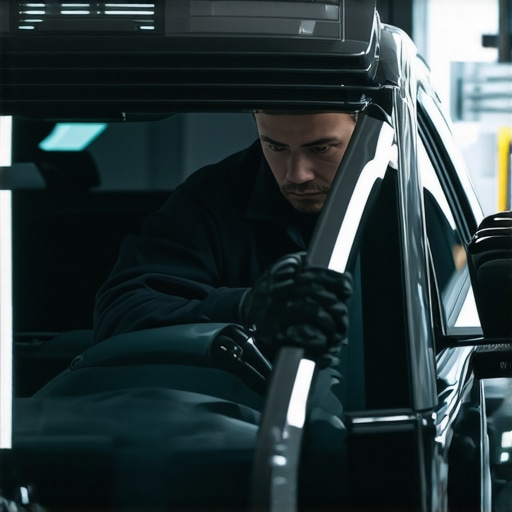
As a master glazier with a quarter-century of experience handling everything from monolithic structural glass to the high-tech laminates found in modern automotive cabins, I view a windshield as more than a piece of safety equipment. It is a sophisticated optical lens. When you hire a glass installer for a same-day chip repair or a full replacement, you aren’t just paying for the glass; you are paying for the precise alignment of a safety system that relies on every millimeter of that glass being perfectly positioned. I pulled a windshield out of a luxury SUV in Chicago where the previous technician had used a screwdriver to scrape the pinchweld, leaving raw metal exposed and the mounting bracket skewed. The rust had already started to bloom under the urethane, but more importantly, the ADAS bracket was tilted by less than three degrees. That tiny deviation meant the Lane Keep Assist was trying to steer the car into oncoming traffic because the camera’s field of vision was physically compromised. This is the reality of modern glazing: if the structural bond is off, the digital brain of the vehicle is blind.
“Installation is just as critical as the window performance itself. A high-performance window installed poorly will fail to meet safety and thermal expectations.” AAMA Installation Masters Guide
When we talk about Advanced Driver Assistance Systems (ADAS), we are talking about a network of cameras and sensors that reside behind your rearview mirror. These systems manage your adaptive cruise control, emergency braking, and lane departure warnings. In colder climates like Minneapolis or Chicago, these cameras face an uphill battle. The enemy here is heat loss and the dew point. If your glass installer uses a sub-par adhesive or fails to ensure the heating elements surrounding the camera aperture are functioning, you will face constant condensation within the camera’s housing. This is not just a nuisance; it is a failure of the thermal barrier. A professional mobile service must ensure that the glass has the correct U-factor and that the Low-E coatings do not interfere with the specific infrared frequencies the cameras use to ‘see’ the road in low-visibility conditions.
The Physics of Misalignment: Pitch, Yaw, and Roll
Why does a millimeter matter? To understand this, we have to look at the geometry of the road. A camera mounted at the top of a windshield is angled to look hundreds of feet ahead. If the glass installer sets the windshield just slightly too high or too low in the rough opening of the car frame, the angle of the camera—its pitch—is altered. A 1mm shift at the bracket can result in a 10-foot error in where the car thinks the lane markings are at highway speeds. This is why the ‘caulk-and-walk’ installers are so dangerous in the auto glass world. They drop the glass, slap on some tape, and move to the next job without ever considering the optical center of the glass. The refractive index of the laminate also plays a role. Cheaper, non-OEM glass often has ‘waves’ or slight thickness variations. To a human eye, it looks fine. To a high-definition camera, it is like looking through a funhouse mirror.
“Proper glass installation is the prerequisite for all safety system functionality. If the structural bond is compromised, the sensor data is invalid.” AGSC Standard for Auto Glass Replacement
In hot, southern climates like Phoenix or Miami, the enemy is different: Solar Heat Gain (SHGC). High temperatures can cause cheaper urethanes to soften before they fully cure, leading to ‘glass creep.’ If you drive the vehicle too soon after a mobile service, the vibration of the road can cause the windshield to settle lower than intended. This shift, even if it is microscopic, throws off the yaw of the camera. Suddenly, your car thinks the vehicle in the next lane is actually directly in front of you, triggering a ghost-braking event. This is why I always insist on using high-modulus urethane that provides the structural rigidity necessary to keep those cameras locked in their calibrated positions regardless of the outside temperature.
Symptoms of a Misaligned Camera System
How do you know if your glass installer missed the mark? The first sign is often the most subtle: a ‘hunting’ sensation in the steering wheel. If your Lane Keep Assist is constantly nudging you back and forth within a lane that you are clearly centered in, the camera’s roll is likely misaligned. It is seeing the lines at an angle and trying to compensate for a tilt that isn’t there. Another red flag is the failure of the auto-high beam system. If your car is blinding oncoming traffic or refusing to turn the high beams on in dark areas, the light sensor—which is often integrated into the camera cluster—is not receiving the correct input through the frit (the black painted edge of the glass). If the frit is not perfectly aligned with the camera’s aperture, it acts like a blinker on a horse, narrowing the field of vision and rendering the system useless.
The Mobile Service vs. In-Shop Calibration Debate
Many customers ask for same-day mobile service because of the convenience. As a specialist, I tell them that while a chip repair or a standard glass swap can be done in a driveway, a full ADAS calibration requires a controlled environment. When we perform a static calibration, we use target boards that must be level and at a precise distance from the vehicle’s center point. If your driveway has a two-degree slope, the calibration will be flawed from the start. A master glazier knows that the environment is part of the tool kit. Dynamic calibration, where we drive the car at a set speed on well-marked roads, is also sensitive. If the installer didn’t account for the weight of the fuel tank or the tire pressure, the pitch of the vehicle will be off, and the camera will be calibrated to a false horizon. This is the level of detail required to ensure that a windshield replacement actually restores the vehicle to its factory safety specifications.
Material Science: The Role of the Spacers and Shims
In architectural glazing, we use shims to ensure a window is plumb and level. In automotive glass, we rely on the consistency of the urethane bead and the precision of the glass curvature. If a technician uses too much adhesive at the top and not enough at the bottom, they have effectively changed the angle of the entire windshield. This is common in ‘rushed’ same-day repairs where the tech doesn’t allow the glass to sit under its own weight before applying the final seals. The camera, sitting in its bracket, is now pointing at the sky rather than the bumper of the car in front of you. You might not see a warning light on the dash immediately, but the first time you need your emergency braking system to engage, those few degrees of error could be the difference between a close call and a collision. We must treat every windshield as a structural component of the vehicle’s crash management system and its digital nervous system.
Final Verdict: Don’t Buy the Hype, Buy the Numbers
In the end, you shouldn’t settle for an installer who can’t explain the difference between a static and dynamic calibration or who doesn’t understand why the SHGC of the replacement glass matters for your camera’s longevity. Precision in glazing is about managing the transition between the interior and exterior environments while maintaining an unobstructed and undistorted path for light. Whether it is a storefront or a sedan, the principles remain the same: quality materials, rigorous prep of the rough opening, and a refusal to compromise on the curing process. If your ‘pro’ tells you that calibration isn’t necessary because ‘the light didn’t come on,’ it is time to find a real glazier. Your safety depends on the math, not the salesman’s pitch. Focus on the technical specs, the NFRC ratings, and the certification of the installer. That is how you ensure your ‘window to the world’ is actually helping you see it clearly.