Why professional resin cures clearer than store bought kits
The Optical Illusion of the ‘Quick Fix’
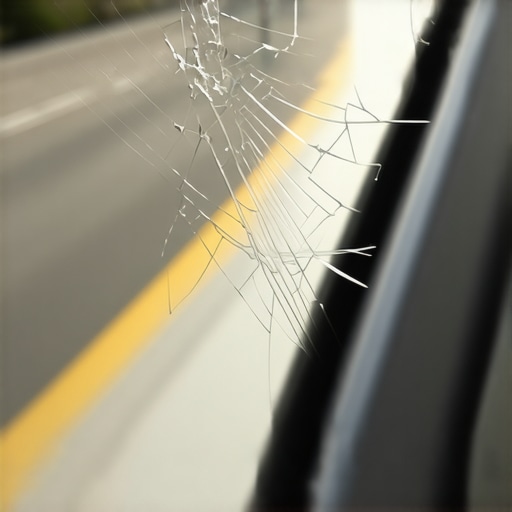
In the world of professional glazing, we don’t look at a chip in a window or a windshield as a mere blemish. It is a structural failure of the silica lattice. Most homeowners and vehicle owners see a star break or a bullseye and think a fifteen dollar tube of adhesive from a big-box retailer will solve the problem. As someone who has spent over two decades examining glass under magnification, I can tell you that the difference between a professional glass installer using high-grade resins and a DIY kit is the difference between a permanent structural weld and a piece of scotch tape. The goal isn’t just to fill the hole; it is to restore the refractive index of the glass and prevent the crack from radiating under thermal stress.
A homeowner once called me in a panic because their large, expensive picture window had developed a series of ‘ghost’ cracks following a DIY repair. I walked in with my hygrometer and a thermal imaging camera. The previous installer, in this case the homeowner, had used a store-bought kit that relied on a single-component acrylic resin. They had failed to account for the humidity levels in the room, which were hovering at 60 percent. Moisture had been trapped inside the break before the resin was injected. It was not the window failing; it was the physics of the repair. Because the moisture wasn’t evacuated using a professional vacuum cycle, the resin turned cloudy within forty eight hours. This is the reality of ‘caulk-and-walk’ mentality applied to glass repair.
“Installation is just as critical as the window performance itself. A high-performance window installed poorly will fail.” AAMA Installation Masters Guide
The Physics of Refractive Index Matching
The primary reason a professional repair is nearly invisible while a DIY kit leaves a ‘scar’ comes down to the refractive index. Glass has a refractive index of approximately 1.52. When light passes from the glass into a void, such as a chip, it bends and reflects, creating the visible dark lines we recognize as a crack. Professional-grade resins are engineered with specific chemical compositions to match that 1.52 index exactly. Store-bought kits often use a generic, low-viscosity adhesive that might have an index of 1.45 or 1.48. While that sounds close, the human eye is incredibly sensitive to light refraction changes. Any mismatch results in a visible shimmering effect that never truly disappears.
Furthermore, professional resins are tailored for the climate. In colder regions like Chicago or Minneapolis, where thermal expansion and contraction are extreme, we use resins with a high modulus of elasticity. Glass is constantly moving. Even an operable sash in a residential window experiences minute shifts when the temperature drops. If the resin is too brittle, which is a hallmark of cheap kits, the bond will shear away from the glass walls during the first freeze-thaw cycle. A professional glass installer understands that the resin must act as a bridge, moving with the glass rather than fighting against it.
Viscosity and Capillary Action in Glass Repair
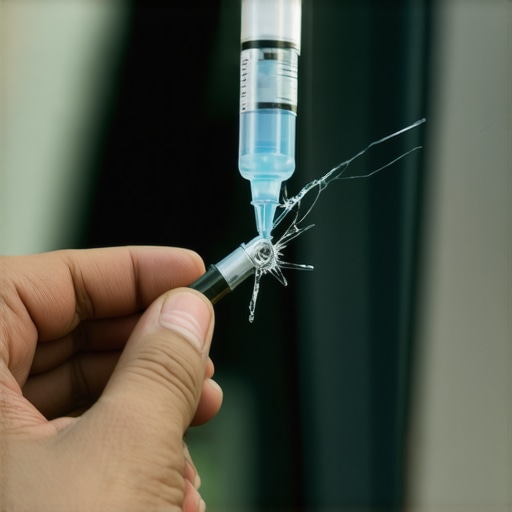
The chemistry of the resin is only half the battle; the other half is the delivery system. Most store-bought kits provide a simple plastic syringe or a gravity-fed tube. These tools are incapable of overcoming the surface tension within a tight micro-crack. Professional mobile service technicians use specialized bridge tools that create a true vacuum over the impact point. We evacuate the air—which is the enemy of clarity—and then switch the tool to a pressure cycle to force the resin into the furthest reaches of the fracture. This ensures that every leg of a star break is saturated.
When we talk about ‘same-day’ service, it is not just for convenience. It is a race against contamination. Once road salt, window cleaner, or dirt enters a chip, the odds of a crystal-clear cure drop significantly. A professional will use a pre-treatment cleaner to decontaminate the area, something DIY kits often skip. We also look at the ‘Rough Opening’ of the glass stress. If a chip is too close to the edge of the glass, the structural integrity is compromised in a way that no resin can fix. A master glazier knows when to repair and when to specify a full replacement of the glass unit.
“The integrity of the fenestration system relies on the seamless integration of materials that can withstand environmental pressures without losing structural or optical properties.” ASTM E2112 Standard Practice
The Curing Process: Anaerobic vs. UV Stabilization
One of the technical details that separates the masters from the amateurs is the curing methodology. DIY kits usually rely on whatever sunlight is available or a tiny, weak UV strip. Professional resins are often dual-cure or specifically formulated for high-intensity UV lamps that cure the material from the inside out in under sixty seconds. This rapid, controlled curing prevents the resin from shrinking. All resins shrink slightly as they polymerize, but professional formulations minimize this to less than one percent. Cheap resins can shrink by five percent or more, pulling away from the edges of the chip and leaving a visible ring.
In northern climates, we also have to deal with the ‘Dew Point’ inside the repair. If there is any microscopic condensation inside the chip, the resin will not bond. Professionals use a dry-out tool—a specific heating element—to ensure the glass is at the optimal temperature for the molecular bond to take place. We then finish the repair with a pit filler resin, which is a much higher viscosity material designed to be polished flat with the surface of the glass. This ensures that the wipers on a car or the cleaning squeegee on a house window don’t catch on the repair site.
Thermal Stress and Long-term Durability
If you are in a cold climate, the U-Factor of your glass matters, but so does the thermal stability of your repairs. When the heat is cranked up inside a house and it is sub-zero outside, the glass experiences a massive temperature gradient. Professional resins are tested to withstand these gradients without yellowing or becoming brittle. Many store-bought resins are sensitive to UV radiation over time. Within six months, that ‘clear’ repair can turn a nasty shade of amber because the manufacturer didn’t include expensive UV stabilizers in the formula. This is why professional services are the only way to ensure the longevity of the glass.
Ultimately, a window is a managed hole in your wall. Whether it is a fixed pane or an operable sash with a complex muntin pattern, the glass is the primary barrier between you and the elements. Trusting that barrier to a fifteen-dollar kit is a gamble with the structural safety of your home or vehicle. When you hire a professional for a same-day mobile service, you aren’t just paying for the resin; you are paying for the vacuum pressure, the refractive index matching, and the peace of mind that the chip won’t turn into a sprawling crack the next time the wind picks up. Don’t let a small chip become a full-frame replacement because you chose the ‘easy’ path. Choose the technical path.