The secret to a streak-free windshield after a chip fix
The Physics of the Invisible Repair
In my twenty-five years as a glazier, I have seen every possible failure of glass, from structural curtain walls to the delicate laminated safety glass of a modern windshield. The average driver sees a chip and thinks of a minor annoyance, but as a professional, I see a fracture in a structural component of the vehicle. A windshield isn’t just a shield; it is a complex piece of engineering designed to provide structural integrity during a rollover and to facilitate the proper deployment of airbags. When you seek a same-day glass installer for a chip repair, you aren’t just paying for a cosmetic fix. You are paying for the management of the refractive index and the restoration of the glass’s integrity.
A homeowner called me in a panic because their new windows were ‘sweating.’ I walked in with my hygrometer and showed them the humidity was 60%. It wasn’t the windows; it was their lifestyle. I mention this because mobile service windshield repair faces the same enemy: moisture. If a technician arrives to fix a chip after a rainstorm and doesn’t spend the time to desiccate the break using a moisture evaporator or a vacuum cycle, that repair is doomed. Trapped moisture reacts with the resin, leading to a milky, hazy finish that ruins the streak-free clarity you expect. In the glazier trade, we call this a failure of the bond, similar to how a Sill Pan fails when water isn’t directed toward a Weep Hole.
“Installation is just as critical as the window performance itself. A high-performance window installed poorly will fail.” – AAMA Installation Masters Guide
The Science of Resin and Refractive Indices
To achieve a truly streak-free and invisible repair, one must understand the chemistry of the acrylic resins used in the industry. The secret lies in the refractive index. Standard soda-lime glass has a refractive index of approximately 1.51. If the resin used by your glass installer has a refractive index of 1.48 or 1.55, the repair will always be visible as a ‘ghost’ or a shimmer, no matter how much you polish it. A master technician selects a resin that matches the glass perfectly, ensuring that light passes through the repair at the same angle it passes through the surrounding pane. This is the Glazing Zooming approach to auto glass: we aren’t just filling a hole; we are matching molecular light-bending properties.
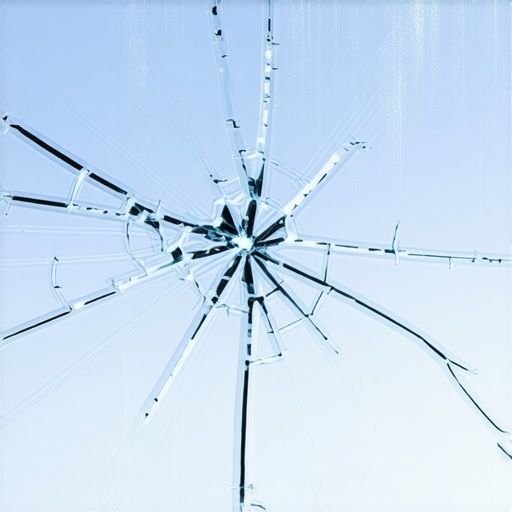
In northern climates like Chicago or Minneapolis, the enemy of a chip repair is the extreme temperature cycle. When the glass is cold, the Rough Opening of the crack actually contracts. If you inject resin into a cold windshield, the fracture will expand as the car warms up, potentially causing the repair to pop or ‘flower’ out. A professional mobile service will always pre-heat the glass to a stable 70 degrees Fahrenheit to ensure the resin flows into the tiniest microscopic fissures of a star-break. This attention to detail is what separates a Master Glazier from a ‘caulk-and-walk’ amateur. Just as an operable sash requires precise Shim placement to function, a windshield chip requires precise pressure management during the injection phase.
The Anatomy of the Streak-Free Finish
Why do some repairs look like a smudge after the technician leaves? It often comes down to the pit filler and the curing process. After the structural resin is injected into the break, a higher viscosity pit filler is applied to the surface. This is the Glazing Bead of the auto glass world. It must be cured using a specific UV wavelength, typically around 365 nanometers. If the technician uses a weak battery-operated lamp or relies on the sun on a cloudy day, the resin doesn’t fully cross-link. This results in a soft spot that attracts wiper grime and washer fluid, creating a permanent streak. A professional same-day service uses high-intensity UV bridges that cure the resin in minutes, ensuring the surface is as hard as the original glass.
“Standard practice for installation of exterior windows, doors, and skylights requires rigorous attention to sealant compatibility and substrate preparation.” – ASTM E2112
Once cured, the excess resin must be scraped away with a fresh razor blade held at a precise 90-degree angle. If the blade is dull or tilted, it can leave microscopic scratches on the muntin-adjacent surface of the glass. The final step is the application of a cerium oxide polishing compound. This isn’t just a wax; it is a chemical polish that levels the repair to the surrounding glass surface. When you look through the windshield, there should be no deviation in the light path. If you see a streak, it’s likely because the technician skipped the Flashing Tape equivalent of auto glass: the final surface polish.
The Thermal Reality of Laminated Glass
In cold climates, the U-Factor of your windshield matters. While we don’t use triple-pane glass in cars, the PVB (Polyvinyl Butyral) interlayer acts as a thermal break. If a chip penetrates deep enough to touch this interlayer, the repair becomes much more complex. Moisture can cause the PVB to delaminate, creating a white fog that no amount of resin can fix. This is why same-day service is vital. The longer you wait, the more contaminants like road salt, car wax, and rain-repellent treatments get into the break. These chemicals are the enemies of adhesion. A Master Glazier knows that once a chip repair is contaminated, the chemical bond is compromised, much like trying to apply sealant to a dirty Rough Opening.
Ultimately, the secret to a streak-free windshield is the combination of vacuum pressure, resin chemistry, and mechanical polishing. Don’t be fooled by high-pressure sales pitches for total replacement when a technical repair can restore the glass to 95 percent of its original clarity. Buy the numbers, not the hype. Look for a technician who understands the dew point and the curing requirements of their specific resin kit. That is the only way to ensure your view of the road remains unobstructed and your vehicle remains structurally sound.