Why your side windows are harder to fix than your windshield
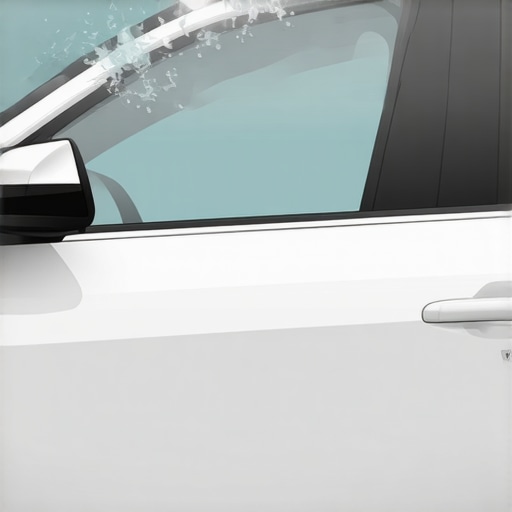
The sound of a side window shattering is unmistakable: it is the auditory signature of five thousand pounds per square inch of internal tension being released in a millisecond. Most drivers experience this after a break-in or a stray rock and immediately call for a glass installer, expecting a simple mobile service similar to a windshield chip repair. However, as someone who has spent over two decades in the glazing industry, I have to set the record straight. A side window is not merely a piece of glass: it is an operable mechanical component that functions within a highly restricted rough opening. While your windshield is a structural laminate designed to stay together under impact, your side glass is a tempered safety device designed to fail spectacularly for your protection. Understanding the physics of this difference explains why that same-day repair is a much more intensive technical operation than most realize.
The Anatomy of an Automotive Fracture: A Narrative Reality
I recall a specific service call out in a suburban driveway where a homeowner had tried to apply a DIY resin kit to a small crack in his driver-side window. He had seen a mobile service technician perform a windshield chip repair the week prior and assumed the physics were identical. I arrived just as he touched the applicator to the glass. Before I could even get my tool bag out of the truck, the entire pane spontaneously reorganized itself into a pile of tempered cullet at his feet. Why? Because a side window is a frozen explosion. During the manufacturing process, the glass is heated and then rapidly cooled, a process called quenching. This creates a state where the outer surfaces are in high compression while the inner core is in extreme tension. When that compressive layer is breached, even by a microscopic amount, the stored energy is released. I had to explain that while a windshield is a sandwich of glass and polyvinyl butyral (PVB) that holds its shape, the side window is a binary system: it is either whole or it is gravel. There is no middle ground for a chip repair here.
“Safety glazing materials for automotive use must balance structural integrity with the requirement for rapid egress. Tempered glass provides the necessary strength to resist wind loads while ensuring that, upon failure, the fragments do not possess the mass or sharp edges to cause fatal lacerations.” ANSI Z26.1 Safety Standard for Glazing Materials
The Physics of Heat and SHGC in Side Lites
In high-temperature climates, the role of your side windows becomes even more critical. We often talk about Solar Heat Gain Coefficient (SHGC) when discussing residential windows, but it is equally vital in automotive glazing. Most side windows today are treated with Low-E coatings on Surface #2 (the inner side of the outer face) to reflect long-wave infrared radiation. In a hot climate, a side window acts as a thermal barrier that prevents your vehicle’s interior from becoming a convection oven. When we perform a same-day replacement, we aren’t just looking for a piece of glass that fits the hole. We are looking for a unit that matches the original manufacturer’s VT (Visible Transmittance) and SHGC ratings. If you install a cheap, non-coated piece of glass, you will feel the radiant heat on your shoulder immediately, even if the AC is cranking. This is where the technical precision of a professional glass installer comes into play: we ensure the replacement glass maintains the thermal equilibrium of the cabin.
The Mechanical Challenge: Beyond the Glass
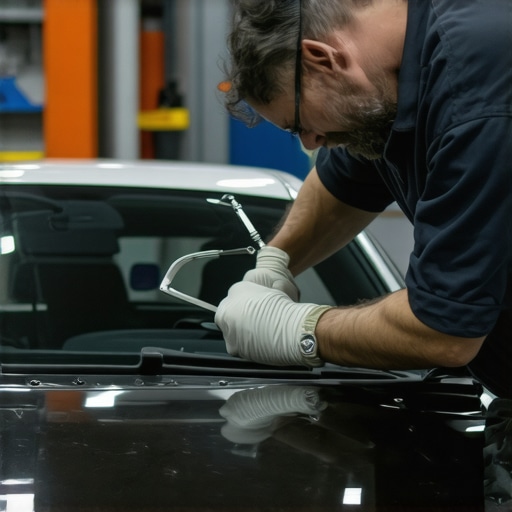
The complexity of a side window replacement lies in what you cannot see. Unlike a windshield, which is urethaned into a static position, a side window is an operable unit. It must slide within a track, guided by a glazing bead and driven by a mechanical regulator. When a side window shatters, the shards don’t just fall outside: they fill the inner cavity of the door. A proper mobile service technician spends more time with a vacuum than with a glass suction cup. If those fragments are not meticulously removed from the sill pan at the bottom of the door, they will clog the weep holes. Once those weep holes are blocked, rainwater that enters through the belt molding will pool inside the door, leading to corrosion and electrical failure of the window motor. This is why a quick fix is never as simple as it looks. We must remove the interior door panel, disconnect the vapor barrier (which we reseal with specialized flashing tape), and carefully extract every gram of glass from the regulator tracks and the bottom of the door shell.
“Installation of automotive glass must account for the mechanical tolerances of the window regulator and the integrity of the moisture management system within the door cavity. Failure to clear obstructions can lead to premature mechanical failure and structural oxidation.” AAMA Installation Masters Technical Bulletin
The Shim and the Sash: Ensuring Proper Alignment
When we seat a new side window into the regulator clips, the tolerances are incredibly tight. We use the equivalent of a shim to ensure the glass is perfectly centered in the run channels. If the glass is tilted by even a fraction of a millimeter, it will bind as it moves upward, eventually tripping the anti-pinch sensors or burning out the motor. We treat the door frame as a rough opening that must be perfectly navigated. The glazing bead, or the weatherstripping that hugs the glass, must be cleaned and lubricated to ensure the new pane slides without friction. This is the difference between a hack job and a professional installation: a professional ensures the window sounds and feels exactly like it did the day it left the factory. We are managing water, air, and mechanical friction all at once.
Why Same-Day Service is a Logistics Feat
Providing same-day mobile service for side windows is a logistical challenge because of the sheer variety of glass types. Every vehicle model uses different thicknesses, tints, and attachment points. A glass installer must have access to a massive inventory of tempered units that are ready to go at a moment’s notice. Unlike a windshield chip repair, which requires only a small kit of resins and UV lights, a side window replacement requires a full mobile workshop. We are dealing with sensors, heated glass connectors, and sometimes laminated side-lites (which are becoming more common for sound dampening). If you have a laminated side window, the repair logic changes again, as these can sometimes be repaired if the crack is small enough, but they are notoriously difficult to cut and fit in the field. For the vast majority of vehicles, however, the tempered popcorn remains the standard, and our job is to manage the clean-up and mechanical recalibration that follows the explosion.
Final Considerations for the Homeowner
When you are looking for a glass installer, do not just ask for the lowest price. Ask about their process for cleaning the door cavity and whether they check the weep holes. Ask if they use OEM-equivalent glass with the correct SHGC ratings for your climate. A side window is a vital part of your car’s safety envelope and its thermal management system. It deserves more than a caulk-and-walk approach. It requires a technician who understands that the glass is only one part of a complex, moving assembly. Precision in the rough opening, care for the mechanical regulator, and a deep understanding of glazing physics are what separate a temporary fix from a permanent restoration of your vehicle’s integrity.”