Why your lane departure warning needs a glass calibration
The Invisible Intelligence Behind Your Windshield
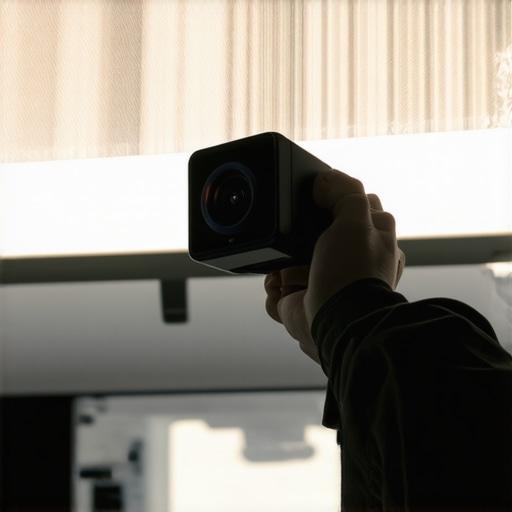
When most drivers look through their windshield, they see a transparent barrier against the wind and rain. As a master glazier with a quarter-century of experience in both structural and automotive glass, I see a complex optical lens. This lens is part of a sophisticated system known as ADAS, or Advanced Driver Assistance Systems. If you have a lane departure warning system, your vehicle relies on a camera mounted directly behind the glass. This camera does not see the road the way you do; it processes light waves through the specific refractive index of your windshield. When that glass is replaced by a glass installer, even a microscopic shift in the positioning of the glass can lead to catastrophic failures in the system’s logic. This is not about being picky; it is about the physics of light and the life-saving precision of modern engineering.
The Reality of the Misaligned Sensor
A homeowner called me in a panic because their new windshield, installed by a mobile service the day before, was causing their car to jerk the steering wheel toward the centerline. They thought it was a mechanical failure. I walked out to their driveway with my digital inclinometer and diagnostic tablet. I showed them that the humidity from a recent storm had affected the curing of the urethane, and the glass had slumped by just three millimeters. To a human, three millimeters is nothing. To a lane departure camera, that three-millimeter drop translated to a thirty-foot error in lane positioning at highway speeds. It was not the car’s fault; it was a lack of precision during the installation process. This is the danger of the ‘caulk-and-walk’ mentality that plagues the mobile service industry today.
“Installation is just as critical as the window performance itself. A high-performance window installed poorly will fail.” AAMA Installation Masters Guide
The Physics of Glazing and Refraction
To understand why calibration is non-negotiable, we must look at ‘Glazing Zooming.’ Automotive glass is a sandwich of two layers of glass with a Polyvinyl Butyral (PVB) interlayer. This interlayer is designed for safety, but it also affects how light bends as it passes through. In regions like Phoenix or Texas, where solar heat gain is the primary enemy, many windshields use specialized Low-E coatings on Surface #2. This coating is designed to reflect long-wave infrared radiation. However, if the glass installer uses an aftermarket windshield that does not match the original equipment manufacturer (OEM) specs for that coating, the camera’s ‘vision’ is obscured. It is like trying to drive while wearing someone else’s prescription glasses. The Solar Heat Gain Coefficient (SHGC) matters here because excessive heat buildup behind the glass can actually warp the plastic housing of the sensor, necessitating a full recalibration of the pitch and yaw angles.
Why Mobile Service Requires Laboratory Precision
Many people opt for same-day mobile service because of the convenience. While I support the efficiency of chip repair and mobile setups, the environment must be controlled. When you are dealing with the ‘Rough Opening’ of a vehicle’s frame, you are dealing with tolerances that would make a residential window installer sweat. There is no room for a ‘Shim’ in an auto glass install. The glass must sit perfectly on the pinchweld. If the vehicle is parked on an incline during a mobile service, the glass can shift before the adhesive reaches its initial set. This shift ruins the alignment of the camera’s focal point. We talk about ‘Sash’ and ‘Muntin’ in houses to describe the structure, but in a car, the windshield is a structural component of the roof strength and the primary mount for the vehicle’s electronic eyes.
“Standard practice for installation of exterior windows requires that the substrate be sound and the alignment be true to ensure the performance of all integrated systems.” ASTM E2112
Static vs. Dynamic Calibration: The Technical Divide
There are two primary ways a glass installer will calibrate your lane departure warning. Static calibration involves setting up a series of targets at specific distances and heights in a controlled shop environment. This requires a perfectly level floor—something you rarely find in a residential driveway. Dynamic calibration requires the vehicle to be driven at a specific speed on well-marked roads for a set period. Both methods are designed to teach the car’s computer where the ‘Sill Pan’ of its vision lies. Without this process, the car may not know the difference between a shadow and a concrete barrier. In hot climates, we focus on Surface #2 coatings to block the sun, but those same coatings can interfere with sensor heat dissipation. A professional installer knows that the ‘Weep Hole’ logic of a residential window—letting things escape—is reversed in a car; we must keep the environment behind the glass perfectly stable to avoid the ‘Condensation Crisis’ that fogs up camera lenses.
The Myth of the Same-Day Chip Repair Fix
While a chip repair can often be done as a same-day service, if the chip is in the ‘critical vision area’—the space directly in front of the ADAS camera—the glass is technically compromised. You cannot simply resin-fill a crack that sits in the path of a laser or camera sensor. The resin has a different refractive index than the glass, creating a ‘blind spot’ in the car’s computer brain. When you are looking for a glass installer, you need someone who understands the ‘Operable’ limits of the technology. Do not let a salesman tell you that a calibration is optional. It is a fundamental requirement of the safety system’s geometry. In coastal areas where corrosion is a factor, the integrity of the seal around the glass is even more vital, as any moisture intrusion can short out the expensive camera sensors mounted to the glass.
The Final Check: More Than Just a Clear View
In the end, a window is a hole in the wall, and a windshield is a hole in your car’s safety cage. Both need to be managed for light, heat, and water. When you replace a windshield today, you are performing surgery on a complex electronic organism. The next time you see a lane departure warning flicker on your dashboard, remember that it is only as good as the glass it is looking through. Precision matters. Alignment matters. And the expertise of an installer who knows the difference between a ‘Glazing Bead’ and a structural seal is the only thing standing between you and a system failure at seventy miles per hour. Don’t buy the hype of the low-cost provider; buy the precision of the numbers and the safety of a calibrated system.