Why your defroster is the fastest way to turn a chip into a long crack
The Anatomy of a Thermal Fracture
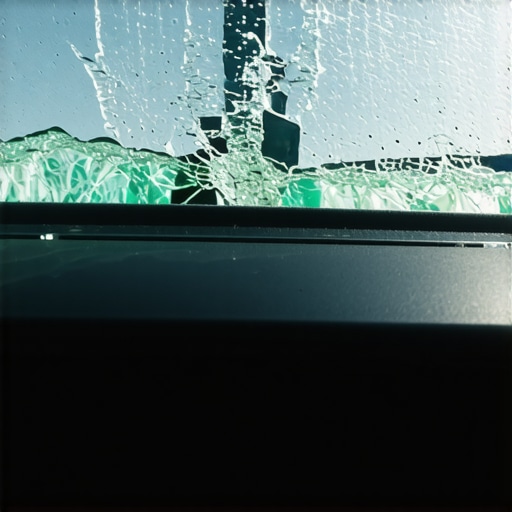
The sound is unmistakable: a sharp, metallic ping that resonates through the chassis of your vehicle. You look up and see it, a tiny bullseye no larger than a pea, sitting innocently in the center of your windshield. Most drivers shrug this off as a cosmetic nuisance, but as a master glazier with a quarter-century in the trade, I see a structural ticking time bomb. The windshield isn’t just a piece of transparent material; it is a sophisticated piece of laminated safety glass, a structural component of the vehicle that is under constant tension. When you introduce a chip, you aren’t just looking at a mark; you are looking at a localized failure of the annealed glass layer. This failure is particularly dangerous in the winter months when the defroster becomes the primary tool for visibility. [IMAGE_PLACEHOLDER]
The Narrative: A Lesson in Humidity and Thermal Stress
A homeowner called me in a panic because their new windows were ‘sweating.’ I walked in with my hygrometer and showed them the humidity was 60%. It wasn’t the windows; it was their lifestyle: running humidifiers and failing to use bath fans. I explained that glass is a thermal messenger; it tells you exactly where the energy is moving and where the weaknesses lie. The same logic applies to your windshield. I once saw a driver in a deep freeze in Minneapolis turn their defroster on full blast while a small star-break sat right above the vent. Within ninety seconds, that star-break had ‘zipped’ across the entire width of the glass. The homeowner was shocked, but to a glass installer, it was a predictable outcome of physics. Glass is a poor conductor of heat, and when you force a massive temperature differential across a localized area, something has to give.
“Installation is just as critical as the window performance itself. A high-performance window installed poorly will fail.” – AAMA Installation Masters Guide
The Science of Glazing Zooming: Thermal Expansion and Delta-T
To understand why the defroster is the enemy of the chip, we have to look at the molecular behavior of soda-lime glass. This material has a specific coefficient of thermal expansion. In a North or Cold climate, the exterior of the glass is often at sub-freezing temperatures, causing the molecules to contract and pull tightly together. When you engage your defroster, you are injecting concentrated, high-temperature air directly onto Surface #2 (the interior side of the glass). This creates a massive ‘Delta-T,’ or temperature difference, between the inner and outer layers of the laminate. In a standard residential window, we manage this with low-E coatings on Surface #3 to reflect heat back inside, but in a windshield, we rely on the PVB (Polyvinyl Butyral) interlayer to hold things together. The glass molecules near the defroster vent begin to expand rapidly. However, the surrounding glass remains cold and rigid. This creates tensile stress. In a perfect, unblemished sheet of glass, the material can often handle this stress through its inherent elastic limits. But a chip is a ‘Griffith flaw’ – a point of infinite stress concentration. The moment the thermal expansion force exceeds the fracture toughness of the glass at that specific point, the crack propagates. It doesn’t just grow; it fails catastrophically along the path of least resistance.
The Role of the Glass Installer and Professional Chip Repair
When you call for a chip repair, you aren’t just paying for a bit of glue. A professional glass installer uses a bridge and injector system to create a vacuum over the impact point. This is critical because air trapped inside the chip has a different expansion rate than glass or resin. By evacuating the air and injecting a specialized UV-curable resin with a refractive index nearly identical to the glass, we are essentially ‘welding’ the molecular lattice back together. This resin is designed to remain flexible enough to handle the expansion of the glass without pulling away from the edges of the break. This is why same-day service is so vital. Every hour that a chip sits exposed is an hour that moisture, dirt, and windshield washer fluid can migrate into the PVB interlayer. Moisture is particularly insidious; it can cause the laminate to delaminate, turning the clear plastic milky and making a successful repair impossible. A ‘caulk-and-walk’ mentality doesn’t work here. If the repair isn’t performed with the same precision as setting a new sash in a rough opening, the structural integrity remains compromised.
“The primary purpose of a window is to provide light and ventilation, but its secondary role as a structural barrier against environmental loads is paramount.” – NFRC Performance Guidelines
Why Mobile Service is the Standard for Safety
In the world of glazing, whether it is a high-rise curtain wall or a passenger sedan, the logistics of the repair matter. Mobile service is not just a convenience; it is a preventative measure. Driving a vehicle with a compromised windshield to a shop actually increases the risk of the crack spreading. Every time you hit a pothole or even shut the car door, you are sending a pressure wave through the cabin. This pressure, combined with the torsional flexing of the vehicle frame, puts immense stress on the glass. By opting for same-day mobile service, you allow the glass installer to stabilize the fracture before these external forces can turn a simple repair into a costly full-replacement job. When we talk about window installation in a residential setting, we talk about using shims to ensure the frame is level and the operable parts move freely. In auto glass, the ‘shim’ is the adhesive bead and the proper seating of the glass within the pinchweld. If the glass is already cracked, its ability to distribute these loads is gone.
Technical Constraints: Rough Openings and Weep Holes
Even though we are discussing auto glass, the principles of fenestration apply. A windshield sits in a ‘rough opening’ of sorts, the vehicle’s frame. This frame must be cleaned and prepped with the same care as a window sill pan. If the glass installer fails to treat a scratch in the paint during a replacement, rust will form, leading to ‘edge cracks’ later. Furthermore, we must consider how water is managed. Just as a residential window has weep holes to allow moisture to escape the glazing bead area, a windshield’s perimeter must be perfectly sealed with high-modulus urethane to prevent water from reaching the interior. If you have a chip, you have already bypassed the primary defense of the glass. The defroster simply accelerates the inevitable failure by manipulating the thermal physics of the material. Do not wait for the crack to reach the edge of the glass. Once it hits the black frit – the painted band around the edge – the thermal absorption changes again, usually causing the crack to turn and run parallel to the frame, making it impossible to fix without a total tear-out.