Why resin takes longer to cure on cloudy days
The Invisible Catalyst: Why Sunlight Matters for Structural Glass Integrity
As a Master Glazier with over 25 years in the field, I have seen every shortcut in the book. From ‘caulk-and-walk’ contractors to mobile service technicians who think a tube of resin and a prayer can fix a structural compromise, the lack of technical discipline in the glass industry is staggering. When we talk about chip repair or the curing of resins in a glass installer context, we are not just talking about ‘glue.’ We are talking about the molecular cross-linking of polymers designed to mimic the refractive index and structural stability of glass. A common question I get during a same-day mobile service call is why the process takes five minutes in the July sun but forty-five minutes under an overcast October sky. The answer lies in the physics of ultraviolet radiation and the specific chemical requirements of high-viscosity resins.
The Narrative Matrix: A Lesson in Atmospheric Humidity
A homeowner called me in a panic because their new windows were ‘sweating’ and a recent chip repair on their picture window had turned cloudy and soft. I walked in with my hygrometer and showed them the humidity was 60%. It wasn’t the windows; it was their lifestyle, combined with a previous installer who ignored the dew point. That same principle applies to resin. I once saw a technician attempt a chip repair in high humidity on a cloudy day without a UV lamp. The moisture in the air contaminated the resin before the UV rays could initiate the exothermic reaction. The result was a failed bond that eventually led to a full crack-out during the first thermal expansion cycle of the season. If you don’t respect the atmosphere, the glass won’t respect your repair.
“Installation and repair materials must be applied within the temperature and environmental parameters specified by the manufacturer to ensure long-term performance and structural adhesion.” – AAMA Installation Masters Guide
The Physics of UV Cross-Linking
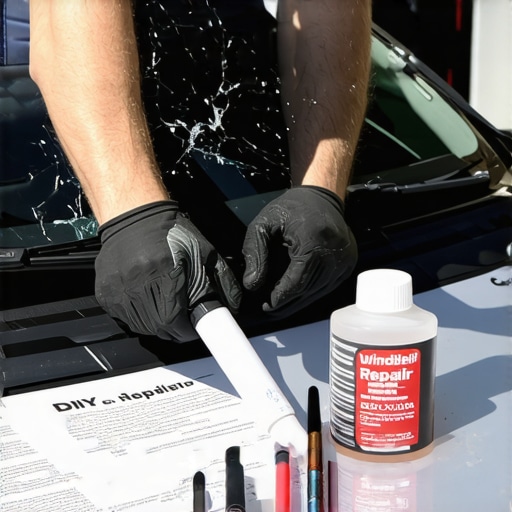
To understand why cloudy days are the enemy of the glass installer, you have to understand ‘Glazing Zooming.’ Most professional-grade resins used in chip repair are UV-activated. These resins contain photoinitiators. When exposed to specific wavelengths of ultraviolet light, typically in the 365nm to 400nm range, these photoinitiators decompose and create free radicals. These radicals then attack the double bonds of the resin monomers, linking them together into a rigid, three-dimensional polymer chain. This is not ‘drying’ in the way paint dries through evaporation; it is a chemical transformation. On a clear day, the irradiance from the sun provides a massive, consistent dose of these photons. On a cloudy day, Rayleigh scattering and water vapor absorption significantly reduce the UV index. Even if the visible light seems bright, the specific photons needed to ‘kick’ the resin are being filtered out. This is why a professional mobile service will always carry high-intensity UV curing lamps to simulate the sun’s output when the clouds move in.
Thermal Stress and the Rough Opening
When we perform a same-day repair, we are often working near the edge of the glass, close to the sash or the glazing bead. This area is subject to intense thermal stress. Glass expands and contracts at a different rate than the vinyl or wood frame. If a resin cure is ‘lazy’ due to poor UV exposure, the polymer chains are not fully formed. As the glass heats up and the U-Factor of the unit comes into play, the partially cured resin will lack the shear strength to hold the crack together. You end up with a ‘smeared’ repair that fails within weeks. For those in northern climates like Minneapolis or Chicago, where the Delta-T (the difference between inside and outside temperature) can be 80 degrees, a full cure is the difference between a successful save and a two-thousand-dollar replacement. We look at the U-Factor, which measures heat loss, but we also have to consider how the repaired area will handle the internal pressure of the gas fill, whether it be Argon or Krypton, within an IGU (Insulated Glass Unit).
“The integrity of the building envelope depends on the seamless integration of glazing components and the correct application of sealants and resins under controlled conditions.” – ASTM E2112 Standard Practice
Why Mobile Service Technicians Must Be Scientists
A lot of ‘tin man’ salesmen will tell you that any chip repair is permanent. That is a lie. A repair is only as good as the technician’s understanding of the materials. When I arrive for a same-day service, I am looking at the ‘Rough Opening’ of the chip itself. Is there crushed glass (pit) that needs to be drilled? Is there moisture trapped in the laminate? If it is a cloudy day, I know my ‘bridge’ and ‘injector’ need to stay on the glass longer. We use shims to level our equipment, much like we would shim a heavy wood sash during a full-frame installation. We ensure the weep hole in the window frame isn’t blocked so that any moisture we use to clean the area can escape. We treat a 1-inch chip with the same technical respect as a 50-story curtain wall because the physics of adhesion do not change based on the size of the project.
Low-E Coatings and Curing Interference
Modern high-performance glass often features Low-E (Low Emissivity) coatings. These coatings are designed to reflect long-wave infrared radiation. However, depending on the type of coating and which surface it is on (Surface #2 for hot climates or Surface #3 for cold), these coatings can also interfere with UV penetration. If you are trying to cure a resin from the inside of a window that has a high-performance coating on Surface #2, you are fighting the very technology that makes the window efficient. This is another reason why cloudy days compound the problem. You already have low ambient UV, and then you are trying to push those few photons through a metallic oxide coating designed to reflect energy. A master glass installer knows to check the NFRC label to see what kind of glass they are dealing with before they even open their resin kit.
The Role of Humidity and the Dew Point
On cloudy days, the relative humidity is often higher, and the temperature is closer to the dew point. If the glass temperature drops below the dew point, a microscopic layer of moisture forms on the surface. If a technician injects resin into a ‘wet’ chip, the resin will never bond. It will sit in the crack like oil in water. This is why we use dry heat to prep the glass. We have to drive out that moisture to ensure that when the UV rays finally do their job, they are bonding resin to glass, not resin to water. This level of detail is what separates a professional from a ‘caulk-and-walk’ amateur. Don’t let someone tell you that the weather doesn’t matter for a glass repair. If they say that, they don’t understand the chemistry of what they are selling.
Final Verdict: Don’t Buy the Hype, Buy the Science
Whether you are dealing with an operable sash or a fixed lite, the curing of resins is a delicate balance of chemistry and meteorology. On a cloudy day, the ‘same-day’ promise of many mobile services can lead to rushed jobs and failed repairs. Always ask your glass installer if they use a timed UV curing lamp and if they have checked the moisture content of the chip. A real pro will wait for the right conditions or create them himself. Water management, thermal logic, and chemical precision are the hallmarks of a true glazier. Don’t settle for a repair that will just fail the next time the sun comes out and the glass starts to move.