Why your car’s heads-up display is blurry after a glass swap
The Ghost in the Glass: Decoding HUD Distortion
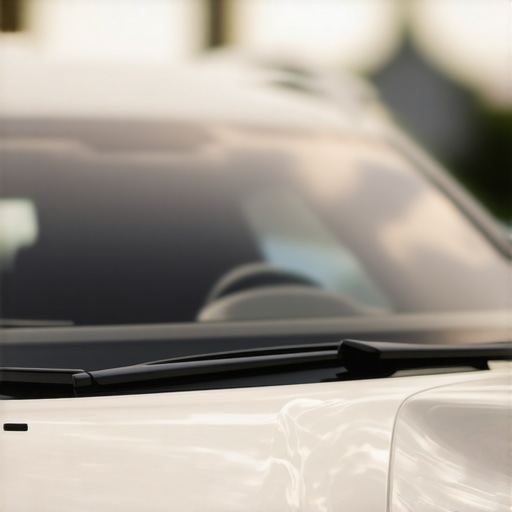
Most drivers view their windshield as a simple transparent barrier. As a master glazier with a quarter-century of experience, I see a complex optical lens that serves as a structural component of the vehicle. When you opt for a mobile service for a same-day replacement, you are often focusing on convenience rather than the high-tolerances required for modern optics. If your heads-up display (HUD) looks blurry, ghosted, or doubled after a glass installer finishes the job, you have fallen victim to the wrong refractive index.
The Condensation Crisis and Optical Failure
I recall a specific incident where a driver in a high-humidity coastal region called me in a panic because their new windshield was ‘sweating’ internally and the HUD was illegible. I walked in with my hygrometer and a digital protractor. I showed them that the humidity was nearly 70 percent inside the cabin due to a poorly sealed sill pan area near the cowl. The glass installer had botched the urethane bead, allowing moisture to infiltrate the dash electronics. But the blurriness? That was purely a physics failure. They had installed a standard laminate where a specialized wedge-interlayer was mandatory. It wasn’t the moisture causing the ghosting; it was the geometry of the glass itself.
“Optical distortion in laminated glass is often a result of non-uniformity in the interlayer thickness or misalignment during the laminating process.” – ASTM C1172 Standard for Laminated Architectural Flat Glass
The Physics of the Wedge: Why Standard Glass Fails
To understand why your HUD is blurry, we must perform a glazing zoom into the Polyvinyl Butyral (PVB) interlayer. A standard windshield consists of two layers of glass bonded by a flat sheet of PVB. When a projector on your dashboard beams light onto this glass, it hits two surfaces: the inner surface (Surface #4) and the outer surface (Surface #1). In a standard windshield, these surfaces are parallel. This causes the light to reflect twice at slightly different angles, creating a ‘ghost’ image that looks like a blurry mess to the driver.
A HUD-compatible windshield is engineered with a tapered or ‘wedge’ PVB interlayer. This interlayer is microscopically thicker at the top than at the bottom. This specific geometry ensures that the reflections from the inner and outer surfaces overlap perfectly before they reach your eyes. If your glass installer used an Aftermarket (OEE) glass that lacks this wedge, no amount of software calibration will fix the blur. You are fighting the laws of refraction.
Thermal Loads and the South/Hot Logic
In regions like Phoenix or Miami, the Solar Heat Gain Coefficient (SHGC) is not just a building code term; it is a survival metric for your car’s interior. A high-quality windshield acts as a thermal barrier. For vehicles with HUDs, the Low-E coating must be strategically placed on Surface #2 to reflect infrared radiation away from the cabin. Excessive heat on the dashboard can warp the HUD projector’s housing or degrade the reflective coatings on the glass, leading to long-term clarity issues. When you settle for a cheap chip repair that should have been a full replacement with heat-reflective glass, you are essentially baking your dashboard electronics.
“Installation is just as critical as the window performance itself. A high-performance window installed poorly will fail.” – AAMA Installation Masters Guide
Trade Cant and Installation Reality
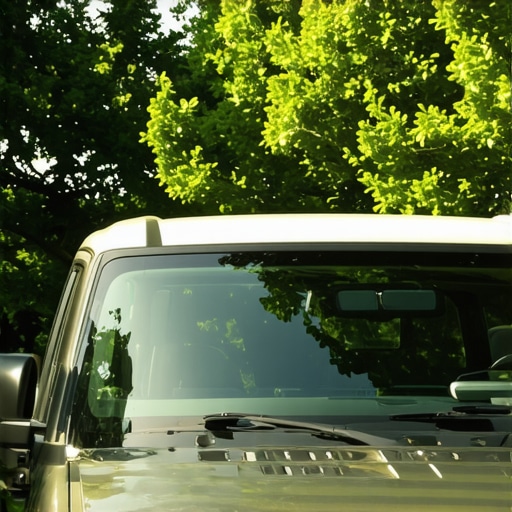
Precision matters when setting the glass into the Rough Opening of the vehicle’s frame. We use shims to ensure the glass sits at the exact height required for the ADAS cameras and HUD mirrors to align. If the glass is set too low or too high in the pinch weld, the angle of incidence for the HUD projector changes. This shift can move the image out of the driver’s primary line of sight or introduce chromatic aberration. Furthermore, the frit (the black ceramic edge) must be properly prepared with primer to ensure the urethane bonds perfectly. A ‘caulk-and-walk’ installer might skip the sill pan inspection or fail to clear the weep holes in the cowl, leading to the moisture issues I mentioned earlier.
The Myth of the Same-Day Mobile Service
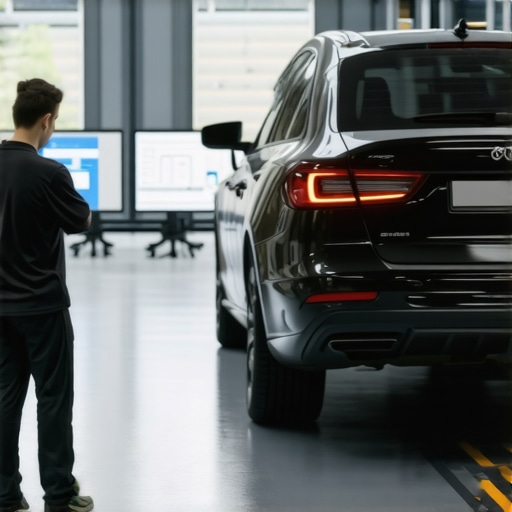
While mobile service is convenient, it often lacks the controlled environment needed for complex glass. Temperature and humidity affect the ‘open time’ of the structural urethane. If the adhesive skins over too quickly in the summer heat, the glass won’t bond at the correct depth, potentially tilting the glass and distorting the HUD projection. A same-day swap is possible, but it requires a technician who understands the ‘Shingle Principle’ of water shedding and the exacting optical standards of the NFRC. Don’t buy the marketing hype: buy the technical specifications of the glass.
Conclusion: Precision Over Price
If you are seeing double, the solution isn’t to adjust your seat. You must verify the VIN-specific glass requirements. A true master glazier knows that a window is a hole in the wall (or the car) that must be managed for light and optics. Demand a windshield with the correct tapered PVB interlayer, ensure the flashing tape and seals are applied with ASTM E2112 precision, and never sacrifice optical clarity for a cheaper invoice.
[{“@context”: “https://schema.org”, “@type”: “HowTo”, “name”: “How to Diagnose a Blurry HUD After Glass Replacement”, “step”: [{“@type”: “HowToStep”, “text”: “Verify the glass markings for HUD or Acoustic symbols.”}, {“@type”: “HowToStep”, “text”: “Check for ghosting by moving your head vertically; if the image doubles, the interlayer is not tapered.”}, {“@type”: “HowToStep”, “text”: “Inspect the urethane bead depth at the pinch weld for uniform seating.”}]}, {“@context”: “https://schema.org”, “@type”: “LocalBusiness”, “name”: “Professional Glass Installation Services”, “description”: “Expert automotive and residential glazing specializing in high-performance glass and HUD-compatible windshields.”}]