Why your car insurance company waives the deductible for chips
The Economics of Silica: Why ‘Free’ Repair is a Calculated Financial Hedge
In the world of high-performance glazing, there is no such thing as a small defect. Whether I am looking at a curtain wall on a skyscraper or the laminated safety glass of a modern SUV, a chip is not just an aesthetic blemish; it is a structural failure in progress. If you have ever wondered why your insurance carrier is so eager to cover a same-day chip repair without charging you a cent of your deductible, it is not because they are generous. It is because they have run the actuarial math on the thermal expansion coefficients of glass and realized that paying a mobile service a few dollars today prevents a thousand-dollar replacement claim next week.
As a glazier with over two decades of experience handling everything from residential casements to automotive laminates, I have seen exactly what happens when a microscopic fracture meets a sudden temperature shift. Most drivers treat their windshield as a static barrier, but it is actually a dynamic component under constant tension. When a stone strikes the glass, it creates a localized area of stress. This is where the physics of ‘The Condensation Crisis’ in home windows meets the ‘Thermal Shock’ of automotive glass. I remember a specific case where a homeowner in Minneapolis called me because their brand-new, high-efficiency patio door had shattered for seemingly no reason. I arrived and found the hygrometer reading was through the roof, but more importantly, a tiny edge-chip from the installation had finally succumbed to a 40-degree temperature swing. The same thing happens to your car glass.
“The structural integrity of laminated glass is dependent upon the bond between the glass plies and the interlayer. Any breach in the surface tension, such as a stone chip, serves as a focal point for crack propagation under thermal or mechanical stress.” – National Glass Association Technical Manual
The Physics of the Chip: Surface Tension and Polyvinyl Butyral
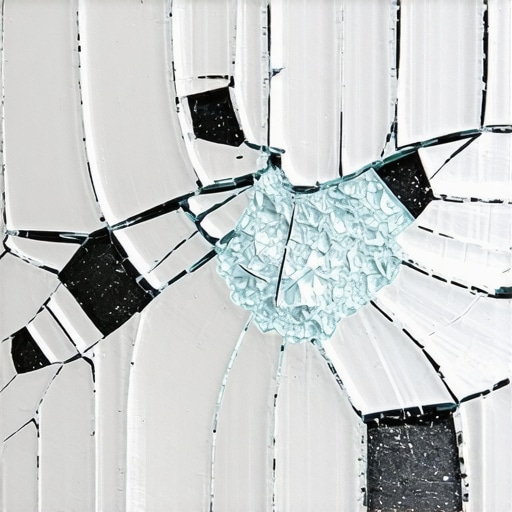
To understand why a mobile service is a necessity, you have to understand what your windshield actually is. It is a sandwich of two sheets of annealed glass bonded together by a layer of Polyvinyl Butyral (PVB). This interlayer is what keeps the glass from showering you in shards during an impact. However, the outer layer is always in a state of compression or tension depending on the ambient temperature. When a rock hits the glass, it creates a ‘bullseye’ or a ‘star break.’ This is effectively a micro-void in the silica structure. If you leave that void open, moisture and dirt enter the fracture. This ruins the refractive index of the repair and, more importantly, weakens the bond between the glass and the PVB.
In colder climates, the danger is heat loss and rapid expansion. You hop into your car on a freezing January morning and blast the defroster. The interior surface of the glass heats up and expands while the exterior surface remains at sub-zero temperatures. This creates a massive shear force across the thickness of the glass. That tiny chip, which was stable at 20 degrees, suddenly becomes the path of least resistance for that energy. Before you can back out of the driveway, you hear that sickening ‘pop’ as the chip transforms into a fourteen-inch crack. At that point, the chip repair is no longer an option, and the insurance company is now on the hook for a full replacement, which often involves recalibrating Advanced Driver Assistance Systems (ADAS) cameras.
The Installation Autopsy: Why Same-Day Service is Mandatory
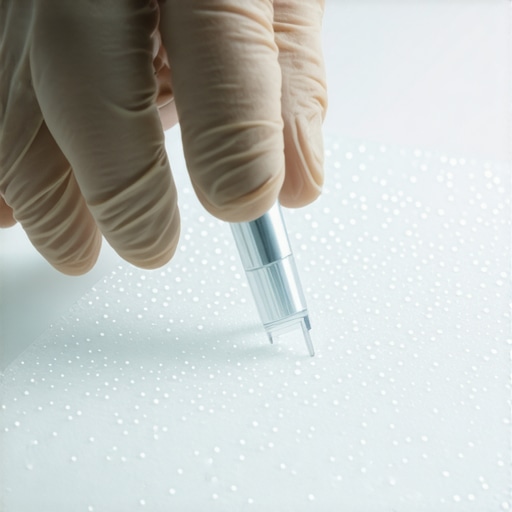
When I perform an autopsy on a failed windshield, the cause is almost always delay. A professional glass installer uses a bridge tool to create a vacuum over the impact point. This vacuum cycle is critical; it sucks the air and moisture out of the microscopic fissures. We then inject a specialized pit resin with a refractive index nearly identical to glass. If you wait even three days, road oils and car wash wax penetrate the break. No matter how good the technician is, they cannot get that contamination out. This results in a ‘cloudy’ repair that fails to restore the structural tension of the pane.
The insurance company understands the ‘Shingle Principle’—water and debris flow into the lowest point of any opening. In a house, that means the sill pan; in a car, it means the chip. By waiving the deductible, they are incentivizing you to call a mobile service immediately. They are essentially buying an insurance policy on their own money. A chip repair is a 30-minute procedure that costs them a fraction of a full glass replacement. They would rather pay for a technician to show up at your office for a same-day fix than deal with the liability of a structural glass failure while you are driving at highway speeds.
“Proper repair of automotive glass restores the moisture barrier and prevents the delamination of the PVB interlayer, ensuring the glass maintains its designed load-bearing capacity during a rollover or airbag deployment.” – ANSI/NWRA ROLAGS Standard
The Role of Thermal Logic in Glass Longevity
Whether we are talking about U-Factor in a triple-pane window or the solar heat gain in a tinted windshield, glass is a thermal sponge. In the south, the enemy is the sun. A car parked in the Phoenix sun can reach internal temperatures of 140 degrees. When you start the engine and the air conditioning hits that hot glass, the rapid contraction is just as violent as the expansion in the north. The resin used in professional chip repair is designed to mimic the expansion and contraction rates of the surrounding silica. Without that resin to bridge the gap, the air trapped inside the chip expands, acting like a wedge that drives the crack deeper into the laminate.
Don’t be fooled by the ‘Tin Man’ approach of some mobile service providers who claim they can fix a crack the size of a dollar bill. As a glazier, I can tell you that once the crack has traveled, the structural bond is compromised. The goal of a repair is prevention. You need to look for a technician who understands the rough opening tolerances of the frame and the chemical properties of the curing light. A proper repair should be nearly invisible and, more importantly, it should restore the tension that allows the windshield to support the roof of the car in the event of an accident.
Final Verdict: The Installer Matters More Than the Glass
In the glazing industry, we have a saying: the product is only as good as the installation. A high-quality resin injected by a hack will still fail. When you utilize the mobile service provided through your insurance, ensure they are using a vacuum-pressure cycle and high-intensity UV curing. This isn’t just about optics; it’s about managing the physics of a hole in your vehicle’s safety cage. The insurance company waives the deductible because they know that physics is undefeated. They aren’t doing you a favor; they are mitigating a high-probability risk. Your job is to make the call before the first frost or the next heatwave turns a five-centimeter pit into a three-foot liability. Water management and thermal control are the two pillars of glass longevity, and a chip repair is the only way to maintain those pillars once the surface has been breached. Stop looking at it as a ‘free’ service and start looking at it as a structural necessity.