Why some rock chips are impossible to fix safely
The sound of a rock hitting glass is a sharp, unmistakable crack that signals the beginning of a structural countdown. As a master glazier with over two decades in the field, I have seen every imaginable type of glass failure, from high-rise curtain wall collapses to the smallest star-break on a storefront. When we talk about rock chips, the general public often assumes that every imperfection is a candidate for a quick injection of resin. However, the physics of glass and the mechanics of structural integrity tell a different story. Not every chip is a simple cosmetic fix. In fact, attempting to repair certain types of damage is not just a waste of money, it is a safety liability. I sat across from a speed-tech who was trying to sell a bridge-injection repair for a contaminated star-break on a high-performance curtain wall. I had to explain to the facility manager why the resin would never reach the tips of the micro-fractures, leaving the unit susceptible to total failure during the next wind load event. The technician was focused on the same-day turnaround, but I was focused on the U-Factor and the long-term safety of the rough opening. Glass is not a static material, it is a rigid liquid that remains under constant tension from its framing, whether that is a sash or a glazing bead. Understanding why some chips are irreparable requires a deep dive into the molecular behavior of silica and the thermal stresses of our northern climate.
The Anatomy of a Non-Repairable Fracture
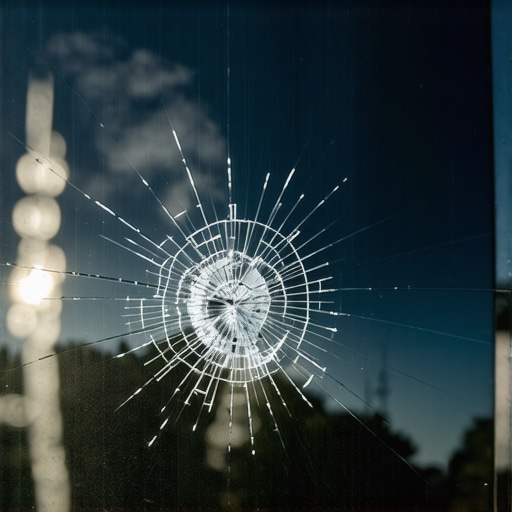
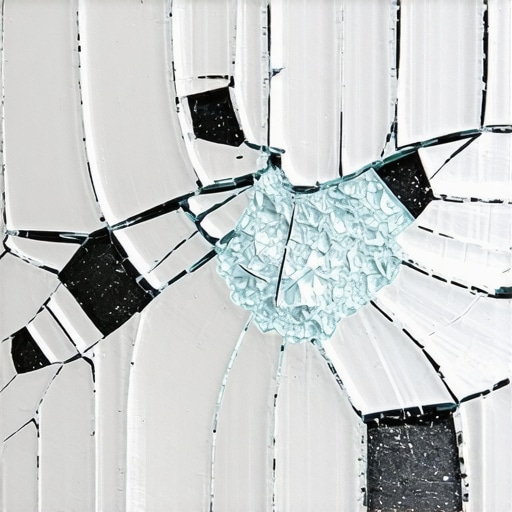
To understand the limits of a glass installer, we must first categorize the damage. A star-break, characterized by several legs radiating from a central impact point, is significantly more dangerous than a simple bullseye. In cold climates like Chicago or Minneapolis, these legs act as stress risers. When the temperature drops, the glass contracts. If the break is near the edge of the glass, close to the muntin or the glazing bead, the leverage exerted by the frame is immense. This is where the shim and the setting blocks come into play. If the glass was not properly centered in the rough opening, the uneven pressure can cause a minor chip to propagate into a full-length crack in a matter of seconds. We often see mobile service providers attempt to fill these breaks without accounting for the ambient dew point or the internal temperature of the glass. If moisture is trapped within the crack, the resin will not bond. More importantly, if the crack has been contaminated by road salts or waxes, the refractive index of the repair will be inconsistent, and the structural bond will be nonexistent. The NFRC (National Fenestration Rating Council) emphasizes that the clarity and performance of a glazing unit are paramount. A botched repair can actually degrade the thermal performance of the unit.
“Installation is just as critical as the window performance itself. A high-performance window installed poorly will fail.” – AAMA Installation Masters Guide
The Physics of Laminated Glass and Thermal Stress
In the world of high-end glazing, we often deal with laminated glass, which consists of two panes of glass bonded by a PVB (polyvinyl butyral) interlayer. When a rock chip occurs on Surface #1, the exterior face, it creates a localized area of high thermal absorption. In a cold climate, we want a low U-Factor to keep heat inside. We typically place Low-E coatings on Surface #3 to reflect heat back into the room. However, a chip on the exterior disrupts the way the glass handles solar radiation. The chip creates a jagged surface area that absorbs more heat than the surrounding smooth glass. This creates a temperature differential. If the interior is kept at a comfortable seventy degrees while the exterior is a punishing sub-zero, the glass is subjected to intense thermal bowing. A chip acts as the weak point where that bowing force is concentrated. If the chip is deeper than half the thickness of the exterior lite, the structural integrity of the laminated sandwich is compromised. No amount of same-day mobile service resin can restore the original tensile strength of the factory-bonded unit. We also have to consider the weep hole system. If a repair is attempted and the technician uses too much pressure, they can actually force resin into the glazing pocket, potentially clogging the weep holes that are vital for water management. Without proper drainage, water sits against the sill pan and the bottom of the sash, leading to rot in wood frames or corrosion in aluminum ones.
When the Frit and Edge Tension Rule Out Repair
One of the most common reasons a chip is impossible to fix safely is its location. The perimeter of any glass unit is under the most stress. This is where the glass meets the glazing bead and the internal spacers. If a rock chip occurs within two inches of the edge, it is in the “edge stress zone.” In this area, the glass is being squeezed by the frame and the shims to maintain a seal. Any fracture here is likely to travel because the glass has no room to expand or contract. Furthermore, in many modern windows, there is a ceramic frit or a black border around the edge. If a chip occurs in the frit, it is impossible to see if the resin has fully penetrated the break. This is a massive safety concern. An incomplete repair in a high-wind-load area can result in the entire lite blowing out of the frame. I have seen cases where a minor chip near a sash rail was ignored, only for the entire operable unit to shatter when someone tried to close it on a cold morning. The mechanical force of the sash hitting the frame was enough to trigger the final failure of the compromised glass. The ASTM E2112 standard provides clear guidelines on how windows should be handled and maintained, and it does not favor the