Why resin takes longer to cure on cloudy days
The Frustration of the Tacky Repair
A client called me recently in a state of high agitation. I had performed a mobile service chip repair on a large storefront window earlier that morning. It was a grey, overcast Tuesday in the city. The homeowner had touched the repair site and noticed it was still slightly tacky to the touch. I arrived with my digital hygrometer and a UV radiometer in hand to show them exactly what was happening. It was not a failure of the material or the technique; it was a fundamental conflict between chemistry and the local weather. The humidity was sitting at 65 percent and the UV index was barely hitting a two. In the world of a professional glass installer, we are often at the mercy of the sky when we rely on natural light for curing. This is the reality of on-site glass work where the physics of light meets the chemistry of polymers.
“Installation is just as critical as the window performance itself. A high-performance window installed poorly will fail.” – AAMA Installation Masters Guide
The Photochemistry of Glass Repair Resins
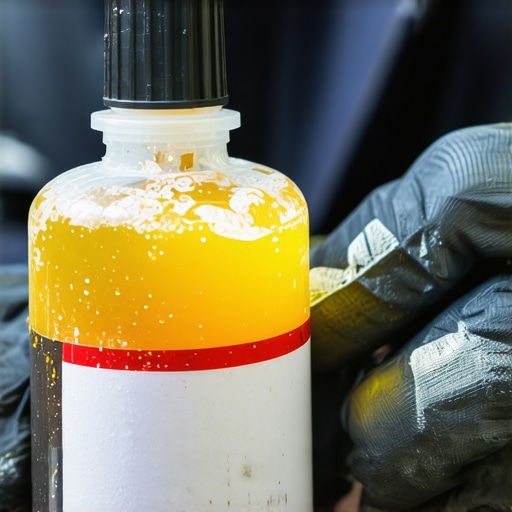
To understand why a cloudy day slows down a same-day repair, we have to look at the molecular level of the resin. Most high-grade resins used for chip repair are composed of acrylic monomers and oligomers. These substances are designed to remain liquid until they are exposed to specific wavelengths of ultraviolet radiation, typically in the 365 to 400 nanometer range. Inside these resins are photoinitiators. When these molecules are hit by UV photons, they undergo a chemical transformation into free radicals. These radicals then start a chain reaction, grabbing onto the monomers and linking them together into a rigid, three-dimensional polymer network. On a clear day, the direct solar irradiance provides a massive influx of photons, completing this process in minutes. However, when a cloud layer moves in, it creates a phenomenon known as Mie scattering. This scattering doesn’t just make the sky look grey; it increases the optical depth and significantly reduces the number of photons reaching the repair site. As a result, the photoinitiators are excited at a much slower rate, leading to a sluggish cross-linking process.
The Thermal Component of Curing
Temperature also plays a pivotal role. On a sunny day, the glass absorbs infrared radiation, which raises the temperature of the substrate. This thermal energy increases the kinetic energy of the resin molecules, allowing the free radicals to move faster and find more monomers to bond with. On a cloudy day, the lack of radiant heat means the glass remains at the ambient air temperature. If that temperature is low, the viscosity of the resin remains higher, further slowing down the reaction. A professional glass installer knows that a cold, thick resin will struggle to penetrate the microscopic crevices of a chip, and without the heat to drive the reaction, the cure will be superficial at best. This is why we often use a specialized heating element to prep the glass, ensuring the resin flows properly before we even think about the UV light.
The Critical Nature of Water Management in Glazing
Whether we are performing a chip repair or a full frame replacement, the goal is always the same: protecting the structural integrity of the building. In residential glazing, we talk about the rough opening and the need for a proper sill pan. If a window is installed without a drip cap or if the flashing tape is not integrated into the shingle principle of water shedding, the window will fail regardless of how expensive the glass is. The same logic applies to resin. If the resin does not cure fully because of poor light conditions, it creates a weak point. Water can eventually find its way into that micro-fissure. Over time, the freeze-thaw cycle will expand that water, turning a minor chip into a full-scale crack that spans the entire sash. This is why we never settle for a cure that is just good enough. We use high-intensity UV lamps as part of our mobile service to bypass the limitations of the weather, ensuring that same-day really means a permanent fix.
“Standard Practice for Installation of Exterior Windows, Doors and Skylights requires that all components must be compatible and that environmental conditions must be suitable for the application of sealants and resins.” – ASTM E2112
Trade Cant and Technical Tolerances
When you look at a window, you might see glass and a frame, but a glazier sees a complex system of components. You have the glazing bead that holds the glass in place, the muntin that provides structural or aesthetic division, and the weep hole in the sill that allows moisture to escape from the track. Each of these parts must work together. When we perform a chip repair, we are essentially re-engineering the glass in a small area. We have to match the refractive index of the resin to the glass, which is usually around 1.51. If the resin is not cured perfectly, its refractive index can shift, making the repair visible to the naked eye. We use a shim to level our tools during the injection process, ensuring that the pressure is applied evenly across the rough opening of the crack. It is a precise science that leaves no room for guesswork.
Why Mobile Service Requires Industrial Equipment
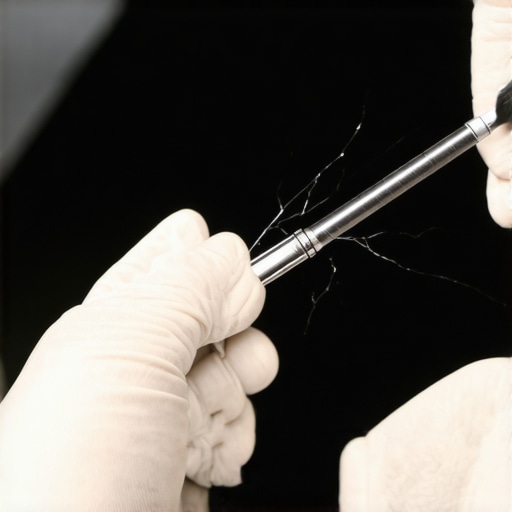
The average consumer might think that a mobile service glass installer just shows up with a bottle of glue and a razor blade. In reality, we carry an arsenal of technology to fight the elements. On those cloudy days where the UV index is nonexistent, we deploy portable UV curing bridges. These devices use high-output light-emitting diodes to saturate the resin with the exact wavelength it needs. This is the difference between a professional repair and a DIY kit. A DIY kit relies on the sun, and as we have discussed, the sun is an unreliable partner on a grey afternoon. Our professional equipment ensures that the molecular cross-linking is 100 percent complete, restoring the structural strength of the glass and preventing the need for a full replacement of the operable unit.
The Verdict on Cloud Cover
Clouds are essentially water vapor filters that block the very energy we need to do our jobs. While a same-day repair is always the goal, a master glazier knows that physics cannot be rushed. If the resin is taking longer to cure, it is because the atmosphere is literally starving the chemical reaction of its fuel. By understanding the interaction between UV light, thermal kinetics, and polymer chemistry, we can adjust our techniques, use artificial light sources, and ensure that every repair is as strong as the original glass. Don’t let a cloudy day compromise your window integrity; ensure your installer has the tools to overcome the weather. [SCHEMA_START]{“@context”:”https://schema.org”,”@type”:”HowTo”,”name”:”How to Ensure Professional Resin Curing on Cloudy Days”,”step”:[{“@type”:”HowToStep”,”text”:”Assess the UV index using a radiometer to determine if natural light is sufficient.”},{“@type”:”HowToStep”,”text”:”Pre-heat the glass substrate to decrease resin viscosity and improve penetration into the chip.”},{“@type”:”HowToStep”,”text”:”Inject high-grade acrylic resin into the void using a pressure-controlled bridge.”},{“@type”:”HowToStep”,”text”:”Deploy an industrial UV curing lamp to provide the necessary wavelengths for photoinitiator activation.”},{“@type”:”HowToStep”,”text”:”Verify the cure using a hardness test and scrape away excess material with a precision blade.”}],”totalTime”:”PT30M”}[SCHEMA_END]