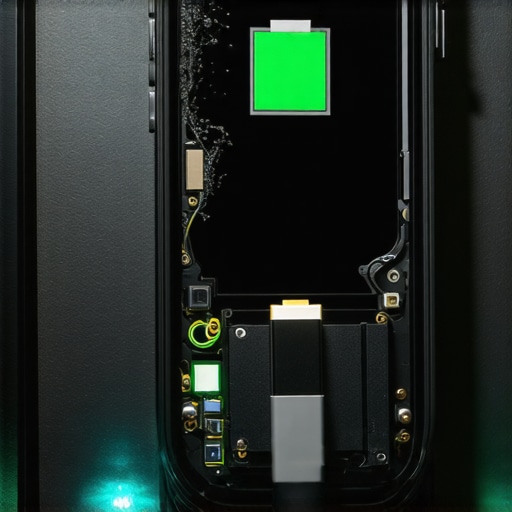
Why cheap phone chargers are killing your battery health
You might wonder why a man who has spent three decades hanging off the side of high-rises and sealing a rough opening is talking about mobile electronics. The answer is simple: thermodynamics. Just as a cut-rate phone charger sends an unstable current that cooks a lithium-ion battery from the inside out, a cut-rate glass installer or a botched chip repair creates a thermal imbalance that destroys your home’s energy health. In both cases, you are trading a few dollars today for a catastrophic failure tomorrow. When we talk about window performance in a blistering climate like Phoenix or Houston, we are talking about managing a constant, aggressive energy transfer. If the seal on your insulating glass unit (IGU) is compromised by poor installation, your home’s ‘battery’—its ability to retain cooling—drains faster than a phone running a GPS app on a 5 dollar cable.
The Rot Repair: A Tale of Hidden Failure
I pulled a vinyl window out of a house in a humid coastal suburb last year and the header was completely black with rot. Why? The homeowner had opted for a ‘same-day’ mobile service from a company that specialized in quick fixes rather than structural integrity. The previous installer relied on the nailing fin instead of proper flashing tape and a dedicated sill pan. They treated the window like a plug-in appliance rather than a complex valve in the building envelope. By the time I arrived, the water had bypassed the glazing bead, sat in the track because the weep hole was clogged with excess caulk, and migrated into the framing. The ‘cheap’ installation cost them five times the original price in structural remediation. It is the same logic as that cheap charger: it works for a week, then it fries the motherboard.
“Installation is just as critical as the window performance itself. A high-performance window installed poorly will fail.” AAMA Installation Masters Guide
The Physics of the Hot Climate Window
In the southern latitudes, the enemy is not the cold; it is the Solar Heat Gain Coefficient (SHGC). This is a measurement of how much solar radiation actually enters your home. When you hire a glass installer for a chip repair or a full replacement, they need to understand the ‘Surface 2’ rule. In a hot climate, the Low-E coating must be applied to the second surface of the glass—the inside of the outer pane. This allows the coating to reflect long-wave infrared radiation back toward the street before it even crosses the argon-filled gap. If an amateur flips that glass or uses a pane designed for the Canadian border, they are essentially ‘overcharging’ your house with heat, forcing your HVAC to work until it dies prematurely, much like a battery forced through too many high-heat cycles.
The Mobile Service Myth
The rise of the ‘mobile service’ glass installer has brought convenience, but it has also brought a decline in technical precision. Replacing a sash or performing a chip repair in the field means the installer is fighting wind, dust, and humidity. For a chip repair to be effective, the refractive index of the resin must perfectly match the glass, and the ‘rough opening’ of the crack must be completely evacuated of moisture. If a mobile tech rushes the job on a humid day, they trap microscopic water vapor inside the glass. When the sun hits that window, the vapor expands, the resin fails, and what was a simple chip becomes a full-thickness crack. This is the ‘same-day’ trap. True glazing requires a controlled environment or, at the very least, an installer who understands that you cannot fight the laws of physics with a tube of silicone.
Water Management: The Shingle Principle
A window is not a waterproof box; it is a water management system. We operate on the Shingle Principle: every layer of the window must shed water to the layer below it and eventually to the exterior. This starts with the flashing tape and ends with the weep hole. Many amateur installers treat caulk as a primary defense. In my world, caulk is the last line of defense, and usually a temporary one. When we perform an installation autopsy, we often find that the installer skipped the shim process. Without proper shimming, the window frame can bow as the house settles. This puts stress on the glazing bead, creates a gap in the primary PIB (polyisobutylene) seal of the IGU, and allows the argon gas to escape. Once that gas is gone, your ‘thermal battery’ is dead. You are left with two sheets of glass and zero insulation value.
“Field-applied liquid sealants should not be used as a substitute for proper flashing and water management components.” ASTM E2112 Standard Practice
The True ROI of Professional Glazing
People love to talk about the ROI of new windows. The truth is, if you are only looking at the energy bill, it takes a long time to pay off. But if you look at ‘Comfort ROI’ and ‘Structural ROI,’ the math changes. A window that is properly integrated into the building envelope with high-quality flashing tape and a thermally broken frame prevents the rot I saw in that coastal home. It prevents the ‘battery drain’ of solar heat gain. When you choose a glass installer, you aren’t just buying a piece of silica; you are buying a technical specification. Don’t let a ‘cheap charger’ mentality ruin the most expensive investment you own. Demand a full frame tear-out if your headers are soft, insist on NFRC-certified glass that matches your specific climate zone, and never, ever trust an installer who says caulk is the only thing keeping the water out.