Why some phone cases cause your device to overheat
Most people look at a phone case and see a simple protective barrier, a buffer against the inevitable gravity-induced disaster. As a master glazier with over 25 years in the field, I look at a phone case and see a failed thermal envelope. I’ve spent my life managing the movement of heat, light, and moisture through glass apertures, from high-rise curtain walls to intricate residential retrofits. When you ask why a device is overheating, you aren’t just talking about a processor working too hard; you are talking about the physics of heat dissipation and the catastrophic failure of material science. A phone is essentially a miniature glass-and-metal assembly that needs to shed heat to survive. When you wrap it in the wrong case, you are effectively installing a window without a thermal break in the middle of a Phoenix summer. It’s a recipe for internal degradation.
“Installation is just as critical as the window performance itself. A high-performance window installed poorly will fail.” – AAMA Installation Masters Guide
A few years back, I had a client call me in a panic because the new high-efficiency windows we had installed were ‘sweating’ on the interior. I walked into that house with my hygrometer and showed them that the humidity was sitting at a staggering 60 percent. It wasn’t the glass failing; it was their lifestyle and the way they were trapping moisture inside a sealed environment. I see the same thing with mobile devices and their cases. Users complain about their screens delaminating or their batteries swelling, blaming the hardware, when in reality, they’ve encased their device in a polymer that has the thermal conductivity of a wool blanket. You are trapping heat in a closed loop, and just like that humid house, the internal components are the ones that pay the price.
The Physics of the Thermal Envelope
In the glazing world, we obsess over the Solar Heat Gain Coefficient (SHGC). This number tells us how much solar radiation is admitted through a window. In a hot climate, you want a low SHGC to keep the heat out. Your phone, however, generates its own heat from the inside. This is where we look at the U-factor, or the rate of heat transfer. A high-quality glass installer knows that if you don’t allow for proper heat dissipation, the glass will experience thermal stress. Most phone cases are made of thermoplastics or silicone. These materials are excellent insulators but terrible thermal conductors. When your phone’s processor ramps up, it generates long-wave infrared radiation. In a naked device, the aluminum or glass back acts as a heat sink, radiating that energy into the surrounding air. When you slap a thick, non-vented case over it, you are effectively creating a pocket of dead air, much like the space between two panes of an Insulated Glass Unit (IGU).
However, unlike an IGU which uses that dead air for insulation, your phone needs that energy to escape. If the case doesn’t have what we in the trade call a ‘thermal break’ or proper ventilation pathways, the heat reflects back into the device. This raises the internal temperature of the glass, leading to potential structural issues. This is why you see chips in a phone screen suddenly turn into massive spiderweb cracks on a hot day. The thermal expansion of the glass is restricted by the case, and the stress has nowhere to go but through the weakest point: the chip. This is why same-day chip repair is so vital; you have to restore the structural integrity before the heat cycles of a standard day cause a total failure of the lite.
Material Science: Why Your Case is a Heat Trap
As a glazier, I deal with frame materials daily. We compare vinyl, fiberglass, and aluminum based on their expansion coefficients and how they handle the sun. Vinyl expands and contracts significantly, which is why we leave specific tolerances in the rough opening and use shims to ensure the sash remains operable. Many phone cases are made of cheap, high-density materials that don’t account for the thermal expansion of the device itself. If the case fits too tightly and lacks internal ridges for air movement, it creates a vacuum effect. This is why mobile service technicians often find ‘hot spots’ on the back of devices where the case was in direct contact with the battery housing. In the South, where the ambient temperature is already pushing the limits of the hardware, this lack of a ‘weep hole’ for heat is a death sentence for your electronics.
“The Solar Heat Gain Coefficient (SHGC) is the fraction of incident solar radiation admitted through a window… the lower a window’s SHGC, the less solar heat it transmits.” – NFRC Performance Standards
We also have to consider the ‘Glazing Bead’ of the phone: the adhesive and gaskets that hold the screen to the frame. These are sensitive to prolonged heat exposure. When a case traps heat, it can soften these adhesives. I’ve seen storefronts where the wrong sealant was used, and under the intense radiant heat of the sun, the glazing beads failed, and the glass literally began to shift. On a smaller scale, this is what happens when your phone overheats inside its case. The internal components may shift, or the screen may begin to lift, creating an opening for moisture and dust. This is why choosing a case with a high VT (Visible Transmittance) of heat is essential, though in the case world, we call this thermal venting.
The Glazier’s Solution to Overheating
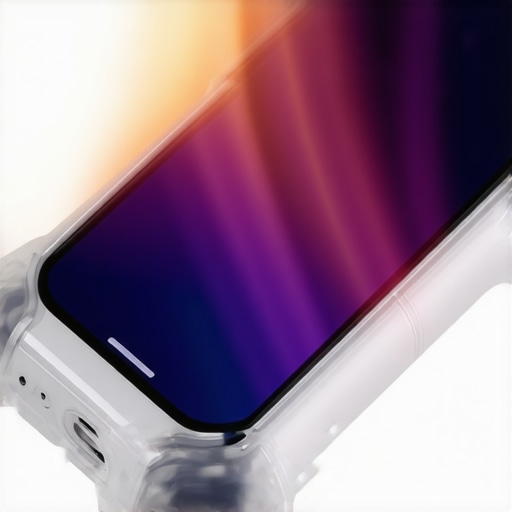
If you are in a high-heat environment, you need to think like a glass installer. You wouldn’t put a heavy dark tint on the interior surface of a single-pane window because it would absorb too much heat and crack the glass. Similarly, you should avoid heavy, dark-colored rubber cases that soak up the sun’s rays while simultaneously trapping the phone’s internal heat. Look for cases that incorporate ‘heat sink’ technology or those that have a perforated back. These perforations act as a series of weep holes, allowing for convective cooling. When you are out in the field, perhaps waiting for a mobile service to arrive for a windshield chip repair, your phone is sitting in a high-UV, high-IR environment. If it’s in a case that doesn’t breathe, you are subjecting the internal glass layers to immense thermal pressure.
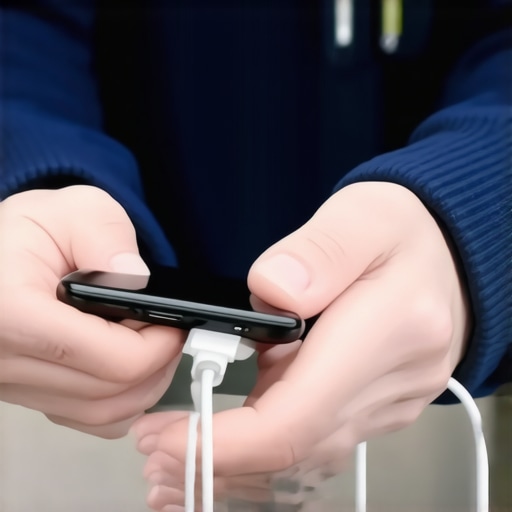
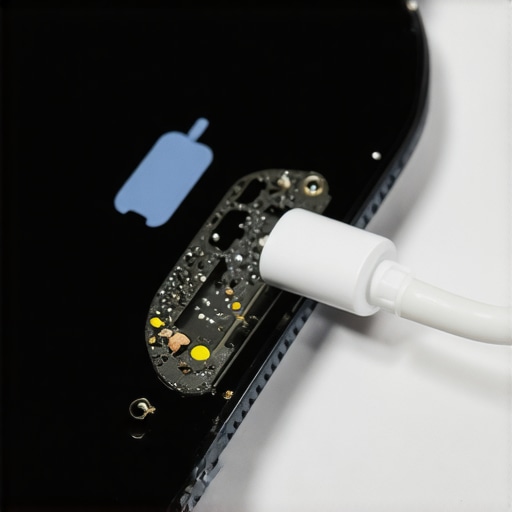
Furthermore, consider the ‘Sill Pan’ of your device: the charging port and speakers. These are often the only places where air can move. If your case covers these with thick flaps, you are further insulating the device. A professional glass installer knows that water management and heat management go hand in hand. If you block the pathways for one, you usually ruin the other. In my 25 years, I’ve seen more damage caused by ‘protective’ measures that didn’t account for physics than I have from actual accidents. A poorly designed case is like a window sash that’s been painted shut; it might look secure, but it’s not doing its job of managing the environment.
When Thermal Stress Leads to Damage
What happens when the heat wins? In the glass industry, we call it a thermal stress crack. It usually starts from the edge of the glass, where the temperature differential is greatest. If your phone is overheating and you have a small chip in the corner, that chip is a ticking time bomb. The heat causes the glass to expand, but the case is holding it in a fixed position. The resulting pressure is concentrated at the chip. This is why I always tell people that same-day repair is not just a convenience; it’s a technical necessity. A mobile service can inject resin into that chip, effectively ‘glazing’ the wound and restoring the tension across the surface of the glass. If you wait, the heat from a single afternoon in a non-vented case will turn that chip into a full-frame replacement job.
In conclusion, don’t buy into the marketing of ‘indestructible’ cases without looking at the thermal specs. If it looks like it belongs on a tank, it probably doesn’t belong on a high-performance computer that needs to shed heat. Think about the U-factor. Think about the SHGC. Think like a glazier. Ensure your ‘rough opening’—the case itself—allows for the expansion and breathing your device needs. If you don’t, you’ll be calling a glass installer for a lot more than just a chip repair; you’ll be looking at a total system failure caused by a lack of thermal common sense.