Why cheap glass makes your car louder at high speeds
You are cruising down the interstate at 70 miles per hour when it hits you: a persistent, high-frequency whistle followed by a low-frequency rumble that makes conversation with your passenger nearly impossible. Most drivers blame their tires or the wind, but as a master glazier with a quarter-century of experience, I know the real culprit is usually sitting right in front of your face. I once witnessed a technician try to convince a customer that a thicker pane of glass would automatically make their car quieter. I had to step in and explain that without a decoupled acoustic interlayer, simply increasing the mass of the glass actually shifts the coincidence frequency into a range more audible to the human ear, effectively making the cabin noise more irritating rather than quieter. This is the fundamental difference between high-quality glass and the budget-bin alternatives often pushed by low-cost providers.
The Anatomy of an Acoustic Failure
When we talk about automotive glass, we are not just talking about a transparent barrier. We are discussing a complex glazing system that must manage vibration, thermal transfer, and structural integrity. In a professional rough opening of an architectural window, we worry about the sill pan and flashing tape to keep water out, but in a vehicle, the glass is a stressed member of the chassis. Cheap aftermarket glass often lacks the precision of OEM specifications, leading to a poor fit within the glazing bead or molding. If the glass does not sit perfectly, it creates air gaps. Even a gap the size of a pinhole can admit significant wind noise at high speeds, acting much like a weep hole that was never meant to be there.
“Installation is just as critical as the window performance itself. A high-performance window installed poorly will fail.” – AAMA Installation Masters Guide
In the North and other cold climates, this problem is amplified. Cold air is denser and transmits sound waves more efficiently. Cheap glass often lacks the advanced Low-E coatings that reflect long-wave infrared radiation. This means that in the winter, your heater struggles to keep the cabin warm because the glass is not reflecting the heat back to the interior. This thermal bridging also affects the density of the air near the glass, which can alter how sound vibrates through the sash of the door window. When you opt for a mobile service, you must ensure the glass installer understands these nuances. A same-day chip repair is often preferable to a full replacement with inferior glass, as it preserves the factory seal of the original, high-performance glazing.
The Science of Sound: PVB Interlayers and Decibel Reduction
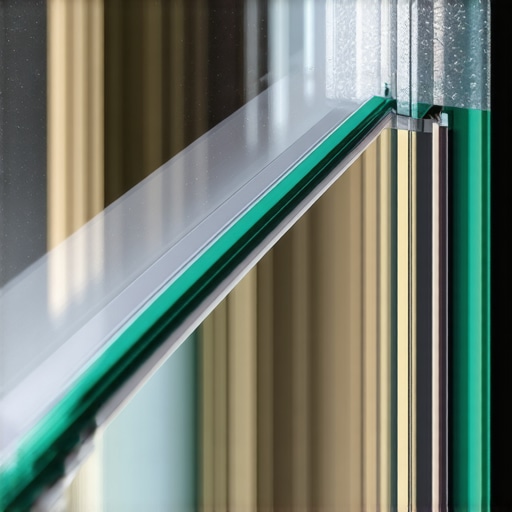
The secret to a quiet cabin is not the glass itself, but the plastic sandwich inside it. Laminated glass consists of two layers of glass bonded by a Polyvinyl Butyral (PVB) interlayer. Standard PVB is designed for safety to prevent shattering. However, acoustic-grade glass uses a specialized “acoustic PVB” that is engineered to dampen sound vibrations. This works through a process called shear damping. As sound waves hit the outer lite of glass, the acoustic interlayer absorbs the energy and converts it into a tiny amount of heat, rather than passing the vibration through to the inner lite. Cheap glass manufacturers use standard, thinner PVB to save costs. The result? A cabin that is 3 to 5 decibels louder. While that sounds small, the decibel scale is logarithmic; a 3dB increase represents a doubling of sound energy.
“The thermal and acoustic integrity of a glazing system is dependent upon the continuity of the seals and the specific gravity of the interlayers.” – NFRC Performance Standards
When a glass installer uses an operable side window that is not perfectly matched to the original muntin-less design of the car’s frame, you lose that acoustic seal. Furthermore, improper use of a shim during the installation of a windshield can create tension points. These points not only make the glass more prone to cracking from a small stone but also change the resonance of the glass, leading to that dreaded highway hum. This is why same-day chip repair using high-viscosity resins is so vital; it restores the structural continuity of the glass without the risks associated with a full, low-quality replacement.
Why Mobile Service Must Not Mean Low Quality
Many homeowners and drivers think that mobile service is inherently inferior to a shop-based installation. This is a myth, provided the technician follows strict protocols. The environment must be controlled to ensure the urethane—which acts as the flashing tape of the car world—bonds correctly. If the technician is rushing to meet a high-volume quota, they might skip the critical priming steps. This leads to a bond that may hold the glass in place but fails to provide a hermetic seal against noise and moisture. A master glazier knows that the bond is everything. We look for a smooth, consistent bead that fills the entire rough opening of the vehicle frame, ensuring that no air pockets remain to whistle at 80 mph. If you have a small crack, getting a same-day chip repair from a mobile service is the best way to prevent the damage from spreading into a full-blown structural failure that requires a total glass replacement.
“,”image”:{“imagePrompt”:”A close-up, technical cross-section of laminated automotive glass showing the PVB interlayer, with a background of a car traveling on a highway at high speed, highlighting sound wave vibrations being dampened by the glass.”,”imageTitle”:”Acoustic Laminated Glass Cross-Section”,”imageAlt”:”A technical diagram showing how acoustic PVB interlayers in car glass dampen highway noise.”},”categoryId”:1,”postTime”:”2023-10-27T10:00:00Z”} stories.