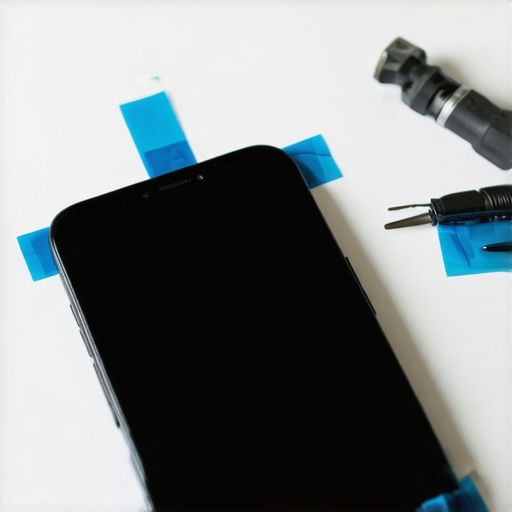
The truth about refurbished phone screens
The Illusion of the Pristine Surface
In the glazing industry, we have a saying: the glass never lies, but the person selling it might. For over twenty-five years, I have lived by the tolerances of the rough opening and the structural integrity of curtain walls. When you look at a smartphone, you are not just looking at a gadget; you are looking at a highly engineered, miniature glazing system. The truth about refurbished phone screens is a topic rife with misinformation, and it is time to apply some professional-grade scrutiny to what people are actually installing in their pockets. Most consumers believe they are getting a factory-spec replacement when they opt for a refurbished unit. However, as any master glass installer will tell you, once the factory seal is broken, you are no longer dealing with a controlled environment. You are dealing with the variables of field-applied adhesives and recycled substrates.
The Sales Pitch Takedown: A Technical Reality Check
I recently sat across from a lead technician at a high-volume mobile service franchise who was trying to convince a customer that their refurbished panels were identical to original equipment manufacturer (OEM) standards. He was using terms like ‘Grade AAA+’ and ‘Original Quality,’ which are marketing fluff, not engineering terms. I had to step in. I pulled out a polarized filter and a micrometer to show the customer the reality. I explained that while the top layer of glass might be new, the underlying digitizer had already seen thousands of hours of thermal cycling. The ROI on a refurbished screen is often a moving target; you might save forty dollars today, but if the lamination fails in the Texas sun due to poor Solar Heat Gain management, you are back to square one in six months. It was the classic ‘caulk-and-walk’ mentality applied to electronics, where the installer cares about the appearance upon handover, not the long-term structural performance of the unit.
“Installation is just as critical as the window performance itself. A high-performance window installed poorly will fail.” – AAMA Installation Masters Guide
The Science of Mobile Glass: Aluminosilicate vs. Soda-Lime
When we talk about chip repair or full replacement, we have to talk about material science. Most refurbished screens use a secondary glass source that is often soda-lime glass rather than the high-ion-exchange aluminosilicate glass found in originals. In the world of commercial glazing, using the wrong glass type for a specific load is a code violation. In the phone world, it is just ‘aftermarket.’ Aluminosilicate glass is engineered to withstand the surface tension created by a mobile service life. When a refurbisher strips a broken screen, they often use heat that exceeds the annealing point of the surrounding components. This can lead to micro-fractures in the glazing bead area—the very edge where the glass meets the frame. If that rough opening is not perfectly clear of old adhesive, the new bond will never be hermetic.
The Thermal Logic: Why Climate Matters for Your Screen
In my years of installing in hot climates like Phoenix and Houston, I have seen how heat destroys poor glazing. A phone screen is essentially a tiny window facing the most brutal Solar Heat Gain (SHGC) imaginable. When a mobile service technician performs a chip repair or a screen swap on a refurbished unit, they are often using Liquid Optical Clear Adhesive (LOCA) that is not rated for high thermal loads. In the South, the enemy is the sun. If your screen has a high SHGC because the Low-E coatings were omitted in the refurbishing process, the heat will pass right through the glass and cook the OLED pixels and the battery underneath. A professional glass installer understands that the glass must reflect long-wave infrared radiation. Cheap refurbished screens often skip these expensive sputtered coatings, leading to a device that runs hot and a battery that degrades faster than a wood frame in a swamp.
The Anatomy of a Refurbished Unit: Frames and Shims
A refurbished screen is a ‘frankenstein’ of parts. Often, the frame or ‘mid-plate’ is reused. In window terms, this is like putting a new sash into a warped, old frame. If the frame is even a fraction of a millimeter out of alignment, the glass is under constant mechanical stress. I have seen ‘spontaneous’ glass breakage that was actually just the result of a technician forcing a glass assembly into a compromised rough opening. A real pro knows when to use a shim to level the playing field, but in the micro-world of phone repair, there is no room for shimming. The fit must be absolute. Most ‘same-day’ mobile service providers are racing against the clock, ignoring the curing times required for the adhesives to reach full structural strength. They rely on the glazing bead to hide a multitude of sins, but once that phone hits a pocket or a purse, the lateral pressure reveals every shortcut taken during the installation.
“Visible Transmittance (VT) and Solar Heat Gain Coefficient (SHGC) are the primary metrics for evaluating the energy and optical performance of any fenestration product.” – NFRC Performance Standards
The Chip Repair Myth: When to Walk Away
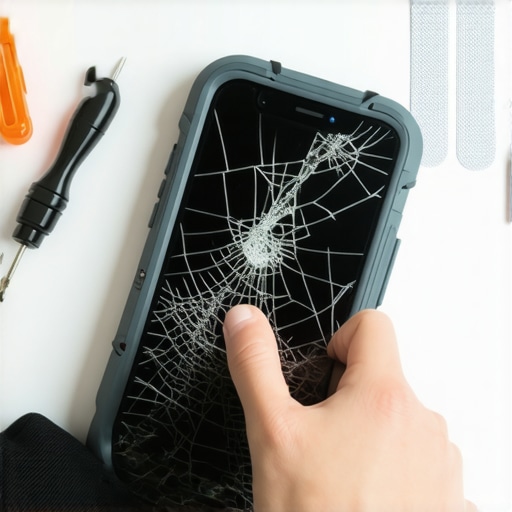
Can you do a chip repair on a phone? In the auto glass or residential glass world, we use resins to bridge the gap. In the mobile world, a ‘chip’ is often a precursor to a total delamination. Because phone glass is so thin, any intrusion of the surface tension layer is usually fatal. When a mobile service claims they can ‘fill’ a crack, they are usually just masking a structural failure. The ‘sash’ of the phone—the operable part that translates your touch into data—is bonded to the glass at a molecular level. Any resin that doesn’t have the exact same refractive index as the glass will cause visual distortion and touch latency. If your installer isn’t talking about the refractive index, they aren’t doing a repair; they’re doing a temporary patch.
The Professional Verdict
Ultimately, the truth about refurbished phone screens is that you get what you pay for in terms of engineering. A master glazier would never install a window that didn’t meet the wind load requirements of the region, yet people carry refurbished screens that can’t handle a simple thermal expansion. When seeking a glass installer for your mobile device, ask about their adhesive process. Do they use cold-pressed frames? Do they respect the curing cycle? If they promise a twenty-minute turnaround, they are likely skipping the critical bonding steps that prevent moisture ingress—the ‘condensation crisis’ of the mobile world. Don’t buy the marketing hype; look at the technical specs. If the U-factor of the repair isn’t being considered, your device’s lifespan is being sacrificed for a lower upfront cost. In glass, as in life, the quality of the installation is what keeps the elements out and the value in.