Why your screen looks dim after a third party repair
The Optical Reality of Aftermarket Glass Replacement
You look through your window every day and expect a certain level of clarity. When that glass is damaged and you opt for a mobile service or a same-day chip repair from a third-party glass installer, you might notice something unsettling: the world looks different. It is darker, slightly grey, or perhaps it has a distinct green cast that was not there before. As a master glazier with over two decades in the field, I can tell you this is not your imagination. It is the result of a fundamental failure to understand the physics of Visible Transmittance and the chemistry of modern glazing materials.
A homeowner recently called me in a panic because their newly replaced storefront windows were ‘sweating’ and looked muddy. I walked in with my hygrometer and a light meter. I showed them that the humidity inside was 60 percent, but more importantly, the new glass was only allowing 55 percent of visible light through compared to the 72 percent of the original units. It was not a mystery; it was a mismatch of technical specifications. The third-party installer had swapped a high-performance, low-iron glass for a standard architectural grade to save on costs during their same-day service.
“Installation is just as critical as the window performance itself. A high-performance window installed poorly will fail.” AAMA Installation Masters Guide
Understanding Visible Transmittance (VT)
Visible Transmittance, or VT, is the metric that determines exactly how much of the visible spectrum of light can pass through a glazing unit. When you hire a budget glass installer for a chip repair or a full pane replacement, they often source generic glass that does not match the original manufacturer’s VT rating. High-quality glass uses a specific recipe with reduced iron content to ensure the glass is clear rather than green. When a cheaper glass is used, the higher iron content absorbs more light, leading to that dim, ‘dirty’ look on your screen or through your window.
Furthermore, the coatings applied to the glass, specifically Low-E (low-emissivity) layers, play a massive role. In a professional shop, we look at which surface the coating is on. If an installer flips the glass or uses a coating designed for a different climate, the light reflection properties change entirely. This creates a visual barrier that makes the interior feel like it is perpetually dusk.
The Science of the Low-E Coating
To understand why your view is dim, we have to look at the microscopic level. A quality Low-E coating is designed to reflect long-wave infrared radiation (heat) while admitting as much visible light as possible. However, there is always a trade-off. In colder northern climates like Chicago or Minneapolis, we prioritize a high U-Factor and often use a coating on Surface #3 to reflect heat back into the room. If a mobile service technician replaces this with a generic South-climate glass designed to block solar heat gain (SHGC) on Surface #2, the result is a significantly darker tint. They have effectively put sunglasses on your house when you needed a clear lens.
The technical precision required here is why the ‘caulk-and-walk’ installers fail. They do not measure the glass thickness or the specific light transmission. They see a rough opening and a piece of glass that fits, and they call it a day. They ignore the glazing bead, the proper application of flashing tape, and the necessity of a dry seal.
The Failure of Rapid Chip Repair Resins
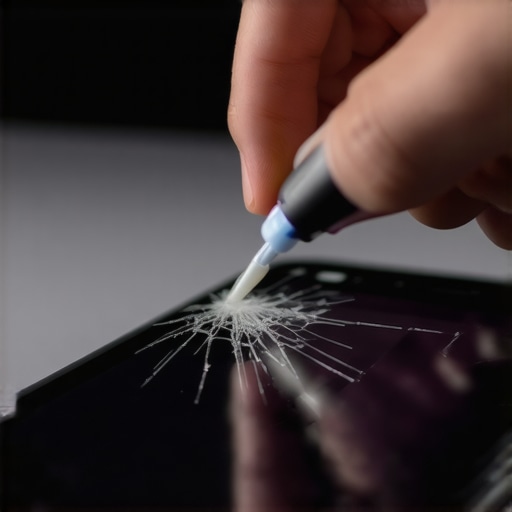
When dealing with a chip repair, the resin used is the most common point of failure. Professional-grade resins are engineered to match the refractive index of the glass. If the mobile service uses a cheap, third-party resin, it will not only look dim but will eventually yellow under UV exposure. This creates a permanent ‘cataract’ in your field of vision. A proper repair requires the technician to vacuum out the air from the break and inject the resin under controlled pressure, ensuring the structural integrity of the sash is maintained.
“The selection of glass type and its accompanying coatings must be matched to the specific environmental requirements of the installation site to ensure long-term performance and occupant comfort.” NFRC Fenestration Standards
The Anatomy of a Professional Replacement
When I approach a repair, I am looking at more than just the hole in the wall. I am looking at the weep hole functionality to ensure moisture can escape. I am checking the shim placement to make sure the glass is not under stress, which can cause ‘oil canning’ or distorted reflections. If you are noticing dimness, it is likely because the installer bypassed these technical steps. A same-day service often means they are using whatever they have on the truck rather than ordering the correct spec for your specific rough opening and climate needs.
In southern climates, we focus heavily on the SHGC. We want to block that radiant heat from the July sun. But if you block the heat without using a high-VT coating, you end up with a dark room. The solution is using high-performance coatings on Surface #2 of the glass, which requires a factory-sealed environment to prevent oxidation. A mobile service cannot replicate these factory conditions on the back of a truck.
Why Material Science Matters
The frame material also impacts your perception of light. If an installer uses a bulky vinyl replacement frame in an opening originally designed for a slim aluminum or fiberglass profile, you are losing square inches of glass. This is the ‘shrunken window’ effect. You might think the glass is dim, but in reality, you just have less of it. A master glazier knows how to maximize the glass-to-frame ratio while maintaining thermal efficiency. We look at the sill pan and the drip cap to ensure that even while we maximize light, we are not inviting water into the wall cavity.
Ultimately, your windows are a complex system. From the desiccants inside the spacer bar that prevent internal fogging to the specific gas fill—be it Argon or Krypton—that provides insulation, every component must be balanced. When a third-party repair skips these details for speed, the visual and thermal performance of your home suffers. Do not buy the hype of a quick fix; buy the numbers and the expertise that ensure your view remains clear and bright.