The Specific Reason Yuma Heat and Diesel Vibrations Destroy Windshield Seals
The Specific Reason Yuma Heat and Diesel Vibrations Destroy Windshield Seals
In the heart of Yuma, Arizona, the environment isn’t just harsh; it is chemically and mechanically hostile to automotive integrity. My name is Donald Odom, and after over nine years as a diesel mechanic specializing in heavy equipment and automotive repair, I’ve seen thousands of trucks roll into the shop with “mysterious” cabin leaks and whistling windshields. Most owners chalk it up to the vehicle simply getting old, or perhaps a rock chip that finally gave way. However, the reality for diesel drivers in the Southwest is far more complex.
While most people understand that the sun is “bad” for cars, they don’t understand the specific synergy between Yuma’s 110°F+ summers and the high-amplitude harmonic resonance unique to diesel engines. It isn’t just one or the other; it is a systematic dismantling of the polyurethane adhesive that holds your windshield in place. We are looking at a “perfect storm” where thermal softening meets mechanical oscillation, leading to a phenomenon I call “seal creep.” If you’ve ever wondered why your heavy-duty truck seems to lose its seal faster than your neighbor’s sedan, the answer lies in the physics of the desert and the chemistry of your engine.
The Yuma Factor: How Extreme Heat Liquefies Your Safety Net
To understand why windshields fail here, we have to look at the chemistry of the bond. Modern windshields aren’t just “held in” by rubber gaskets; they are structurally bonded to the vehicle frame using high-grade polyurethane adhesives. This adhesive is designed to be incredibly strong, providing up to 60% of the vehicle’s structural integrity in a rollover accident. However, like any polymer, polyurethane has a “glass transition temperature” (Tg) – the point at which the material shifts from a hard, glassy state to a more pliable, rubbery, or even viscous state.
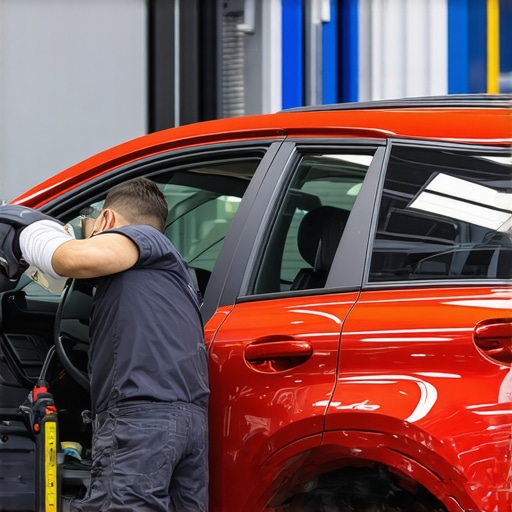
In a typical diesel repair shop, we see the results of Yuma’s UV exposure daily. When the ambient temperature hits 115°F, the surface temperature of your dashboard and the black “frit” (the black ceramic paint around the edge of the glass) can easily soar to 180°F or higher. At these temperatures, the polyurethane adhesive reaches its softening point. It doesn’t “melt” into a liquid, but it loses its structural rigidity. It becomes “viscous,” meaning it can flow or shift under pressure.
Furthermore, Yuma’s intense UV radiation causes photo-oxidation. This process breaks down the long-chain molecules in the rubber weatherstripping and the outer layers of the sealant. You’ll notice this when your seals start to look chalky or develop micro-cracks. Once the seal is dried out and the internal adhesive is softened by the heat, the glass is no longer “locked” into the frame. It is essentially floating on a bed of warm, pliable glue. This is where the diesel engine turns a minor problem into a total seal failure.
The Diesel Pulse: Why Vibrations are Different for Heavy-Duty Engines
If you are looking for a diesel mechanic near me, you likely know that diesel engines are built differently. Unlike gasoline engines, which use spark ignition, diesels rely on high compression ratios – often 17:1 or higher – to ignite fuel. This creates a much more violent “thump” during the combustion cycle. This energy is transmitted through the engine block, into the frame, and eventually into the A-pillars that hold your windshield.
Diesel engines produce what we call low-frequency, high-amplitude vibrations. While a gasoline engine might hum, a diesel engine pulses. This creates “harmonic resonance.” Every object has a natural frequency at which it likes to vibrate. When the low-frequency pulse of a Cummins, Duramax, or Powerstroke engine matches the natural frequency of the large glass pane of your windshield, the glass begins to oscillate. In a healthy environment, the polyurethane seal acts as a dampener, absorbing this energy.
However, when engine mounts begin to wear – a common occurrence in work trucks – these vibrations are no longer isolated. The entire cab becomes a tuning fork. Over thousands of miles, this constant shaking subjects the windshield bond to “fatigue cycling.” If the adhesive were cold and hard, it might resist this. But in the Yuma heat, the glass is vibrating against a softened, weakened bond. This is a primary reason why heavy-duty diesel vibrations make standard windshield chip repairs fail; the movement is simply too much for the cured resin to handle if the underlying seal is compromised.
The “Perfect Storm”: Synergy of Soft Adhesives and Constant Shaking
This is the specific reason Yuma heat and diesel vibrations are so destructive: **Mechanical Shear Stress**. In the winter, or in cooler climates, the polyurethane adhesive is rigid enough to hold the glass firmly against the frame even when the engine is rattling. In the Yuma summer, the heat “primes” the seal for failure by lowering its modulus of elasticity.
When the adhesive is soft, the high-amplitude vibration of the diesel engine performs a “shearing” action. Think of it like a paperclip that you bend back and forth until it snaps. The vibration forces the glass to move microscopically against the frame. Because the adhesive is in a softened state due to the 180°F dash temperatures, the vibration can actually “work” the bond loose, creating microscopic voids between the urethane and the metal pinch-weld of the truck frame.
Once these micro-voids appear, they become catch-points for dust and silt – something Yuma has in abundance. The dust acts as an abrasive, further grinding away at the bond every time the engine idles. This is also how to stop a tiny windshield chip from spreading in the heat: you have to address the vibration and the thermal expansion simultaneously. If you don’t, the physical “shearing” of the seal will eventually lead to a total delamination, where the glass literally begins to slide or “creep” downward in the frame.
Signs Your Seal is Failing (And Why It’s a Safety Risk)
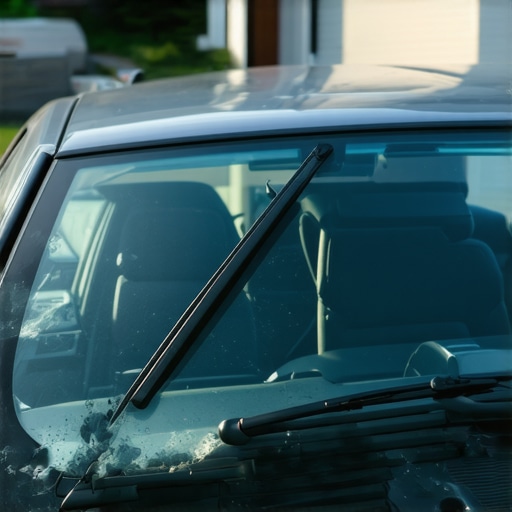
Identifying a failing seal early can save you from a catastrophic glass failure on the I-95. The most common sign I hear from customers at auto repair shops yuma az is a high-pitched whistle or “reed sound” when driving at highway speeds. This is caused by air being forced through those microscopic shear-voids we discussed earlier. It is literally the reason your windshield whistles at high speeds after a fix if the technician didn’t use a high-viscosity adhesive rated for desert temperatures.
Another major red flag is water intrusion. Even though it doesn’t rain often in Yuma, a monsoon downpour or a trip through a high-pressure car wash will reveal a failing seal immediately. If you see moisture on the interior of the glass or dripping from the headliner, your structural bond is gone. You should also learn how to spot a bad windshield seal before it leaks by inspecting the outer molding for “waviness” or gaps.
Perhaps most importantly, modern trucks rely on ADAS (Advanced Driver Assistance Systems). Cameras mounted behind the rearview mirror “look” through the windshield to manage lane-keep assist and emergency braking. If the seal is failing and the glass is vibrating excessively, these cameras can lose calibration. This is why your car’s safety features depend on your glass quality and seal integrity. A vibrating windshield can lead to “ghost” warnings or, worse, the failure of the emergency braking system when you need it most. This is also why your car’s lane departure warning needs glass recalibration whenever the seal is serviced or the glass is replaced.
Prevention and Professional Solutions
So, how do you fight back against the Yuma sun and the diesel pulse? First, stop using DIY “windshield glue” kits. These consumer-grade products rarely have the glass transition temperature required to survive an Arizona summer. When you need a fix, you must visit a professional Mechanic Shop Near Me that uses “High Modulus” (HM) polyurethane. These adhesives are specifically engineered to maintain their stiffness at higher temperatures, resisting the “shear” caused by diesel vibrations.
Furthermore, professional shops will perform a “soap bubble test.” By pressurizing the cabin and spraying soapy water around the exterior of the seal, we can find the exact point where the engine’s harmonics have breached the bond. This is the way to check for air leaks in a new windshield and ensure the job was done right. Additionally, as a diesel mechanic, I always recommend checking your engine mounts. If your mounts are shot, no windshield seal in the world – no matter how high-quality – will be able to withstand the constant pounding of a heavy-duty diesel engine for long.
Conclusion: Protecting Your Investment in the Desert
Living in Yuma requires a different level of vehicle maintenance. You can’t treat a diesel truck in 115-degree heat the same way you would in a temperate climate. The synergy of thermal degradation and harmonic resonance is a real, measurable threat to your safety and your wallet. If you notice whistling, moisture, or your ADAS sensors acting up, don’t wait. Searching for auto repair near me and getting a professional evaluation of your windshield seal and engine mounts is the only way to prevent a total seal failure. Stay cool, keep the rubber side down, and make sure your glass is actually staying where it belongs.