How to stop a tiny windshield chip from spreading in the heat
The Physics of Thermal Expansion in Laminated Safety Glass
When you look at your windshield, you are not looking at a single slab of glass. You are looking at a sophisticated sandwich of two layers of annealed glass bonded by a central layer of Polyvinyl Butyral (PVB). This design is intended for safety, but it introduces a complex variable when a chip occurs: the Coefficient of Thermal Expansion. In the heat of July, the outer layer of glass absorbs radiant energy, expanding at a different rate than the inner layer that is being cooled by your vehicle air conditioning. This creates a state of shear stress. A tiny chip is more than a blemish; it is a structural failure point where these competing forces concentrate. If you do not address this immediately, the physics of the situation will dictate a full replacement rather than a simple repair.
The Condensation and Heat Crisis: A Cautionary Tale
I recall a specific incident in late August where a vehicle owner called me in a panic from a roadside rest stop. They had a minor bullseye chip, no larger than a pea, that had been sitting there for a week. As the external temperature hit 98 degrees with a high heat index, they turned their air conditioning to the maximum setting and directed the vents toward the dashboard. I walked them through the technical reality over the phone: they had created a massive thermal gradient across the 2.1mm thick glass. As they watched, a crack shot across the entire span of the glass like a lightning bolt. It was not the chip itself that failed, but the owner’s lack of understanding regarding thermal shock. The humidity in the air had also introduced moisture into the PVB layer through the break, which expanded when heated, forcing the glass layers apart. This is why immediate intervention via a mobile service is not a luxury; it is a technical necessity to preserve the structural integrity of the glazing unit.
“The success of a laminated glass repair is contingent upon the complete evacuation of air and moisture from the break followed by the total saturation of the void with an optically matched resin.” – NWRA Maintenance Standards
Understanding the Solar Heat Gain on Automotive Glazing
In hot climates, the Solar Heat Gain Coefficient (SHGC) of your glass determines how much infrared radiation is transmitted into the cabin. While modern windshields have coatings to mitigate this, a chip bypasses these defenses. The glass surrounding the break becomes a heat sink. When the temperature of the glass reaches 120 degrees Fahrenheit or higher, the resin in a DIY kit will often fail to cure correctly because the viscosity changes too rapidly. A professional glass installer uses high-viscosity resins specifically formulated for high-temp environments. We use a bridge and injector system to create a vacuum, pulling the air out of the break before injecting the resin. This is critical because any trapped air will expand in the heat, eventually blowing the repair out and leading to a long-crack formation.
“Installation and repair procedures must account for environmental variables to ensure the finished product meets original equipment manufacturer specifications for safety and clarity.” – AGSC Standard for Auto Glass
The Mechanics of Mobile Chip Repair
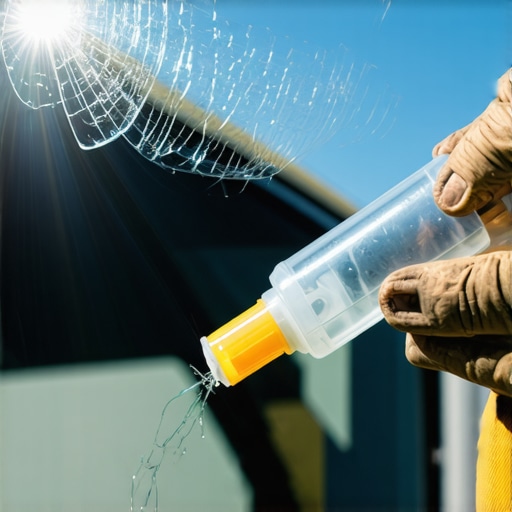
The goal of a same-day mobile service is to stabilize the break before it reaches the critical threshold of crack propagation. When a glass installer arrives, they first assess the ‘pit’ of the chip. Using a probe, they remove any loose shards of glass that could interfere with the resin flow. The technician then applies a bridge over the rough opening of the chip. This tool is calibrated to apply specific pressure without further stressing the glass. The resin is then cured using a specific wavelength of ultraviolet light. This is not just a cosmetic fix; it is a structural weld. By filling the void, we restore the ability of the glass to distribute stress across its surface, rather than focusing it on the edges of the break. If you wait even twenty-four hours in extreme heat, the dirt and road oils that accumulate in the chip will prevent the resin from bonding properly, leaving a visible scar and a weak point in the glass.
Why Professional Resins Outperform DIY Options
Many homeowners think they can grab a tube of acrylic from a hardware store and fix a chip themselves. This is a mistake. Professional glazing resins are engineered with refractive indices that match the glass, meaning the repair becomes nearly invisible. More importantly, these resins are designed to handle the flex of the vehicle as it moves. Your windshield is a stressed member of the car’s frame; it supports the roof in a rollover and provides the backstop for the passenger-side airbag. A poor repair using inferior materials will not hold up under the pressure of an airbag deployment. When we talk about a chip repair, we are talking about maintaining a safety system, not just fixing a window. The use of high-quality curing films and pit fillers ensures that the surface remains flush with the surrounding glass, preventing wiper blade wear and maintaining the aerodynamic profile of the glass.
The Final Verdict on Heat and Glass Integrity
To stop a chip from spreading in the heat, you must control the environment. Park in the shade, crack the windows to allow hot air to escape, and avoid using the defroster or direct A/C on the glass until the repair is complete. Most importantly, contact a mobile service for a same-day repair. The cost of a chip repair is a fraction of the cost of a full windshield replacement, especially on modern vehicles equipped with Advanced Driver Assistance Systems (ADAS) that require expensive recalibration after a glass swap. Protect your investment by understanding the science of the glass and acting before the thermal stress takes its toll. Water management, heat dissipation, and structural bonding are the pillars of professional glazing, and they apply just as much to your car as they do to a skyscraper. [IMAGE_PLACEHOLDER]