The reason your windshield resin didn’t clear the break
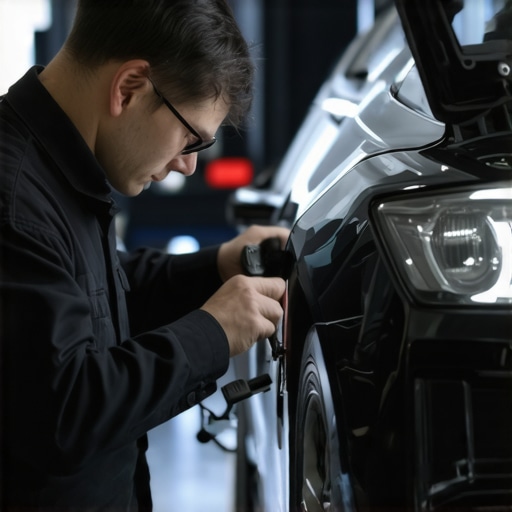
When you stare through your windshield at a fresh stone chip, you are not just looking at broken glass; you are looking at a complex failure of structural integrity and optical clarity. As a glazier with over two decades in the trade, I have seen every type of fracture from star-breaks to bullseyes. The most common question I get when a mobile service technician finishes a chip repair is: Why can I still see it? Most people think a same-day glass installer uses a magic eraser. The reality is rooted in the uncompromising laws of physics, polymer chemistry, and thermal dynamics.
“Installation and repair procedures are just as critical as the glass performance itself. A high-performance glazing system or component installed or repaired poorly will fail to meet its engineered specifications.” – AAMA Installation Masters Guide
A homeowner called me in a panic because their new windows were ‘sweating,’ but the real lesson came when we looked at their car in the driveway. They had just had a mobile chip repair done, and the break was still visible as a silver ghost. I walked over with my hygrometer and showed them that the humidity was nearly 70 percent at the time of the repair. It wasn’t the resin that failed; it was the moisture trapped in the laminate. You see, a windshield is a sandwich of two layers of glass held together by a Polyvinyl Butyral (PVB) interlayer. When a rock hits the glass, it creates a void. If that void is contaminated by moisture, road oils, or even car wax before the glass installer arrives, the resin cannot achieve a perfect mechanical bond. The silver flash you see is actually air or moisture trapped behind the resin, reflecting light rather than letting it pass through.
The Physics of Refractive Index
To understand why a repair fails to clear, we have to talk about the refractive index. Glass has a refractive index of approximately 1.52. For a chip repair to be invisible, the resin injected by the mobile service must match that number exactly. However, resin viscosity changes based on temperature. In hot climates like Texas or Florida, the glass expands, narrowing the microscopic fissures of a star-break. If a technician attempts a chip repair on a windshield that has been sitting in 100-degree sun, the resin won’t penetrate the tips of the cracks because the glass is ‘tight.’ Conversely, in cold climates, the glass contracts, and the resin becomes too thick to flow via capillary action. This is where the Solar Heat Gain Coefficient (SHGC) logic applies even to your car. If the surface temperature of the glass is not stabilized, the resin will never achieve the necessary wet-out.
The Role of Surface Tension and Capillary Action
The injection process relies on a vacuum-pressure cycle. A professional glass installer uses a bridge tool to create a seal over the rough opening of the break. First, they pull a vacuum to suck the air out of the fracture. Then, they toggle to pressure to force the resin in. If the resin has a high viscosity—meaning it’s thick like syrup—it won’t fill the narrowest parts of the break. This is why cheap, over-the-counter kits fail. They use a one-size-fits-all resin. Professionals use different resins for different temperatures and break types. They manage the glazing bead of the resin to ensure it fills every microscopic void. If even a molecule of air remains, it creates an optical discontinuity. This is especially true with ‘long cracks’ where the glass has fully separated. The resin must act as a structural bridge, not just a filler.
“Standard practice for the installation and repair of exterior glazing requires that the substrate be dry, clean, and at a temperature that allows for proper sealant adhesion.” – ASTM E2112 Standard
When you opt for a same-day mobile service, the technician is fighting the environment. Dust is the enemy. Even a microscopic speck of road grit inside the break will prevent the resin from clearing. This is why I tell people to put a piece of clear packing tape over a chip the second it happens. This keeps the ‘wound’ clean until the glass installer can get there. If you’ve been running your defroster or your AC, you’ve already introduced thermal stress to the area, which can cause the chip to spread before it can be stabilized.
Why Triple-Pane Logic Doesn’t Apply Here
In residential glazing, we talk about triple-pane units and argon gas fills to manage the U-factor. In automotive glass, we are dealing with a different set of stresses. The windshield is a stressed member of the vehicle’s frame. If the chip repair doesn’t clear, it’s often because the PVB interlayer has been damaged or ‘scarred’ by the impact. No amount of resin can fix a scorched interlayer. Furthermore, if the technician doesn’t use a UV lamp with the correct wavelength to cure the resin, the polymer chains won’t cross-link properly, leading to a yellowing or shrinking of the patch over time. You want a repair that handles the radiant heat of the sun without popping out of the pit.
Ultimately, the reason the break didn’t clear is usually a combination of contamination, improper temperature management, or a mismatch in the resin’s refractive index. It’s not magic; it’s glazing science. When you hire a professional for a same-day chip repair, you aren’t just paying for the resin; you are paying for their ability to control the environment around the break long enough for the chemistry to work. If they don’t check the glass temperature or clean the pit with a specialized probe, they are just ‘caulking and walking,’ and you’ll be left staring at that star-break for the rest of the car’s life.