The reason your car’s auto-wipers are acting erratic
When you are behind the wheel during a sudden downpour, you expect your vehicle to respond with the precision of a Swiss watch. Yet, many drivers find themselves battling a rain-sensing system that has seemingly developed a mind of its own. As a master glazier with over two decades of experience in both architectural and automotive glass, I can tell you that a windshield is far more than a transparent barrier; it is a sophisticated optical lens. When your auto-wipers start acting erratic, the culprit is rarely the software. Usually, it is a failure in the physical interface between the glass and the sensor, often caused by a corner-cutting glass installer.
The Rain Sensor Autopsy: Why Your Wipers Are Faltering
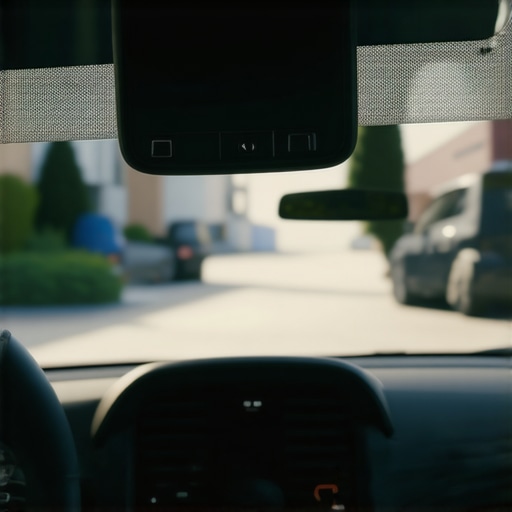
To understand the failure, you must understand the physics of the sensing unit. Most modern vehicles utilize an infrared sensor mounted behind the rearview mirror. This device operates on the principle of Total Internal Reflection (TIR). The sensor emits infrared light at a specific angle toward the exterior surface of the windshield. If the glass is dry, the light reflects back to a photodiode. When raindrops land on the glass, they disrupt this reflection, scattering the light. The sensor detects this drop in reflected intensity and triggers the wipers. I once had a client come to me in a panic because their wipers were ‘sweating’ phantom movements even on cloudless days. I took my hygrometer to check the interior cabin humidity and then inspected the sensor bracket with a high-power loupe. The issue was not the weather; it was a microscopic air pocket trapped in the silicone gel pad between the sensor and the glass. This pocket was refracting light prematurely, tricking the car into thinking it was perpetually raining.
“Installation is just as critical as the window performance itself. A high-performance window installed poorly will fail.” AAMA Installation Masters Guide
When you opt for a cheap same-day mobile service, you are often getting an installer who ignores the tolerances of the rough opening. In the automotive world, the rough opening is the metal pinchweld of your car frame. If the glass is not seated with surgical precision, or if the urethane bead is uneven, the angle of the glass relative to the sensor shifts. Even a deviation of a few millimeters can throw the TIR calculations into chaos, leading to the erratic behavior you are experiencing.
The Invisible Technicalities: Refractive Index and the Frit
Not all glass is created equal. When a glass installer uses low-quality aftermarket glass, the refractive index of the material may differ slightly from the OEM (Original Equipment Manufacturer) specifications. The rain sensor is calibrated to the exact density of the factory glass. If the replacement glass is even slightly denser or thinner, the infrared beams will not strike the photodiode at the correct intensity. Furthermore, the black ceramic ‘frit’ (the dots around the edge of the windshield) serves a structural purpose by protecting the urethane from UV degradation, but it also acts as a thermal heat sink. In colder northern climates, like Chicago or Minneapolis, the U-Factor of the glass becomes vital. If the glass cannot manage the temperature differential between the warm cabin and the freezing exterior, condensation can form inside the sensor housing. This moisture is the ultimate enemy of optical clarity. I always tell my apprentices that we aren’t just fitting a sash into a frame; we are managing a thermal envelope. If you use a warm-edge spacer logic in architectural glazing, you apply the same logic to the sensor seal in a car. You need a perfect, hermetic bond to prevent the dew point from reaching the interior side of the glass aperture.
The Danger of the Quick-Fix Chip Repair
Many drivers seek out a chip repair for small dings, which is usually a smart move to prevent a crack from spreading. However, if that chip is located within the ‘critical zone’ directly in front of the rain sensor or the ADAS (Advanced Driver Assistance Systems) camera, a standard resin injection might not be enough. The resin used in a chip repair has a different optical density than the surrounding glass. While it may look clear to the human eye, to an infrared sensor, it looks like a permanent obstruction. If your wipers are acting up after a repair, the repair itself might be the ghost in the machine. In these cases, a full replacement is often the only way to restore the optical integrity of the system.
“Standard Practice for Installation of Exterior Windows requires a level of water management that many mobile installers simply ignore in the interest of speed.” ASTM E2112
The rise of mobile service has revolutionized convenience, but it has also led to an increase in ‘caulk-and-walk’ mentality. Proper glass installation requires a controlled environment. If an installer attempts to replace your windshield in high humidity or extreme cold without proper climate control, the urethane may not cure correctly. This leads to subtle shifts in the glass position as you drive, further aggravating the sensor issues. A professional glass installer knows that the weep hole logic of a building’s window system is mirrored in the drainage channels of a car’s cowl. If the glass is not aligned, water pools in places it shouldn’t, eventually seeping into the sensor electronics and causing permanent damage.
The Final Verdict: Quality Over Speed
When your wipers fail to respond or move erratically, don’t just blame the rain. Look at the glass. Was it a same-day rush job? Is the glass OEM quality? Is there a shim or a bead of sealant visible where it shouldn’t be? The complexity of modern glazing requires a technician who understands the science of light and the chemistry of adhesives. Whether you are dealing with a wood sash in a historic home or a laminated windshield in a modern SUV, the principles of glazing remain the same: precision, thermal management, and an uncompromising commitment to the standards of the trade. Don’t buy the marketing hype of the low-cost providers; buy the numbers and the technical expertise that ensures your safety on the road.