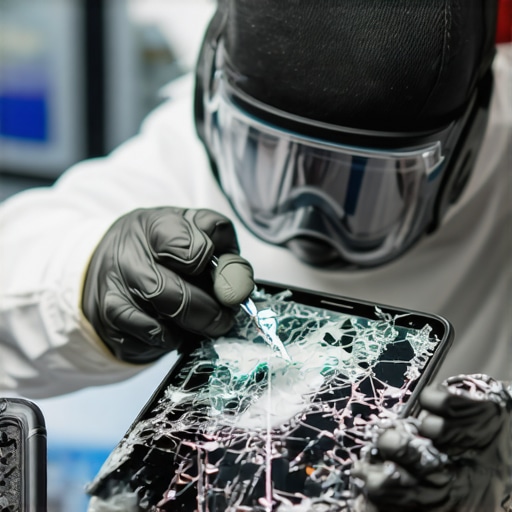
Why we never use superglue on a cracked glass screen
The Chemical Catastrophe of DIY Glass Repair
I’ve seen it a hundred times in my twenty-five years as a master glazier. A homeowner notices a hairline fracture in their window sash or a small chip in a glass door and reaches for the nearest bottle of superglue. It seems logical to the untrained eye: fill the gap, stop the spread. But in the world of professional glazing, this is the equivalent of trying to repair a structural beam with chewing gum. Cyanoacrylate, the active ingredient in superglue, is a rigid, brittle polymer. Glass, contrary to its appearance, is a dynamic material that constantly moves, expands, and contracts based on the thermal load it carries. When you introduce a rigid adhesive into a material with a different coefficient of thermal expansion, you aren’t fixing a problem; you are building a ticking time bomb.
The Physics of Thermal Stress
In cold climates like Chicago or Minneapolis, the U-Factor of your window is the only thing standing between a comfortable living room and a frozen pipe. When I walk onto a job site and see a rough opening where the glazing bead has been smeared with household glue, I know I’m looking at a full replacement. Glass expands at a rate of approximately 9 parts per million for every degree Celsius of temperature change. Superglue does not share this property. As the sun hits the glass, the pane expands. The glue stays rigid. This creates a massive concentration of stress at the tip of the crack, often causing it to spiderweb across the entire sash in a matter of hours.
“Installation is just as critical as the window performance itself. A high-performance window installed poorly will fail.” – AAMA Installation Masters Guide
The Condensation Crisis: A Real-World Failure
A homeowner called me in a panic because their new windows were ‘sweating.’ I walked in with my hygrometer and showed them the humidity was 60 percent. It wasn’t the windows; it was their lifestyle. However, upon closer inspection of a small chip they had tried to ‘seal’ with superglue, I found something worse. The glue had off-gassed inside the insulated glass unit (IGU). The chemical vapors reacted with the Low-E coating on Surface 2, creating a permanent, cloudy haze that no amount of cleaning could remove. This is why we insist on professional chip repair using high-viscosity, UV-cured resins that are specifically engineered to match the refractive index of 1.52 found in standard soda-lime glass.
Why Mobile Service and Professional Resins Win
A professional glass installer provides a same-day mobile service because time is the enemy of glass integrity. Once a crack is contaminated with dirt, oils, or household chemicals like superglue, a clean repair becomes impossible. We use a vacuum-pressure system to evacuate the air from the crack before injecting a specialized resin. This resin remains flexible enough to handle the shim-to-header movement of the house while maintaining a bond that is actually stronger than the original glass. We look at the Dew Point and the Solar Heat Gain before we even touch the glass. If you are in a northern climate, we are focusing on keeping that heat reflected back into the room by protecting the integrity of the coating on Surface 3.
“Total window performance is a combination of the glazing, the frame, and the installation method.” – NFRC Performance Guidelines
The Anatomy of a Proper Repair
When we perform a chip repair, we aren’t just filling a hole. We are restoring the structural integrity of the pane. This involves cleaning the site with specialized solvents that don’t leave residues, using a bridge and injector tool to ensure 100 percent resin penetration, and then curing the repair with a specific UV wavelength. If there is a weep hole blockage or a sill pan issue contributing to the stress, we address those mechanical failures as well. Superglue lacks the optical clarity and the structural elasticity required for this task. It will yellow over time due to UV exposure, further highlighting the damage you were trying to hide. Don’t buy the marketing hype of ‘all-purpose’ adhesives; buy the science of professional glazing. If the crack is too large, a full sash replacement is the only way to ensure your home’s thermal envelope remains intact.