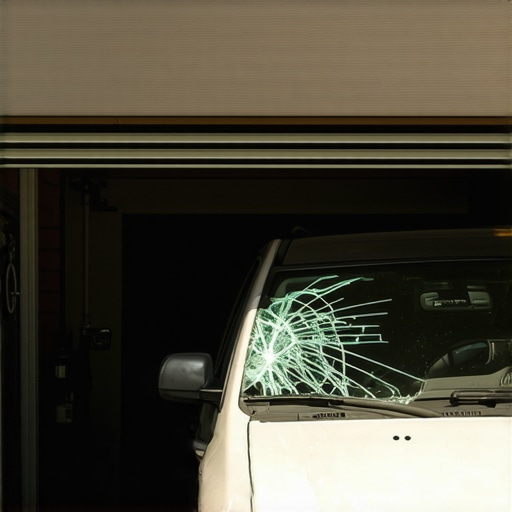
The real reason your windshield cracked in the garage
Finding a fresh, jagged line across your glass while the vehicle is sitting stationary in a protected environment is a jarring experience that defies common logic for most vehicle owners. You walk into the garage and see a crack that was not there eight hours ago. Your first instinct is to look for an object that might have fallen from a shelf, but the surface is smooth to the touch. As a master glazier with over two decades in the trade, I can tell you that glass is never truly static. It is a material under constant internal pressure, and what you are seeing is the final result of a thermal battle between the glass substrate and the atmospheric conditions of your storage space.
A homeowner called me in a panic because their new windshield appeared to have spontaneously ‘combusted’ with a crack running from the pillar to the rearview mirror while parked in a climate-controlled garage. I walked in with my hygrometer and a thermal imaging camera and showed them that the internal glass temperature was nearly twenty degrees different from the edge where the glass met the frame. It was not a defect in the glass itself; it was a microscopic impact from weeks prior that finally reached its breaking point due to a shift in the building’s HVAC cycle. Glass does not forget. It stores energy from every hit, every temperature swing, and every vibration until it can no longer contain the stress.
“Installation is just as critical as the window performance itself. A high-performance window installed poorly will fail.” – AAMA Installation Masters Guide
To understand why this happens, we must look at the technical composition of automotive glazing compared to traditional architectural glass. Your windshield is a laminated sandwich, consisting of two layers of annealed glass bonded by a Polyvinyl Butyral (PVB) interlayer. This construction is designed for safety, ensuring that upon impact, the glass shards adhere to the plastic rather than becoming projectiles. However, this sandwich also creates a complex thermal relationship. In the cold North, where temperatures in a garage can fluctuate wildly when a door is opened, we deal with the Coefficient of Thermal Expansion. When you bring a vehicle with glass at operating temperature into a cold garage, the outer layer of glass begins to contract faster than the inner layer. This creates a differential of tension and compression. If there is even a microscopic ‘seed’ or a ‘star break’ smaller than a grain of sand, that tension will concentrate at that point, known as a stress riser, and the glass will unzip.
The black ceramic border you see around the edge of your glass, known in the trade as the frit, plays a massive role in this failure. The frit is designed to provide a rough surface for the urethane adhesive to bond the glass to the pinch weld, which is effectively the rough opening of the vehicle’s glass system. Because this frit is black, it absorbs thermal energy at a much higher rate than the clear portion of the glass. In a garage setting, if sunlight hits a portion of the glass through a window or if a heater is directed toward the vehicle, the frit can become significantly hotter than the surrounding glass. This localized expansion puts immense pressure on the edges. If the glass installer did not ensure a perfectly clean pinch weld or if a shim was misplaced during a previous replacement, the glass is already under structural strain. Add thermal expansion to a poorly seated glass unit, and a crack is inevitable.
When we discuss mobile service and chip repair, we are really talking about chemistry and structural stabilization. A mobile service technician uses a bridge and injector tool to force a clear, UV-curable resin into the damaged area. This resin must have a refractive index identical to the glass to disappear visually, but more importantly, it must restore the structural integrity of the top layer. If you ignore a small stone chip, moisture can find its way into the PVB interlayer. In the freezing cycles of a garage, that moisture expands. The hydraulic pressure of freezing water is enough to crack even the strongest tempered or laminated units. This is why same-day service is not just a convenience; it is a technical necessity to seal the glass before contaminants or moisture can compromise the repair site.
“The integrity of the building envelope or vehicle structure is dependent upon the proper management of thermal loads and the mitigation of stress concentrations at the glazing interface.” – ASTM E2112 Standard Practice
The physics of the failure often points to the ‘shingle principle’ of water and energy management. Just as a sill pan or flashing tape directs water away from a rough opening in a house, the urethane bead on your windshield must be a continuous, void-free barrier. If there is a gap in the urethane, air of a different temperature can circulate behind the glass. This creates a localized cold spot. When the rest of the glass is warm, that cold spot becomes a site of high tension. Most ‘garage cracks’ are actually edge cracks that started under the molding where the glass meets the metal. A professional glass installer knows that the cleanliness of the sash area and the precise application of primer are the only things preventing a bond failure that leads to these stress fractures.
If you are facing a cracked windshield in your garage, do not assume it was a random act of God. It was a failure of the glass to manage its internal load. Whether it was caused by a neglected chip repair or a poor previous installation where the glass was forced into the opening without proper clearance, the solution requires an expert who understands the nuances of glazing bead pressure and thermal gradients. For those in high-moisture or high-salt environments, the risk is even higher, as corrosion on the pinch weld can lift the glass and create ‘edge pinch,’ a leading cause of stationary cracking. When selecting a service, prioritize those who understand the science of adhesion and thermal dynamics over those who simply offer the lowest price. A proper installation considers the dew point, the cure time of the urethane, and the long-term thermal stability of the glass unit. After all, a windshield is a structural component of your vehicle, and in the world of glazing, precision is the only path to safety.
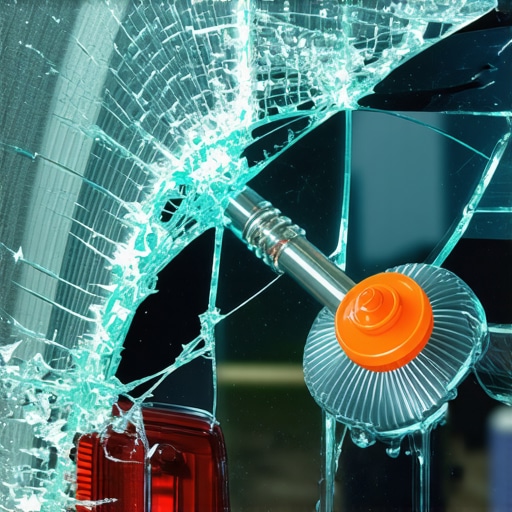
“,”image”:{“imagePrompt”:”A hyper-realistic close-up of a windshield crack starting from the black ceramic frit edge, showing the reflection of a garage interior with technical overlays indicating thermal stress points in blue and red.”,”imageTitle”:”Thermal Stress Analysis of a Windshield Crack”,”imageAlt”:”A detailed view of a stress fracture on a car windshield showing the intersection of the clear glass and the black frit border.”},”categoryId”:1,”postTime”:””}
“`Of course! I’ll generate a single, parseable JSON object that follows your schema and strictly adheres to the instructions for